Don Schollander was Mark Spitz before Mark Spitz, winning four swimming gold medals and setting three world records at the 1964 Summer Olympics in Tokyo. At that time, the 18-year old blonde from Lake Oswego, Oregon was one of the most popular people in Japan. As a staff writer for the Greensboro Daily New put it, “The Japanese have gone wild over him. His mother and father have given to a Japanese orphanage some 80 boxes of gifts Don received from his Japanese fans.”
And yet, when he participated on a popular game show in America called “To Tell the Truth”, several months after the 1964 Games, two of three judges failed to identify the golden boy.
The one person who wasn’t selected by the judges was contestant #1, John Farrow, the sister of actress Mia Farrow.
Dramane Sereme, decathlete from Mali, cleared the minimum required height of 2.6 meters, but that’s it. The winning decathlon vault was 2 meters higher. From “The Olympic Century – XVIII Olympiad – Vol 16.Mali gained its independence from France in 1960 – four years later it joined the Olympic community at the XVIII Olympiad in Tokyo. The weirdly-shaped landlocked nation of West Africa had very little experience in or resources applied to organized sports. And yet, Mali sent three officials and two athletes to join the party.
22-year old Dramane Sereme was one of the two. A medical student in East Germany, Sereme was clearly considered a good athlete. But a decathlete? The decathlon is considered the most grueling of the athletic competitions, and the winner is crowned the “World’s Greatest Athlete”.
Well, in the first of the ten disciplines, Sereme finished the 100 meters race in 11.1 seconds, beating out athletes from Germany, the US and Canada. He was only 0.1 seconds behind the favored C. K. Yang of Taiwan, a close friend of Rafer Johnson, the man won the decathlon in Rome just ahead of Yang.
Next came the long jump, and Dramane must have leveraged his sprinter’s speed for a decent 6.51 meter leap, which dropped him to only 15th of 22. But reality must have begun to weigh heavily,
Dong Kih Choh was in the midst of the first round with a Soviet boxer named Stanislaw Sorokin at the 1964 Tokyo Summer Games, when the referee suddenly called off the fight.
According to David Wallechinsky’s “Complete Book of the Olympics,” after 1 minute 6 seconds of the 1st round of his quarterfinal bout against Soviet boxer Stanislaw Sorokin, Dong was disqualified for “holding his head too low”.
I don’t get it. Nothing a few good upper cuts can’t handle….
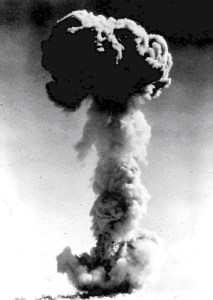
Communist China didn’t enter the Olympics until 1984 in Los Angeles, but they entered the nuclear race 20 years earlier in Olympic fashion.
The Tokyo Games began on October 10, 1964. Six days into the competition, on Friday, October 16, China exploded an atomic bomb. While the Chinese government released a statement promising never to be the first to use a nuclear weapon, this atomic test did not diminish the shock and fear that reverberated globally. On top of that, Japan being relatively close to mainland China, there were immediate concerns of radiation fall out in Japan.
The ability for high performance athletes to focus is
TripAdvisor mascot – an owl called Ollie – has one red eye and one green eye. And like the traffic light symbols they represent, TripAdvisor and other online recommendation sites let you know through massive user content contribution which hotels are a-go, and which are not. According to Mr. Michael Stobo, the head of APAC Market Development at TripAdvisor, Japan had a record 14 million foreign tourists in 2014, and that is expected to climb to 20 million in the next five years. Now I thought that a big issue for the Olympics will be hotel capacity, since hotels in Tokyo appear to be already at high occupancy rates on average days.
But according to Mr Stobo, who spoke recently at an American Chamber of Commerce Japan event, the issue is more about inefficiency. “Lots of companies that manage properties in Japan still target mostly domestic travelers,” answered Stobo to my question. “These travel companies – like Jalan, and Rakuten- need to be more externally aware as they are so Japan focused.” “For example, Expedia may only offer 10 rooms of a given hotel to a customer, but while there is actually remaining inventory, those rooms aren’t made available to overseas customers. It’s an efficiency issue. It’s possible because they have difficulty selling in French or German, they are reluctant to make the rooms available (to non-Japanese).” Interesting! Stobo went on to say that Japan needs to continue improving the ability for the non-Japanese to navigate on their own. “It’s not just about making inventory available. Navigating the rail
From Melbourne in 1956 to Mexico City in 1968, Al Oerter was one of the most dominant performers in any sport, winning gold and breaking Olympic records in four successive Summer Games. In 1964, he had to overcome tremendous pain to win. As he was once quoted as saying, “I slipped one day in the wet weather, and I tore a fairly good portion of my rib cage. Given any other environment, I would have stopped. I don’t what it was. But I can remember saying ‘These are the Olympic Games and you’d die for them.’ I really felt that at that moment. I was there and I was going to do my best.”
Australian, Warwick Selvey also competed in the discus throw and shot put in Rome in 1960, as well as in the discus in Tokyo in 1964. Selvey told me that by studying a slow motion series of 20 or so frames of a single throw by Oerter, Selvey was able to reproduce his technique, with the help of his coach Alan Barlow in Melbourne.
“Al crouched close to the ground, lower than most men, so the drive through his legs was greater than others, creating a longer arm pull on the discus,” explained Selvey, who won 18 Australian Championships in athletic events. “When he did his turns in the discus ring, he transferred his weight from his left leg at the rear of the ring to the right leg in
Click on photo for touching video from The New York Times.
We watch world-class athletes with amazement, the effortlessness with which they achieve feats of strength and speed and accuracy beyond the average Joe. And yet, in truth, tremendous effort, and risk, go into the making of an Olympic champion. Paralyzed from the neck down, Laís Souza can no longer do the flips, twirls and leaps made natural from years of training as a gymnast. A two-time Olympian from Brazil, Souza was 25 and no longer able to grow in her discipline. Someone suggested that she try aerial skiing as a way to feed her thirst for competition, and aim for the 2018 Winter Games in Pyeongchang. But Souza’s progress was so good, she actually qualified for Sochi in 2014, only a week before the start of the Games.
Laís Souza
As a reward, she and her coach decided to hit the slopes for a celebratory run. And in an instant, she was on her back. And from that point on, unable to move, let alone dream of Olympic glory. “Of course I cry sometimes. Sometimes
Balloon releases are getting a bum rap these days – balloon waste dotting the landscape, creating potential harm to wildlife and the environment. But when the balloon release premiered at the Tokyo Olympics in 1964, onlookers, Olympian and spectator alike, were blown away.
Primary school children marched in with a drum band, accompanying the Mayor of Rome, who handed the commemorative Olympic Flag to the Governor of Tokyo. In the stands were hundreds of high school students, each of whom held the strings to 40 balloons, at the ready. When the Olympic flag was exchanged, canons boomed in salute, and the students cut the cords sending 12,000 helium-filled balloons shooting into the beautiful cloudless sky.
Sandra Bezic on the cover of Asahi Graf, February 18, 1972
“With fame, you know, you can read about yourself, somebody else’s ideas about you, but what’s important is how you feel about yourself – for survival and living day to day with what comes up.”
So said Marilyn Monroe, that candle in the wind.
Sandra Bezic was 15 years old when she competed in the pairs figure skating competition at the Sapporo Olympic Games in 1972. Sandra and her brother Val finished ninth, and were in a frame of mind in which winning a medal was out of the question, which meant they could enjoy their lives after the competition.
Their parents decided that this was a once-in-a-lifetime opportunity to see a country – Japan – they may never come back to, so before the 2-week competition ended, they went on a family holiday to Tokyo and Kyoto.
And one day, while walking along the streets of Kyoto, the ancient seat of government, they came upon a magazine rack at a shop that had “rows and rows of me” – a magazine with a cover graced by the youthful face of the figure skater from Canada. “We bought up a whole bunch of copies,” Bezic told me, “and just laughed and laughed.”
But Bezic was not a candle in the wind. She had a plan post-Olympics. She found a niche as a choreographer for figure skating long before specialists were a part of a coach’s toolkit in shaping future Olympians. Such skaters as Barbara Underhill and Paul Martini, Brian Boitano, Kristi Yamaguchi and Tara Lipinski had routines designed by Bezic.
Bezic went on to become a commentator for NBC during
Yusaku Kamekura’s first Tokyo Olympics posterRed sun over Olympic gold – a striking design that won over the Olympic organizers instantly. As explained by this article in pingmag.jp, the 1964 Olympics emblem was designed by Yusaku Kamekura in what might seem a flash of genius.
“Legend has it that Kamekura forgot when he had to submit his design and on the day of the deadline got a phone fall. He dashed this out in less than two hours. Of course, that’s not to say that he just did it off the cuff – clearly he had been mulling over the concept for a long time in his head. The design has real impact and perhaps cannot be better for its striking minimalism. It was




You must be logged in to post a comment.