CARTOON: Indonesia Withdraws from Tokyo Olympics, Warta Bhakti- 10 October 1964, p1

The day before the opening ceremony of the Tokyo Olympic Games, North Korea and Indonesia decided to boycott the Games. This decision was expected by many as the previous months had seen conflict between Indonesia and major international sports governing bodies.

Indonesia had hosted a regional sporting event called the Asian Games in 1962, refusing entry of athletes from Israel and Taiwan. As a result, The IOC (symbolized by IOC president Avery Brundage in the cartoons) suspended Indonesia, the first time they had ever done so. In reaction to that, Indonesia organized the GANEFO Games, “The Games of the New Emerging Forces”, which explicitly stated that politics and sports were intertwined.

CARTOON: Just wait until it collapses, Warta Bhakti- 26 September 1964

As the time got closer and closer to October 1964, Indonesia was getting impatient to receive formal indication from the Tokyo Olympic Organizing Committee (TOOC) that they would be allowed to participate in the Tokyo Olympics. Indonesia actually was invited to the Olympic Games, but were told by the IOC and TOOC as well as the international governing boards of swimming (FINA) and athletics (IAAF), that athletes who participated in the GANEFO Games could not participate in the Olympics.

CARTOON: We are Not Begging Tokyo, Warta Bhakti - 5 July 1964
CARTOON: We are Not Begging Tokyo, Warta Bhakti – 5 July 1964

On October 9, both North Korea and Indonesia decided to pull their entire teams out of Japan.

While it must have been an incredible disappointment to Indonesian athletes in Tokyo then told to return home on the eve of the Olympics, the press in Jakarta made it clear that the boycott was the right decision. The anti-IOC, anti-Western, anti-colonial backlash was

From the book,
Is this Arnold Gordon? From the book, “XVIII Olympiad Tokyo 1964”

I wrote in a very recent post about the closing ceremony at the XVIII Olympiad in Tokyo about how an orderly march turned into a disorderly lovefest, which the athletes remember with great fondness. I also wrote about a mysterious character who appeared from nowhere in the National Stadium wearing the number “351” on his shirt and ran along the track. The AP report I referenced stated that the man was Arnold Gordon, a citizen of Sierra Leone.

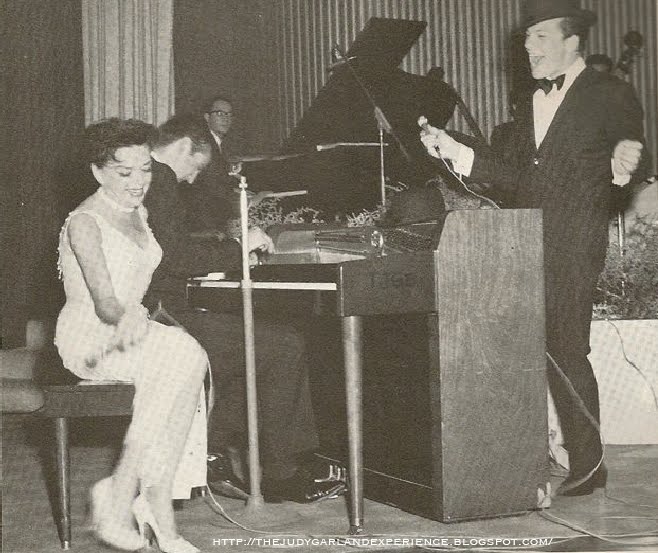
In this interview from the BBC in its coverage of the London Games in 2012, a man named Arnold Gordon talks about how he (and apparently two others) made their way through security to crash the party as it were. My guess is that Gordon is not from Sierra Leone as the AP cites, but from England. Not only did he have wondrous encounters with Judy Garland, as described here, Gordon joined the biggest party in Japan simply by walking on the field. Here is how he told the story.

We decided we would gate crash the closing ceremony so three of us got dressed up in track suits and sneaked into the stadium. They caught the other two, but I was able to run around the stadium, waving to the crowd. They were shouting, urging me on. And I waved and I waved and I ran and ran until was caught and dragged off, out of the stadium.

You can find the above interview starting at the 1 hour 1 minute mark of this program called, Saturday Live BBC.

Per David Price,
Per David Price, ” June 23, 1964 … joining the Allen Brothers for a song during the opening night of their of their Tokyo Hilton engagement.”

Arnold Gordon was having a blast. He made his way from England to Tokyo so he could to the Tokyo Games in 1964. He hitchhiked from Paris to Pakistan, took a boat to India and then another boat from Bombay to Tokyo. He got to see boxing and gymnastics, as well as enjoy the nightlife in the area around the Olympic Village.

According to this fascinating interview of Gordon, taped by the BBC as part of the run up to the London Olympics in 2012, Gordon told this tale. You can find it starting at the 1 hour 1 minute mark of this program called, Saturday Live BBC.

I was living in Shinjuku, which was the great center of Tokyo, where everything was happening, I was sharing a house with some Australians. Now and again some of the athletes when they finished their running and jumping or whatever they did would come around to our house, and sit and drink beer. I remember a couple of Russian athletes were brought down to our house because it was a getaway from being watched and being looked after.

We would go out and eat and drink. It was wonderful. There were so many people there. Lots of artists who were working therein cabarets and shows. And we would meet after midnight at a restaurant called Manos, which was run by a rather crazy Russian. It was where we went to eat Russian food. People would come down after they finished their acts. The atmosphere was quite fun. One of the artists who was appearing in Tokyo at the time was Judy Garland. And she used to come down there after she finished her cabaret act. We got to know her very well. We got to sit and talk with her. She used to buy us drinks. It was a small group of foreigners so you got to know each other very well. In fact, one of my best friends, Peter, in fact eventually married her daughter Liza. So we mixed very well.

One evening they were playing one of her records, old vinyl, so she went up to the DJ and grabbed the vinyl off the turntable and said that’s a horrible recording. I can sing better than that. And then she sat at the piano, and sang “Over the Rainbow”. I’ll never forget it. Just thinking about it gives me shivers down my spine. It really was magical. Everybody stopped and listened to her. OK her voice was not as good as it used to be before, but it was Judy Garland singing to us, “Over the Rainbow”. But to see her, she was a bit short and dumpy. Not as attractive as she was earlier in life. But she was a feisty, fun person to be with. She sat at the piano and sang. Even today, 40 years later, I can still feel a tingle when I hear Judy Garland singing as if she is only singing to us. Oh it takes me right back, to my youth. It really does.

Elvira Ozolina
Elvira Ozolina

She was the best, holding the world record in the women’s javelin throw from May 1960 to October 1964. Elvira Ozolina, the native Latvian who was representing the Soviet Union at the 1964 Olympics, was primed to repeat as Olympic champion in Tokyo, after taking gold in Rome in 1960.

However, you have to play the game as they say. And when the competition ensued, Romanian Mihaela Penes threw nearly 7 meters better than Ozolina to win the gold medal. Ozolina threw poorly, and the Rome Champion landed in fifth place.

Then the rumors began to swirl. The US wire services filled newspapers across the country with this story from AP.

Various headlines from AP news wire stories on Ozolina

“There’s a bald-headed beauty who speaks Russian roaming the Olympic Village today. And a new Olympic mystery is swirling around her. Less than 24 hours ago the girl had beautiful, shoulder-length chestnut hair. Then she walked into a Village beauty parlor and ordered it shaved off. She walked out 20 minutes later, tears streaming down her face and her head bald as a billiard ball.”

The press suspected that it was Ozolina, but the Russian officials and press so strongly denied the report that the mystery remained a mystery. In fact, Ozolina appeared in a press conference a few days later. The AP report, without directly saying so, hints that Ozolina was now wearing a wig, but Ozolina waved the idea off. When asked why she cut her hair off, she said “Cut my hair off? Take a good look at my head.”

So did she, or didn’t she? As they say, only her hairdresser knows for sure.

Hair Salon in Olympic Village, from the book
Hair Salon in Olympic Village, from the book “Tokyo Olympiad 1964_Kyodo News Agency”
Japan Times, October 26, 1964

Indonesia and North Korea pulled out of the 1964 Olympics. The Vietnam War was raging a few thousand kilometers away. China tested its first atomic bomb. Lyndon Johnson was facing off against Barry Goldwater in a testy US presidential campaign. The Soviets launched the first three-man spaceship. The Warren Report on the Kennedy assassination was released.

Prime Minister Hayato Ikeda

On top of it all, in October, 1964, on the eve of the Tokyo Olympics, the health of the prime minister of Japan was teetering.

In the first week of October, it was reported that Prime Minister Hayato Ikeda had a throat condition and might not be able to attend the opening ceremonies. Fortunately, when the Games opened on October 10, the prime minister was able to preside over the Games.

Ikeda became prime minister of Japan in 1960 as the famed Japanese economic miracle really began to gain steam. In addition to building pension and health insurance schemes for the country, Ikeda created a vision of doubling the income of the Japanese by the end of the decade. Akin to Kennedy’s moonshot vision, Ikeda captured the imagination of the country, and continued to preach that Japan’s economic success was just getting started.

When the Olympic Games ended on October 24, the flame extinguished and the word “Sayonora” flashing on the large National Stadium screen, Japan was universally recognized for having emerged as a legitimate success story, from an Asian nation that re-built itself from the rubble of war to a powerful force in the global economy. Hayato Ikeda, who was born in Hiroshima a year before the turn of the century, was able to witness this as the leader of the country.

And then a day later, on October 25, he announced his resignation. The tumor in his throat was simply not going to allow him to continue as leader. He was hospitalized for three months, had an operation in August, 1965, and then passed away on August 13, 1965.

As Wikipedia notes, a leading economic historian described Ikeda as “the single most important figure in Japan’s rapid growth. He should long be remembered as the man who pulled together a national consensus for economic growth.”

John F. Kennedy and Hayato Ikeda
John F. Kennedy and Hayato Ikeda, from the JFK Library
Hiroshi Hase, wrestler and minister
Hiroshi Hase, Olympian, wrestler and Minster of Education, Culture, Sports, Science and Technology

He was a teacher in classic Japanese literature. He was an Olympian, competing in Greco-Roman wrestling at the 1984 Olympiad in Los Angeles. He had a long and successful career as a pro wrestler, starting his career in Puerto Rico, Canada and the Soviet Union before becoming a star in Japan, particularly in his tag team performances with Kensuke Sasaki. Towards the end of a storied career in wrestling, Hiroshi Hase ( ) followed in the footsteps of his mentor, Antonio Inoki, by being elected into the Upper House of the Japanese Diet in 2005, as an independent in Ishikawa Prefecture.

Which brings us to today.

Today, Hase is the head of the Ministry of Education, Culture, Sports, Science and Technology. And in the Japanese bureaucracy, it is the sub-departments in this Ministry that make decisions regarding the Olympic Games. And Hase has already stated that he intends to push hard for the protection of the rights of the LGBT community in Japan, using the Olympics as a platform.

“Let me be clear on this: I believe sexual-minority students at elementary and junior high schools have been left out” to the extent that people around them, including teachers, friends and family, have little understanding of the issues they face, said Hiroshi Hase, a few days ago in this Japan Times article.

In another Japan Times article from 7 months ago, Hase was quoted as saying that the Sochi Olympics were a lesson for us all, hearing that many Western leaders did not attend the opening ceremonies due to the openly hostile attitude towards the LGBT community in Russia.

As a four-time Olympic host, Japan has the responsibility of calling for social change through sports, Hase said.

Is the bureaucracy in Japan ready for this? Skepticism reigns, but optimism can conquer.

sakura fujiyama,tokyo

In 1964, Japanese officials expected 130,000 foreigners to visit during the Olympics, so they encouraged proprieters to get ready for the world to flock across the seas, not only to Tokyo, but to the beautiful vistas around Tokyo and beyond.

But alas, government projections proved to be overly optimistic as only 70,000 tourists were estimated to arrive that October. Millions of dollars were spent to accommodate more people and make the experience for non-Japanese tourists a good one in popular resorts like Atami and Hakone, but facilities never got close to capacity.

Kyoto hoteliers turned down reservations by Japanese wanting to see the old capitol in all its beauty during the refreshing Autumn season in anticipation of the busloads and trainloads of foreigners instead saw occupancy rates plummet, when instead they should have been near capacity.

When a country holds the Olympics, there is a promise that the tourists will come and the money will flow for hotels and restaurants. It is a promise that goes unchallenged, and proven time and time again to be baseless.

circus maximusEconomist Andrew Zimbalist explains in his fascinating book, Circus Maximus – The Economic Gamble Behind Hosting the Olympics and the World Cup,  that a country which hosts the Olympics may very well be welcoming a large number of foreign visitors (athletes, coaches, judges, media, family members, etc.), anywhere from 10 to 25,000 related to the Olympics. But rarely have there been instances where the number of tourists actually increase. Very often, it is the opposite – tourism decreases, sometimes significantly.

Zimbalist cited China, which dropped 6.8% in foreign visitors from 26.1 million in 2007 to 24.3 million in 2008 when the Olympics were hosted in Beijing. London experienced a year on year drop of 6.1% in overseas visitors from July and August 2011 to July August 2012, when the Summer Games were held there. Athens expected 105,000 foreign tourists per night during their Olympic Games in 2004, but in actually hosted only 14,000 per night.

Zimbalist does write that Sydney’s number did increase modestly from 2.5 million in 1999 to 2.7 million in 2000 when the Games were held in Australia, but that was more than a quarter less than projected, resulting in low occupancy rates on top of expansion hotel expansion in anticipation of higher numbers – just like in Tokyo in 1964.

So what’s happening?

A dynamic that is not understood is that Olympic traffic is not adding to overall numbers – it is merely replacing traffic that would have come. And yes,

Ann Packer wins 800 meters.

She wanted to go shopping.

Ann Packer had won the silver medal in the women’s 400 meters, finishing second to Australian, Betty Cuthbert. So instead of bothering with the 800-meter race, it was time to ease the disappointment with a trip into town. Her fiance, and captain of Team GB at the 1964 Tokyo Games, Robbie Brightwell, convinced Packer that she was here to compete, and that she should. So she did.

Packer had little experience in the 800 meters. And as you can see in this film clip, Packer was at the back of the pack for most of the race. But in the final two hundred meters, she climbed to third, and in a burst sprinted out a dominating finish. A world record finish, in fact.

Packer explained subsequently that the 800-meter race for women had only been introduced 4 years earlier in Rome, so not many women were experienced in this distance, and for her personally, she had no preconcpetions about how to run the race. But being naïve, and being a sprinter, was Packer’s advantage. As she later said, “ignorance proved to be bliss.”

Sport Illustrated also noted the Packer cool, a modesty and lack of concern about the bigness of the moment, and that her future husband had to re-emphasize to Packer that her achievements were indeed a big deal.

“But what is it, really?” Ann said. “So many have won medals. I don’t think it is better than doing anything else well. I won a gold medal because I ran twice around a track, that’s all.”

Brightwell looked at her. “I don’t think you realize

Weber Shandwick's City Soft Power Attributes
Weber Shandwick’s City Soft Power Attributes

Cities matter. They are flag carriers for nations, centers for universities and cultural influences, attractors for investment and tourists, as well as experiences for people living and visiting them. In other words, cities are brands. Thus explained Ian Rumsby, Chief Strategy Officer of Weber Shandwick Asia Pacific in a panel discussion entitled “The Growing Strength of Tokyo as a Global Brand”, on September 11, 2015.

At this talk for the American Chamber of Commerce Japan, Rumsby went on to explain that cities have assets, which contribute to their reputation over time. These assets sub-divide into two attributes: hard and soft power. Hard power is the military complex, the political stability and strength and the economic horsepower that support a city. Soft power is made up of attributes that encourage an environment of openness, diversity, livability, growth, sustainability, and creativity.

If Tokyo in 1964 was a successful opening act for Japan on the world stage, will Tokyo in 2020 be a thrilling revival?

As is cited in Weber Shandwick’s report, Engaging Cities – The Growing Relevance of Soft Power to Cities’ Reputations in Asia Pacific – the Tokyo Olympics will be the pinnacle of all the great investments Japan is making to build its brand.

In anticipation of the 2020 Olympics, “Tokyo is delivering on a number of smart investments that will enhance the sense of occasion for those visiting the city as much as the 13 million people who currently live there. Innovative sustainability initiatives are high on the agenda with the Tokyo Metropolitan Government laying out a clear 10-year plan to reduce

Japan Times, October 11, 1964

I was one. Exactly.

The day the Tokyo Olympics began.

It was a moment

of Pride

of Joy

of Hope

for all Japanese.

Roy around 1 years old, the only nude photo of him on the internet

The song, “Konnichi wa, Akachan,” (“Hello, My Baby”) was one of the most popular songs of the time in Japan, and it’s cheerful melody and lyrics or promise represented the mood of the country when Japan welcomed the world.

Michiyo Azusa’s song sold over a million record from its debut in July 1963, written by the singer/composer duo who brought you the equally popular hit, Sukiyaki.

“Hello, my baby, it’s your life!

Hello, my baby, it’s your future!”

Japan was re-born, rising, literally, from the ashes of a tragic Pacific War. And in only one generation , Tokyo was bringing the hot spotlight on Asia for the first time with the debut of the biggest sporting spectacle in the world – the Olympic Summer Games.