Over 300 designs for the Tokyo 2020 Olympics logo design contest have already been submitted. Is yours one of them?
You need to be a Japanese national or a permanent resident of Japan 18 years or older to submit. A child or groups of children can also submit a logo design, but only under the name and supervision of a person 18 years or older.
According to this NHK report a few days ago, you need to make sure that you have the words “Tokyo 2020”, as well as the Olympic and Paralympic symbols together with your original design.
But there are a few restrictions NHK pointed out in the video clip:
You cannot mash the three design elements together into one.
You cannot use the Olympic torch or Olympic medal in the design.
You cannot use widely known national symbols like the flag symbol in the design. (Admittedly, this last one will be open to interpretation.)
When the submission portal opened up, over 300 submissions were made in the first 30 minutes. The application form was downloaded over 70,000 times, so one can expect that number to climb dramatically. In terms of the timeline going forward, the hope is to narrow the design nominees to 100 to 200 by the end of the year.
In January, a committee will narrow the nominees to a short list, making sure that the requirements are satisfied and that the logo would be eligible for trademark registration. There would then be a national survey conducted to get further input, with the intent of finalizing the logo design by Spring of 2016, although the details of that step are not yet clear.
If surfing comes to the Tokyo Olympics, it’s possible surfers will have the American military to thank.
After the Pacific War ended and General MacArthur assumed nearly imperial-like status in running Japan, military bases with thousands of American troops were established throughout the country. As explained in a previous post, American soldiers and their families were particularly prominent in the Shinjuku and Roppongi areas, significantly influencing the fashion and music of those areas in the 1950s and 1960s.
Screen capture of Tokyo University Professor Shunya Yoshimi’s EdX course, Visualizing Postwar Tokyo.
In Kanagawa Prefecture, which is just south of Tokyo are two major American military bases, Atsugi and Yokosuka. A spot in between those two bases is a beach called Shonan, which today is considered a popular place for sun worshippers and surfers. The image of Shonan as a surfer’s hangout was most certainly cultivated by American soldiers who brought their music and surfboards to the beach. As Tokyo University professor, Shunya Yoshimi, explained in his EdX course, Visualizing Postwar Japan, “Kanagawa Prefecture or Shonan area was one of the most important areas where American military facilities remained even after the 1960s. And from these military facilities, sporting culture, marine culture, music culture, many kinds of American military culture spread out which people enjoyed.”
Marketers in Japan immediately noticed the influence and the emerging love of beach culture in Shonan. As Professor Yoshimi explained further, Hawaii, or the image of a Hawaiian lifestyle began to enter the Japanese pop consciousness. Prof Yoshimi uses as a case in point an advertisement of TRIS Whiskey, in which the company, Suntory, offers a trip to Hawaii to a lucky 100 Japanese people. Hawaii in the 1960s, for mainland Americans and Japanese alike, was becoming the exotic paradise that people dreamed of visiting. Today, of course, Hawaii is one of the most popular holiday destinations for Japanese.
Suntory ad for TRIS Whiskey offering 100 people a trip to Hawaii.
One of the more influential movies of the time was called “Season of the Sun”, which came out in 1956, based on a novel by Shintaro Ishihara. Season of the Sun was a love story between a boy, who runs with a rough crowd, and a rich girl, with life on the beach as a central part of the storyline.
Influenced by the surfing culture of beaches like Shonan, and with a desire to inject youth and fun into the Olympics, the Tokyo Olympic Committee nominated surfing to become an Olympic sport in 2020.
In 1988, a nuclear explosion destroyed Tokyo sparking World War III. That was the alternative universe of Katsuhiro Otomo, who co-wrote the famed manga “Akira“, as well as directed the cult anime classic by the same name.
Otomo established this dystopian vision of the future in 2019, and quite coincidentally, made the Olympics a part of the storyline. The image below shows that only 147 days remain before the opening of the 30th Tokyo Olympiad.
The next image is of the “Neo-Tokyo Olympic Stadium” which is under construction. According to this site, the stadium is actually the secret seat of the military where covert operations were taking place, including where Akira, a person who possesses extraordinary and potentially destructive psychic capabilities. Thus the stadium becomes, in the film, the staging area for the final conflict between the film’s protagonists, Tetsuo Shima and Shotaro Kaneda, and Akira’s awakening.
And if you have read this far, you may want to see this mash-up between Akira and Doraemon. As the creator of the video below explains according to this site, Doraemon was named as a special ambassador to the 2020 Tokyo Olympics, and Akira predicted the Tokyo Games in 2020.
Rio is named for a river that doesn’t exist. (Janeiro is January, which is when the Portuguese first arrived in that part of Brazil.)
It was once part of a colony called Antarctic France. (The French apparently got there before the Portuguese.)
The French once held it for ransom. (There be gold and diamonds in them thar hills!)
It served as the capital of the Portuguese Empire for almost seven years.
Its residents might be named for a house, or maybe a fish. (When citizens of Rio go out on the town to sing, you could say “Carioca go ka-ree-oh-kee”.)
Its giant statue of Jesus is struck by lightning several times a year. (What exactly is God trying to say?)
The newspapers called him “The Flying Sikh”. On top of that, the sprinter from India was sporting unusually a beard and a topknot on his head.
Most significantly, Milkha Singh was fast!
It was the finals of the 400-meter race at the 1960 Rome Olympics, and the international press gave Singh a chance at being a rare track and field champion from Asia, certainly the first from the newly independent nation, India. As David Maraniss describes in his book Rome 1960, Singh burst out of the blocks in lane 5 in the finals of the 400 meter race in the 1960 Olympics, keeping pace with South African Malcolm Spence in lane 3. Halfway through the race, Singh very much had a chance at gold.
But as they entered the second half of the race, American Otis Davis and German Carl Kaufmann began to emerge from the middle, and surge to the front. They pulled away from Milkha and Spence. At the end, Davis barely edged out Kaufmann. And despite a desperate push, Singh could not wrestle the bronze from Spence.
It was fourth place for Singh, finishing out of the medal, but entering into the consciousness of Indians, a symbol not of failure or misfortune, but of how hard work can take an Indian to world-class levels.
And in the scheme of things, Singh’s life experiences as a child pale in the face of the challenges he faced in Rome. When the British Indian Empire fell, and the state of Pakistan was split off from India, primarily to create separation between Hindu and Muslim populations. The so-called partition, a mass migration of Muslims into Pakistan and Hindus and Sikhs into India, was a time of tragedy, when neighbor set upon neighbor, when families were split, and people were murdered depending on what religious beliefs they were believed to hold.
Milkha Singh witnessed this first hand in his home, which was located in the nation that became Pakistan. Driven from his town, his family joined the migration. Inevitably, the family encountered the hatred head on, and Milkha witnessed the deaths of his parents and his siblings. An orphan, separated by surviving family members, Milkha made his way across the border into India.
Soon after the Rome Olympics, when Singh returned to India a star, he was asked by the Indian government to participate in a track competition in Pakistan. And Singh refused. It is the kind of script that could only appear in a movie. And of course, this was the dramatic finish to the 2013 movie, Bhaag Milkha Bhaag (“Run Milkha Run”), starring Farhan Akhtar, who does actually look like Milkha Singh in his youth (although far more muscular).
In the end, the prime minister of India appeals to Milka Singh’s responsibility as a soldier of India to defend his country’s honor at this track meet in Pakistan. In reality, very little time has passed since the Partition. Milka Singh did indeed run, as the film would have you believe, from the ghosts of his past, from his Pakistani rival, Abdul Khaliq, and find, perhaps, a peace within himself.
Singh would go on to compete. He appeared in Tokyo at the 1964 Summer Games, running in the 4×400 Relay, but unable to help his team beyond the heats. He was apparently an inspiration to the British champion, Ann Packer, whom he greeted with warm confidence before the 1,500 meter finals, telling her she would win, and she did. More importantly, Singh continues to inspire and make an impact. While he reportedly sold the film rights to his story for one rupee, he stipulated that a share of the profits would be given to the Milkha Singh Charitable Trust, which assists poor and needy sportspeople.
Here is the final scene from the Rakeysh Omprakash Mehra film, Bhaag Milkha Bhaag in which Singh triumphs in Pakistan.
A GE advertisement in Life Mgazine, October 9, 1964
During the American occupation of Japan, American soldiers and their families lived in Washington Heights, a fabricated neighborhood of American houses, with American lawns and American kitchens in Tokyo. Japanese who got a glimpse inside these homes were astonished by the size of the rooms, the roar of the cars and the gleam of the white goods in the kitchen.
My mother, who was born and raised in Tochigi, Japan, met my father in 1957, got married in 1958 in Tokyo, and then took a ship back to the United States. They settled in Kentucky, where my father worked as a reporter for the Louisville Times, and my mother began life as an American housewife.
I think my father was kinda being cheeky when he took this picture, but hey, their new kitchen was probably the size of the apartment he rented out in Tokyo.
Is this Arnold Gordon? From the book, “XVIII Olympiad Tokyo 1964”
I wrote in a very recent post about the closing ceremony at the XVIII Olympiad in Tokyo about how an orderly march turned into a disorderly lovefest, which the athletes remember with great fondness. I also wrote about a mysterious character who appeared from nowhere in the National Stadium wearing the number “351” on his shirt and ran along the track. The AP report I referenced stated that the man was Arnold Gordon, a citizen of Sierra Leone.
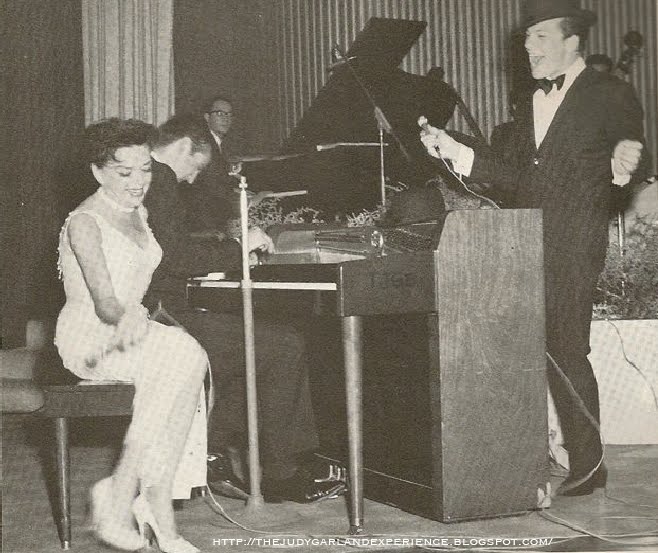
In this interview from the BBC in its coverage of the London Games in 2012, a man named Arnold Gordon talks about how he (and apparently two others) made their way through security to crash the party as it were. My guess is that Gordon is not from Sierra Leone as the AP cites, but from England. Not only did he have wondrous encounters with Judy Garland, as described here, Gordon joined the biggest party in Japan simply by walking on the field. Here is how he told the story.
We decided we would gate crash the closing ceremony so three of us got dressed up in track suits and sneaked into the stadium. They caught the other two, but I was able to run around the stadium, waving to the crowd. They were shouting, urging me on. And I waved and I waved and I ran and ran until was caught and dragged off, out of the stadium.
You can find the above interview starting at the 1 hour 1 minute mark of this program called, Saturday Live BBC.
Per David Price, ” June 23, 1964 … joining the Allen Brothers for a song during the opening night of their of their Tokyo Hilton engagement.”
Arnold Gordon was having a blast. He made his way from England to Tokyo so he could to the Tokyo Games in 1964. He hitchhiked from Paris to Pakistan, took a boat to India and then another boat from Bombay to Tokyo. He got to see boxing and gymnastics, as well as enjoy the nightlife in the area around the Olympic Village.
According to this fascinating interview of Gordon, taped by the BBC as part of the run up to the London Olympics in 2012, Gordon told this tale. You can find it starting at the 1 hour 1 minute mark of this program called, Saturday Live BBC.
I was living in Shinjuku, which was the great center of Tokyo, where everything was happening, I was sharing a house with some Australians. Now and again some of the athletes when they finished their running and jumping or whatever they did would come around to our house, and sit and drink beer. I remember a couple of Russian athletes were brought down to our house because it was a getaway from being watched and being looked after.
We would go out and eat and drink. It was wonderful. There were so many people there. Lots of artists who were working therein cabarets and shows. And we would meet after midnight at a restaurant called Manos, which was run by a rather crazy Russian. It was where we went to eat Russian food. People would come down after they finished their acts. The atmosphere was quite fun. One of the artists who was appearing in Tokyo at the time was Judy Garland. And she used to come down there after she finished her cabaret act. We got to know her very well. We got to sit and talk with her. She used to buy us drinks. It was a small group of foreigners so you got to know each other very well. In fact, one of my best friends, Peter, in fact eventually married her daughter Liza. So we mixed very well.
One evening they were playing one of her records, old vinyl, so she went up to the DJ and grabbed the vinyl off the turntable and said that’s a horrible recording. I can sing better than that. And then she sat at the piano, and sang “Over the Rainbow”. I’ll never forget it. Just thinking about it gives me shivers down my spine. It really was magical. Everybody stopped and listened to her. OK her voice was not as good as it used to be before, but it was Judy Garland singing to us, “Over the Rainbow”. But to see her, she was a bit short and dumpy. Not as attractive as she was earlier in life. But she was a feisty, fun person to be with. She sat at the piano and sang. Even today, 40 years later, I can still feel a tingle when I hear Judy Garland singing as if she is only singing to us. Oh it takes me right back, to my youth. It really does.
She was the best, holding the world record in the women’s javelin throw from May 1960 to October 1964. Elvira Ozolina, the native Latvian who was representing the Soviet Union at the 1964 Olympics, was primed to repeat as Olympic champion in Tokyo, after taking gold in Rome in 1960.
However, you have to play the game as they say. And when the competition ensued, Romanian Mihaela Penes threw nearly 7 meters better than Ozolina to win the gold medal. Ozolina threw poorly, and the Rome Champion landed in fifth place.
Then the rumors began to swirl. The US wire services filled newspapers across the country with this story from AP.
Various headlines from AP news wire stories on Ozolina
“There’s a bald-headed beauty who speaks Russian roaming the Olympic Village today. And a new Olympic mystery is swirling around her. Less than 24 hours ago the girl had beautiful, shoulder-length chestnut hair. Then she walked into a Village beauty parlor and ordered it shaved off. She walked out 20 minutes later, tears streaming down her face and her head bald as a billiard ball.”
The press suspected that it was Ozolina, but the Russian officials and press so strongly denied the report that the mystery remained a mystery. In fact, Ozolina appeared in a press conference a few days later. The AP report, without directly saying so, hints that Ozolina was now wearing a wig, but Ozolina waved the idea off. When asked why she cut her hair off, she said “Cut my hair off? Take a good look at my head.”
So did she, or didn’t she? As they say, only her hairdresser knows for sure.
Hair Salon in Olympic Village, from the book “Tokyo Olympiad 1964_Kyodo News Agency”


#/media/File:AKIRA_(1988_poster).jpg)




You must be logged in to post a comment.