From the book
From the book “The Olympic Century – XVIII Olympiad – Volume 16”

He was the best at the triple jump in the 1960s. He held the Olympic and world records in that discipline. He hopped, skipped and jumped his way to two gold medals, one in Rome in 1960 and the second in Tokyo in 1964.

And yet, there’s not much available in English about Jozef Szmidt, triple jumper extraordinaire from Miechowice, Poland.

In addition to being the first human to ever triple jump over 17 meters, Szmidt held the world record for an incredible 8 years from 1960. At the 1968 Olympics in Mexico City, Guiseppe Gentile of Italy extended 2.75 inches further than Szmidt’s mark. Gentile held that record for moments before Viktor Sanyeyev of the USSR, Nelson Prudencio of Brazil and then Sanyeyev lept progressively further for record marks.

tokyo heat WSJ
from the Wall Street Journal
I had always wondered why the 1964 Olympic Summer Games took place in October, which is a beautiful time in Japan, primarily because it is Autumn.

One reason was to avoid the typhoons of summer in Japan, which could possibly wreak havoc on a tight two-week schedule. Another reason was possibly to avoid the heat and humidity of August in Tokyo.

That is the reason raised by Terrie Lloyd, a Japan-hand who currently writes and consults on tourism in Japan. In his latest post, he wondered why officials set the 2020 Olympics in Tokyo in late July, early August. As Lloyd pointed out, we suffered through horrible heat in that period this year, with temperatures ranging from 35 to 38 degrees celsius (95 to 100 degrees fahrenheit). He claims that the actual feel on the street averaged something closer to 47-50 degrees!

The Wall Street Journal stated that “since 1964, average July-August temperatures in Tokyo have risen several degrees, as heat radiating off asphalt and buildings and coming out of car exhausts and air conditioners remains trapped at night.”

Lloyd claims that if temperatures hit an average of 38 degrees at this time in 2020, the Tokyo Summer Games would be the hottest in 120 years.

So he asks, why July/August? Well, that may seem more obvious if you follow the money. NBC has paid a king’s ransom to broadcast the 2020 Games in the U.S., and would rather not have to compete with the NBA championships in June, or the NFL season that starts in September, or the World Series that plays out in October.

By the way, if you visit Tokyo in August, it’s hot and muggy. The only good thing about that? A cold beer tastes absolutely heavenly!

ichiban shibori

karate_japantoday

Hopes high for karate’s inclusion in 2020 Olympics.

the narrow road to the deep north cover

An Olympian I interviewed told me about a time he returned from the Tokyo Olympics in 1964 and gave a talk at a Rotary Club. He spoke about how wonderful the experience was, and how friendly and helpful the Japanese were. The Olympian’s father who was at the presentation had a friend who remembered the Japanese differently, and resented the Olympian’s talk.

1964 was only a couple of decades removed from World War II. For those who served in the Pacific War on either side, atrocities were the product of everyday life, particularly in the latter years of the war.

A book I am currently reading, “The Narrow Road to the Deep North“, tells the story of an Australian POW, Dorrigo Evans, who worked on the infamous “Line”, the construction of the Burma Railway. Hundreds of thousands of slave labor, made up of PoWs and captive Asian civilian labor, perished in the effort.

This Man Booker Award winning novel by Richard Flanagan is extraordinary in its descriptions of the human psyche, not only from the hero’s survivor complex to the sword-wielding, poetry-citing slave-driving commander.

Dorrigo Evans is the surviving protagonist of the novel, and I was struck by this reference to fleeting nature of life and beauty. He and his lover Amy are lying on the beach, an idyllic time prior to the horrors that awaited months later.

Dorrigo held his arm up to the white-streaked sky and thought he had never seen anything so perfect. He closed one eye and with his other watched his finger touch the beauty of a cloud.

Why don’t we remember clouds? He said.

Because they don’t mean anything.

And yet they’re everything, thought Dorrigo, but this idea was too vast or absurd to hold or even care about, and he let it drift past him with the cloud.

Is it reference to Basho? This was one of

kobe bryant

Kobe Reportedly Looking To ‘Ride Off Into The Sunset’ With Team USA Win In 2016.

It’s corny. It’s unrealistic. It’s moving nonetheless.

It’s August 18, 1945, three days after the Emperor of Japan has declared the war over, and for all to endure the unendurable. The Japanese troops are hiding from the British in a village in Burma. But to show appreciation for a meal and a place to stay, the Japanese sing songs for their Burmese hosts.

At 6’15 of this clip from the 1985 film, “The Burmese Harp” (ビルマの竪琴), the Japanese soldiers go silent and tense up when they hear the approach of other men. Are they British soldiers? Are they Japanese? The oncoming men are singing. It’s “Home Sweet Home” (埴生の宿), a song they know. And it hits them…the song is being sung in English, and the enemy is coming their way.

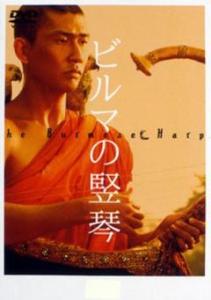
burmese harp 1985The soldier and hero of the film is named Private Mizushima, who is holding his harp as his fellow brothers in arms wait anxiously. So what does Mizushima do? He begins to play his harp, accompanying the singing of the British soldiers.

His brothers soon join in. Highly unrealistic and yet wondrous in its effect, they are enemies in the night, blending in English and Japanese, harmonizing in spirit, and feeling intensely that there indeed is no place like home.

The director of “The Burmese Harp” is Ichikawa Kon, the same director of the groundbreaking film called “The Tokyo Olympiad”. The film clip is from a re-make Ichikawa did of his own 1956 version in black and white. There are no subtitles in this clip, but you’ll get the gist.

On this day – August 15 – 70 years ago, the Japanese surrendered and the Pacific War ended

Peru Argentina Soccer Riot on May 25

  • Eleven Israeli athletes and coaches were murdered by Palestinian terrorists during the Summer Games in Munich in 1972.
  • Dozens of protestors were said to have been killed by soldiers in Mexico City 10 days prior to the start of the 1968 Olympic Games.
  • But in 1964, no violence visited the Games of Tokyo, often cited as the last “innocent” or “pure” Games. Security was relatively lax, and athletes enjoyed freedom of movement amidst a population most friendly and cooperative.

And yet, a little over 4 months before the start of the XVIII Olympiad in Tokyo, an Olympic qualifying soccer match turned into a brutally bloody affair.

The match was in Lima, Peru, on May, 25, 1964. Argentina and Peru faced off, and the winner would go on to compete in Tokyo. With time running out and Argentina leading 1-0, Peru equalized. But the referee from Uruguay disallowed the goal, sending the 40,000 people in the stadium into an uproar. A mob rushed the field, police fought back with tear gas and dogs, people were trampled, fires were set – total chaos.

In the end, Argentina went on to compete in the Olympics in Tokyo, drawing once against Ghana as well losing to host Japan 3-2. But one could only imagine their psychological state after leaving South America, where some 200 to 300 people died on that terrible day in May.

Here is a grainy video report from that tragic match.

From the booklet "Tokyo Olympic Basketball Games Guide 1964"
From the booklet “Tokyo Olympic Basketball Games Guide 1964”
Jimbocho in Tokyo is famous for dozens of stores that sell used books and magazines. One day I came upon a thin booklet called “Tokyo Olympic Basketball Games Guide 1964”. It’s a straightforward illustration of who the players on each of the national basketball teams , and what the rules of basketball are.

Youu can see here the wonderful use of illustration to explain the infractions. I find the tongue and cheekiness surprising and refreshing. The illustrated explanations for “Pushing” and “Technical Foul” show us a bit what the Japanese thought about themselves and Americans (perhaps).

See more below.

Nick Symmonds

There was a time when you could get kicked off your Olympic team for getting support from sponsors, an affront to the idealism of amateurism in the 1950s and 1960s. Today, you can get kicked off your team for not accepting support from sponsors.

Nick Symmonds is a USA Track and Field 800-meter champion, but will not be invited to the IAAF Championships in Beijing because he does not want to wear Nike gear outside of competitions, award ceremonies and press conferences. Apparently the sponsorship contract the USTF has with Nike includes “other official team functions.”

Symmonds is personally sponsored by Brooks, and believes he should be able to wear Brooks gear when not competing, accepting awards or talking with the press. “I deserve the right to know what an official team function is,” Symmonds said in a New York Times article. “They haven’t defined that yet.” the article continues to quote Symmonds as saying “the federation apparently wants him to wear Nike gear for the world championships from the time he leaves his apartment in Seattle. That’s absurd.”

According to Runner’s World, Symmonds had to sign a document saying