My favorite team in sports, The New York Mets, were actually up and coming, after 13 years of supreme suckiness. Hope springs eternal, but it was especially true for Mets fans in April of 1985.
And when Sports Illustrated came out with the story, “The Curious Case of Sidd Finch”, I was ecstatic. Really, the Mets have a prospect who can throw a fastball 168 mph (270 kmh)? He wore one shoe, he played the French horn – well these eccentricities were proof that it had to be true. After all, there were pictures of him, and his locker was between those of George Foster and Darryl Strawberry. After 13 years in the wasteland, our savior had come!
George Plimpton wrote the piece that set off a media firestorm. TV news crews were sent to Florida to interview the mystery pitcher on the Mets. But no one could find him. And then two weeks later (remember, this is pre-social media), New York Mets fans woke up.
April Fools.
Writing an April Fools story is walking a fine line between incredulity and credulity. It’s got to be believable enough, and yet outlandish enough to make you go, “Say what?” Here are a few April Fools’ stories regarding the Olympics.
On April 1, 2014, this video was released announcing that skateboarding would be an Olympic sport in 2016. A day later, it was revealed to be a prank. Of course, as we know now, skateboarding is actually one of the five new sports that Tokyo 2020 is recommending for the 2020 Games.
Last year, twelve-time Olympic medalist over five Olympic Games, Dana Torres, announced she was coming out of retirement to compete at the Rio Games. Yes, she was 47. But yes, she was a swimming legend and still in fantastic shape.
Subject: Yang Chuan-Kwang. 1960 Olympics. Rome, Italy. Photographer- George Silk Time Life Staff merlin-1140594
They called him the Asian Iron Man, a title befitting the only Asian ever to set a world record in the decathlon, the ten-event, two-day athletic event that is as grueling an athletic competition there is.
As the first non-Westerner to set a world record for the decathlon in 1963, experts pegged C. K. Yang as a heavy favorite to win gold in Tokyo in 1964, and prompted this profile in the August, 1964 edition of the popular magazine, Boy’s Life. In this article, they wrote about Yang’s humble origins, a small, sickly boy. Not mentioned in the article was that he was born in the poorest, most isolated part of mainland Taiwan – Taidong.
So when the arguably greatest athlete in Asian history provides his list of key behaviors for training for championship performance, the readers of Boy’s Life might have taken note:
Determination.
Discipline yourself.
Practice with a purpose.
Don’t just run and run, and then go home.
Watch people running.
Appreciate what your coaches are doing for you.
Let ‘s look at a couple in detail:
Determination.“Want to do it, know that you can do it, then DO IT!”
Yang came up with Nike’s famous marketing phrase years before the company was created…but he knew from experience that being determined is a good part of the battle. When he made the cut to represent Taiwan in the Asian Games in 1954, he was probably going to compete in the broad jump or the high jump. When he went to his country’s training camp in preparation of the Asian Games, he began fiddling with other disciplines. He explained this in detail in this Sports Illustrated article:
Yang’s curiosity and competitive drive moved him to experiment with other events, hitherto strange to him. He set up a bicycle and used it as an impromptu hurdle. He read a Japanese book on hurdling – Yang speaks and reads Japanese fluently because of his schooling under the Japanese occupation – and studied its illustration. “I tried to bring the whole thing together in my mind,” he said, but his coach became irritated because Yang was not concentrating on his jumping. Yang said, “I told him I just can’t jump every day. If I practice hurdling today, maybe tomorrow I can jump more higher.” And I did. I jumped 2 or 3 inches higher.
And as the article continues, Yang did the same for javelin, the discus and the shotput, excelling in this new events to the point where the coach had to say, “How’d you like to try decathlon?”
Appreciate what your coaches are doing for you. Appreciate the fine equipment you have to work with, and then give your best. I came all the way to this country to take advantage of the coaching and equipment available here. Through track I have received an education, and because of this, I have given track everything I have.
Yang, and his coach at UCLA, Ducky Drake, to his right
In the Sports Illustrated article, Yang tells this touching story about how people need to have empathy for others who try so hard. He explained to the author of the article, Robert Creamer, that people made fun of him when he was about 15, and he suddenly grew. He was so tall and thin compared to his friends that people derisively nicknamed him “Bamboo”, and laughed at him, which Yang was understandably sensitive to. He told this story about how his baseball coach helped him gain his confidence.
In practice when I throw the ball I was – so funny form, you know? I couldn’t throw hard. The athletes start laughing at me. I was so happy to join them, and I was so embarrassed when they laugh at me. The coach was mad. He bawled them out who laughed, and he said, “if you laugh at people someday he will be much better than you are. You better not laugh at people. You never know. He have a long way to go, and maybe he can learn faster than you and someday laugh at you. Put yourself in that position. Suppose people laugh at you. How do you respond to them? How do you feel?” Said, “think about it.” And they didn’t laugh at me anymore.
World’s Best Athlete – C. K. Yang December 23, 1963 X 9612 (X 9456) credit: Mark Kauffman – contract (BG Eric Schaal)
Before there was Jeremy Lin or Yao Ming, Tiger Woods or Se Ri Park, Nomo or Ichiro, or even Bruce Lee for that matter, there was C. K. Yang.
Iconic Asian athletes are far and few between, but Yang Chuang-Kwang, or C. K. Yang as he was popularly known, was called The Greatest Athlete in the World several times in the late 1950s and early 1960s.
Competing in three Olympics as a decathlete – Melbourne in 1956, Rome in 1960 and Tokyo in 1964, Yang of Taiwan set an indoor record for the pole vault in 1963, set the world record in the decathlon later that year, and still is the only Asian to ever hold the world record in that category. And in an epic, down-to-the-wire finish, Yang lost the gold medal to his best friend and biggest competitor, Rafer Johnson of the United States, at the Rome Summer Games.
He did not win the championship, but he made an entire nation, and quite possibly, an entire race proud. And there was one person in particular who was immensely proud – Mr S. S. Kwan.
Yang sat down with Robert Creamer of Sports Illustrated for a lengthy interview, and in this article, Yang expressed his keen gratefulness to Kwan, who was a successful architect and businessman who supported Yang’s development. In fact, Kwan, who was the president of the China National Amateur Athletic Federation in Taiwan, personally financed Yang’s travel and living expenses when Yang visited the United States to get experience in AAU meets.
Ducky Drake
Eventually, it was recommended that Yang stay in the US, where he enrolled at UCLA to train under the renowned coach, Ducky Drake, and become teammates with rising star, Rafer Johnson. Kwan supported it all.
“He (Kwan) was like a father, you know,” Yang told Creamer. “And then at Rome, I got second place, Mr. Kwan was so happy. I never saw him so happy as he was at Rome. He said, ‘Ahh! Now I have
A photograph by Hengki Koentjoro (Tobin Ohashi Gallery)
One of the most iconic images of Japan is the cherry blossom. It is both symbol and example of beauty that charms young and old, cynic and saint, natives and non.
The beauty of the cherry blossom is inherent, but enhanced by time – the uncertainty of when they bloom, whether March or April, and the brevity of their bloom.
For about two weeks, we are enthralled by the sakura, whether it is a single blossom, a lone cherry tree on a road, or a park-filled celebration of delicate pink and rose-tinted white. We forget ourselves as we stare from an elevated train platform into a sea of cherry trees, filled both with hope and humility.
That period is just commencing in Tokyo.
When Tokyo won the bid for the 2020 Summer Games, the logo for that bid was a wreath of cherry blossoms. Designed by an arts graduate student from Tokyo University, Ai Shimamine, the ever-present logo showed a ring of cherry blossoms in the Olympic colors of red, blue, green and yellow, with black replaced by purple. Shimamine submitted her design organized by the Tokyo bid committee believing that the cherry blossom was an excellent way to represent her country, according to this interview.
Arts graduate student from Tokyo University, Ai Shimamine, whose design graced the Tokyo 2020 Candidate City bid logo
Cherry blossoms are our national flower that represents Japan and are loved by many. They also symbolize the Japanese spirit, as cherry blossom trees have been sent to countries around the world as a tribute to peace and friendship. The most important point about this logo is that it is a wreath. I once saw a scene in a foreign film where a wreath was laid on a grave and wondered about the meaning behind the gesture. When I looked it up, I discovered that wreaths carry a message of “coming back again.” I took this concept and infused the hope that Japan will recover its vigor and courage through sports.
The cherry blossom logo was popular, and certainly linked to the tremendous feelings of happiness and pride when Tokyo won the bid for 2020. But, for some reason still unclear to me, the International Olympic Committee does not allow the local organizing committee to use the candidate city logo as the official logo for the Games and Paralympics.
The Tokyo 2020 Candidate City Bid Pin
Thus, the Tokyo Organising Committee of the Olympic and Paralympic Games (TOCOG) had another competition last year to select a new logo, which turned into a PR fiasco. Many of the logo corporate sponsors, eager to show off the new logo, had to rush to change their marketing materials and commercials to replace the now notorious logo, and TOCOG launched yet another design competition. Open to the public, the initial draw yielded over 10,000 designs. Subsequent rounds dropped the number of entries under consideration to four.
The final design, according to this website, is supposed to be decided by the Emblems Selection Committee sometime in the Spring. Exactly when is not clear. But that, I suppose, is the beauty of Spring in Japan.
Rikidozan was one of the most well-known people in Japan in the 1950s. Starting out as a sumo wrestler, Rikidozan made his mark taking on American wrestlers, and defeating them. This time is only a few years removed from the end of the American occupation, a psychologically disorienting time as Japanese swung from superior overlords in Asia to beaten and despairing at the end of the Pacific War. Taking on the Americans in the ring and knocking them into submission (even if they were to script), built up the morale of the Japanese, and made Rikidozan a national hero of unparalleled stature.
The picture below is a testament to Rikidozan’s pulling power. In the 1950s in Japan, black and white televisions were available, but were still too expensive for the common person. Movie theaters were booming, but they could not show live broadcasts. So when there was a major event broadcast live, the major Japanese networks like NHK and NTV would set up televisions at train stations, temples, shrines and parks and invite people to watch free of charge. And no one pulled in the crowds like Rikidozan.
AP Photo/Max Desfor
One December evening in 1963, Rikidozan was at a night club called The New Latin Quarter in downtown Tokyo when he apparently bumped into another person as he was leaving the rest room. Rikidozan apparently demanded that the other person, a gangster named Katsushi Murata, to apologize. Murata did not, Rikidozan wrestled Murata to the ground, and Murata sent a knife blade into the wrestler’s abdomen. Rikidozan died a week later.
Ten months later, on October 23, on the second-to-last day of the Tokyo Olympics, Japan was again reminded of Rikidozan when they read the news that Murata had been sentenced to 8 years in prison.
The Tokyo Olympics lifted the spirits of Japanese throughout the country in those magical two weeks in October, 1964. Rikidozan, the Father of Japanese Pro Wrestling, had already been doing that for years.
Ibitihaj Muhammad was invited to speak at South by Southwest (SXSW), the popular culture, media, technology conference in Austin, Texas. When she arrived to check into the conference, she was asked to remove her hijab so that a photo ID could be taken.
During the panel discussion entitled, “The New Church: Sport as Currency of American Life”, Muhammad said “I had a crappy experience checking in. Someone asked me to remove my hijab isn’t out of the norm for me. Do I hope it changes soon? Yes, every day.”
Muhammad is the first Muslim woman to join Team USA and represent America in the Olympics. She is a sabre fencer who got into fencing when she noticed as a young teenager that fencers have to cover their entire body from head to toe. In other words, she can wear her hijab and compete without any concern for what people will think or feel.
But fencing may be one of those uncommon sports where one can wear something on your head without a rule being invoked or disapproving stares cast your way.
In August 2014, officials of the International Basketball Federation (FIBA) at an international basketball tournament in China insisted that two Sikh players representing the India team play without their turbans. Why? Because FIBA rules state that “Players shall not wear equipment (objects) that may cause injury to other players”, which apparently includes hijabs, turbans and yarmulkes.
Despite the fact that the opposing players in that game did not mind that the Indian players wore turbans, and that the coach of the Indian team, Scott Flemming had apparently already attained approval from FIBA for his players to wear turbans, FIBA officials at the game still decided that the rules were the rules.
I know that US bureaucracy has a few rules for headshots for passports and driving licenses, and I know they don’t allow you to wear anything on your head. But as it turns out, the US government realizes that while rules are rules, you do need to be flexible in maintaining other rules (e.g.: the first amendment of the US constitution). The US State Department clearly states that there is an exception for headgear used “for religious purposes” are allowed, as long as the face is fully visible.
US State Department passport photo rules
Hijabs, turbans and yarmulkes in various sports like basketball and soccer have not proven to be a safety risk, any more than any other piece of clothing worn during a competition. And yet, the fact that Muhammad is in the news because she is wearing a hijab in addition to the fact that she is a gifted athlete, and that I am writing this blog post indicates that the hijab and the turban are less about safety and more about a conflict of values.
There is power in being the first. It would be wonderful for Muhammad to do well at the Rio Olympics, to show a whole generation of Muslim women in America (and perhaps in other countries) that values and attitudes can change, and that new possibilities for them are opening up.
Moon Tae Jong of South Korea (L) passes a ball as Amjyot Singh of India (R) defends during their preliminary round match between South Korea and India at the 26th Asian Basketball Championships in Wuhan in China’s central Hubei province on September 17, 2011. South Korea won 84-53. AFP PHOTO / LIU JIN (Photo credit should read LIU JIN/AFP/Getty Images)
Peter Snell ahead of George Kerr of Jamaica, Wilson Kiprugut of Kenya (bronze) and Bill Crothers of Canada (silver)
Peter Snell was confident. He had ran a time trial run of 800 meters in 1 minute and 47 seconds, a very fast time in 1964, despite the poor conditions of the track. This is when he knew he was peaking at the right time, and thought, not only could he win the 800, but also the 1500 meter competition at the Tokyo Olympics.
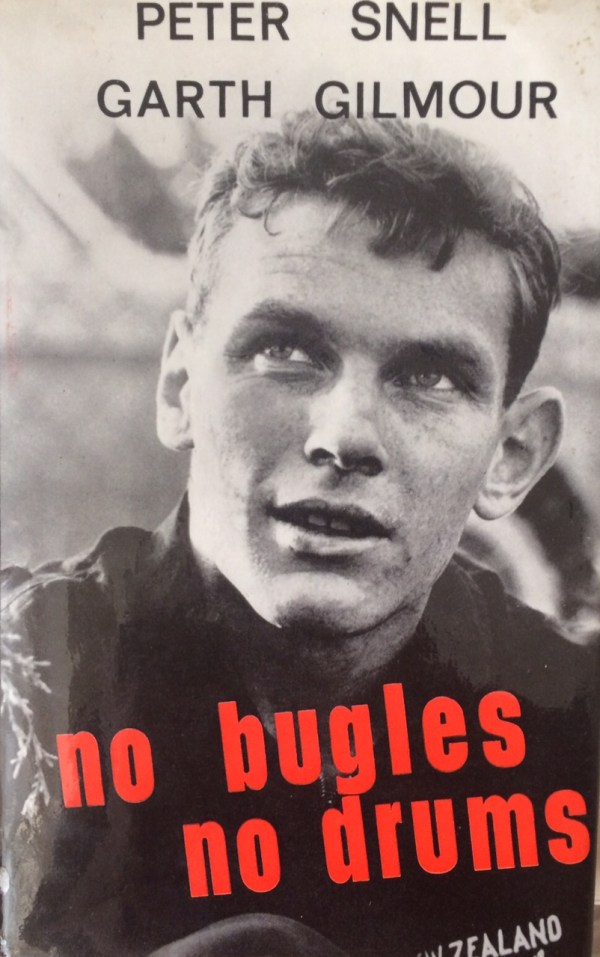
In the finals of the 800 meters, Snell drew the first lane, which he thought was unlucky because he would have to either “go like a madman and hit the front so you can maneuver with the field behind you and allow only as many pass as you want, or you can start slowly and try to work your race from the back of the field,” he wrote in his autobiography, No Bugles No Drums. “Either way can be troublesome and an in-between start can cause all sorts of jostling and tangling.”
With that understanding, Snell chose the first option with the intent of just trialing the lead runner, Wilson Kiprigut of Kenya, who was expected to jump out to a fast start. By sticking to the shoulder of the pacesetter, he would be able to avoid being boxed in and slowed. As it turned out, Kiprigut did not race out to the lead, and Snell ended up boxed in amidst a group at the front.
With 250 meters, Snell’s plan was to go all out. But he was trapped.
My pre-race plan had called for a sustained sprint from about 250-to-go. Now the whole position was confused. I was running easily within myself and, unlike Rome, where the circumstances were similar, I felt I was capable of dropping back out of the box, going around the field and still being able to challenge. That’s what I had to do. This involved two separate moves: a surge from the rear of the field to about fourth position with a clear run three or four wide which took me to the end of the back straight; then a second and final effort as I fought past Kiprugut and Kerr, who were locked together, and sprinted desperately into the curve. It was desperate because my plan had gone wrong and my run was coming late against fast finishers.
But soon, desperation gave way to elation. Snell hit the tape, setting an Olympic record. Despite having to drop back and swing wide to take the lead, Snell still relaxed at the end, as he wrote, “subconsciously” holding back for the 1500 meter competition to come.
Watch this video highlighting Snell’s exciting victory in the 800 meter race in Tokyo.
Peter Snell of New Zealand, from the book “The Olympic Century – XVIII Olympiad”
Peter Snell was the 800-meter Olympic champion, coming out of relative obscurity to set an Olympic record at the 1960 Olympic Games in Rome and win the gold medal. But in Tokyo in 1964, Snell was not only the favorite in the 800 meters, he and many others were expecting him to compete and win in the more glamorous 1500-meter race.
While our stereotypical view of Olympic champions are they are super confident and expect to win, the reality is that many oscillate between expectations of victory and the inevitability of disaster. Peter Snell of New Zealand may have exemplified the latter.
As British Olympic reporter, Neil Allen, noted in his book, Olympic Diary Tokyo 1964, Snell was shy and filled with doubt prior to the start of competition.
Two years ago the shy New Zealander and I had sat on the grass in Geraldon, Western Australia, and I had listened to him ponder, with worried brow, his problems in training for the forthcoming Commonwealth Games. Now he was behaving as though he was the last man in the world to hold the records for 800 meters, 880 yards and the mile, the last man you could imagine had won the Olympic 800 meter title four years ago.
“Running both events here might take it out of me, you know,” he said, staring at the ground. “My training was going so badly back at the beginning of last month that I got to the pitch where I couldn’t care less about the Olympics. There are times when you wonder how on earth you could run a 4:30 mile. You no longer have the ability to punish yourself.”
After a successful trial run in the 800 meters, Snell decided he would go for both the 800 and 1500 meter championships. He understood the ramifications of having to run heats in both races, with the possibility that the effort and strain of competing in both could mean doing poorly in both. And those doubts would not go away, as Snell wrote in his autobiography, No Bugles, No Drums.
My most nerve-racking period of the Games was the night before my first race. I’d made the decision to try for the double and promptly that night all sorts of doubts crowded into my mind in a sleep-wrecking procession. Quite seriously I wondered whether the decision was the right one. I felt I could produce a really good performance over 1500 meters. But if I ran in the 800 meters first, there was a strong possibility that not only could I run out of a place in that event – or even fail to qualify at all – I could find myself too tired for the 1500. I could, through tackling both, miss out on both. Was I being too greedy?
What does it take to go from London to Rio on human power? Physically fit, mentally strong, well organized fanatics on a mission.
On January 9 of this year, 2 men and 2 women got on their bikes and cycled over 2,400 miles from Olympic Park in London to Lagos, a port town in southern Portugal. On January 31, they left Lagos and started rowing a 8.6 meter long boat called a Rannoch R45, which can house four or five people uncomfortably, allowing three people to row at the same time. They are currently close to the halfway mark rowing a total of 3,600 miles with the intent of hitting land at Recife, Brazil. From there, they will cycle down the Brazilian coast to Rio de Janeiro, which should take another four weeks.
The mission is raise awareness of the upcoming Rio Olympics, making the literal connection between the past 2012 Olympic venue with the future 2016 venue. But on the way, they are raising funds for cancer research, as well as their journey’s operations.
The four team members are:
Susannah Cass: a 27-year old PhD student of botany from Dublin
Jake Heath: a 29-year old podiatrist from Twickenham
Mel Parker: a 27-year old fundraiser for a children’s charity from Gloucestershire
Luke Richmond: a 31-year-old cross-fit and Olympic lifting coach from Australia
And their posts on the journey rowing south 24 hours a day are fascinating:
Luke Richmond, Day 1-3: It was a brutal first day and night, sea sickness had three of us spewing all at once, only Jake seemed un effected. I was sure I was about to die.
Jake Heath, Day 1-6: The trip so has been life changing already, because I have realized how much you can push your body, if you can keep breaking things down on the small tasks, like the two hour stretch in front of you. I am currently switching inwith Luke every two hours for 24 hours a day, as we row our way across to Brazil. The girls are also switching with each other, every two hours, but staggered by one hour with us, so everyone gets to spend some time together.
Jake Heath, Day 7&8: We have been on what seems like a giant conveyor belt of water and big waves. It’s all good and going in the right directions for us to reach the canaries in two days and then push on to Cape Verde straight after. The sea swells are pretty big and at night they can catch you off guard and just crash over your head. Last night Captain Susannah caught a high wave, which went all over her, but I luckily was out of the rowing seat having a stretch and remained bone dry. Carbon copy thing happens to Mel the next I shift, this time I was getting a drink and avoided it once again. I know what you are thinking? I promise I am actually doing some of the rowing!
Mel Parker, Day 18: Imagine your bed is 1m by 1m, around your little square of bed you have everything tied to the walls – your wardrobe, toiletries and a few days food. Above you you’ve got all the comms and electronics you could need to get you safely across an ocean. Behind your head you have the worlds noisiest neighbour, which sounds like a robotic Jurassic park, but is working hard to make sure you’re steering in the right direction.
If you’re interested in making a donation to help the MacMillan Cancer Support organization fight cancer, go to this link.
If you’re interested in following the exploits of this fantastic four, here is a link to their blog – Row2Rio. And stay tuned!
Yes, I agree: I can never remember which one is the Australian flag, and which is the New Zealand flag.
Apparently, heads of state for both countries have been seated or presented in front of the other country’s times more than a few times.
To presumably improve brand recognition of his country, as well as do away with the Union Jack in the upper left-hand corner, Kiwi prime minister, John Key has put it to the people in a referendum whether to keep the current flag, or go with a new version, seen below.Proposed in place of the Union Jack is the fern leaf, certainly a more popular symbol of the nation, most commonly seen internationally on the dark jerseys of the intimidating national rugby team, The All Blacks. Unfortunately, according to this article, New Zealanders regard the proposed design with ambivalence, at best. Many want change for the same reasons as the prime minister, but not to the one that is often called, not so affectionately, a beach towel. In fact, according to a recent poll, times may be a-changin’, but perhaps not for the Kiwi flag.
…it doesn’t appear that replacing the country’s flag is actually all that popular with New Zealanders. In a poll conducted in February, 70 percent of the population said they were against the change, though 16 percent of those voters specifically only oppose the new silver fern design.
So which flag will New Zealand Olympians see when they win gold in Rio for the 2016 Summer Games? We’ll find out on March 24, the final day that New Zealanders can vote in this referendum.


 He explained this in detail in this Sports Illustrated article:




You must be logged in to post a comment.