Your child is talented – talented enough to make it to the highest levels of competition, like the Olympics. You’ve driven her countless hours to and from practice, begged time off from work yet again to be with her at a meet, cried out when she fell, massaged her creaky calves to make the pain go away, wept as she was carted off for surgery, and went bananas upon the moment of her triumph.

RaismanParents

The video at the top of the page is of the parents of Aly Raisman, who won gold medals in the team and floor women’s gymnastics competitions at the 2012 London Olympics. The expressions, the body language, the sounds of the parents are so explicit that we cannot help but feel their anxiety. We understand that these parents have had their fair share of sacrifice, pain and joy. As the writer of the book, The Secret Olympian wrote, that is the price of athletic success for many.

To make it in sport you need others to sacrifice their goals. To make it in sport you need others to sacrifice their time, and often money, for you to make it. I didn’t speak to a single Olympian who didn’t recognize the huge burden they were to their parents when growing up. My parents spent thousands of hours at weekends and week-nights, driving me to and from training and to races across the country, and spent thousands of pounds on coaching, training camps and kit (and sating my excessive appetite!)

Aly Raisman's Parents 2.jpg

The parents of Aly Raisman will be featured in an upcoming television series in America called “Gold Medal Families”. In it, Raisman’s mother is quoted as saying:

“Time is such a precious commodity, and the impact on family time was tough,” says Lynn, whose daughter is looking to make the team for a second time in July after winning gold in the floor exercise event in London in 2012. “Around the time Aly was 10, she reached a level where her coach did not want her out of the gym during school vacations. There were a number of times where my husband took her siblings away … and I stayed home with Aly. There were birthdays, holidays and family gatherings she missed because she had [to go to the] gym. Even just regularly missing daily family dinners was hard.”

Aly Raisman was in St Louis for the US Olympic Team Trials in gymnastics. On June 26th, Raisman, at the rather elderly age of 22, won a spot on the American team headed to Rio in August. Can her parents stand the pressure?

Aly Raisman's Parents 3


Indian Club Variety

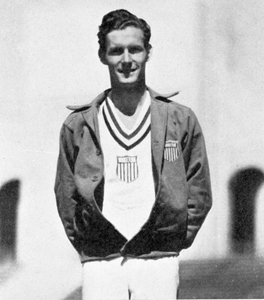
In 1932, George Roth won the gold medal in India Club Swinging.

I had no idea what that was, but if my imagination were allowed to run wild, my first thought would not have been sport.

Back to the Olympics.

George Roth
George Roth, gold medalist in indian clubs, 1932 Los Angeles Olympics

Roth, who won his gold medal at the Los Angeles Olympics in 1932, and was so poor he could not afford to travel to across the city to get to the LA Coliseum and receive his gold medal in the award ceremony. He had to hitch a ride three times, and I suppose at that time, only the wealthy had cars, because of his impromptu taxi drivers was the famed entertainer, Jimmy Durante.

Indian Club swinging in 1932 was experiencing its death throes as a competitive sport. Popular really only in North America, Indian Clubs had its last major competition in 1953. Today, a few health gurus market Indian Clubs as an excellent way to build lung capacity, strengthen shoulder joints, and build general upper body strength.

OK, so what is Indian Club Swinging? Here’s how Roth describes it in the book, Tales of Gold:

Indian clubs look a little like bowling pins, but they are skinny and have long necks with a small, round knob at the top end. What you do is twirl them around your body – in front, in back, and on the sides – without letting them touch each other or yourself. The routines lasted for four minutes, and you couldn’t stop or hesitate or repeat any pattern that you already had done.

Below is a video showing the basic movements for Indian Club swinging.

So why do we call this sport, Indian Club Swinging? Back in the day, when the sun never set on the British Empire, and the Kings and Queens of England were the rulers of India. Europe, particularly London, was experiencing the nastiest effects of the Industrial Revolution – overcrowded, polluted, disease-ridden cities. At the same time, men of

Kristof Willerton at the Tumbling World Championships, November 20, 2011
Kristof Willerton of Great Britain competes during the 28th Trampoline and Tumbling World Championships

Power tumbling is amazing! You don’t have to know anything about the sport to see how incredibly athletic and powerful these tumblers are. Just click on the above image and watch the video!

Tumbling is a discipline within gymnastics. In a floor exercise at an international competition like the Olympics, you would see a series of tumbles and transition routines over 70 to 90 seconds performed on a floor 12×12 meters. The floor exercise goes fast and slow, and can be both artistic and beautiful.

Power tumbling is all about speed, and yes, power.

The track for power tumbling is over 25 meters long, with a long runway just to get to top speed. And over the years, this tumbling mat has undergone technical tweaks to provide a bit of bounce: mats with skis underneath, mats with springs, and today, mats supported by fiber-glass rods. Once the tumblers hit top speed on these long bouncy tracks, their momentum and athleticism blast them off on a series of cartwheels, somersaults and handsprings that are performed in jaw-dropping succession.

Tumbling was once an Olympic Sport. It premiered and ended with the 1932 Los Angeles Olympics. The United States swept the medals, with 17-year old Rowland Wolfe taking gold. Unfortunately, only 4 athletes contended the tumbling competition. Poor István Pelle of Hungary finished fourth, missing a medal despite the 75% chance of doing so. With the poor turnout, tumbling never made it back to the Olympics as an official sport, although it did make appearances as a demonstration sport at the Atlanta Games in 1996 and the Sydney Games in 2000.

Here is a video of Wolfe doing a few tumbling routines on the grass – pretty impressive! Nice to imagine what he could have done on the mats today.

Oksana Chusovitina in Six Olympiads

When she arrives at Rio de Janeiro for the 2016 Summer Games, she will have turned 41 years old. For most Olympians, that’s old. For female gymnasts, that’s ancient.

Oksana Chusovitina was selected as a member of the Uzbekistan’s women’s gymnastics team. And while Chusovitina will be far more than twice the age of her teammates and competitors, she will also have infinitely more experience. The Rio Olympics will be her seventh Olympic Games. Not only has she competed in seven Olympic Games, she has done so, essentially, for three different teams:

  • The Unified Team (participants from former USSR): 1992 Barcelona Games
  • Uzbekistan: 1996 Atlanta Games, 2000 Sydney Games, 2004 Athens Games, 2016 Rio de Janeiro Games
  • Germany: 2008 Beijing Games, 2012 London Games

Here is a basic fact. Since 1972, the all-around Olympic women’s gymnastics champions have been 20 years old or less, the majority of them being teenagers. There is a biological and evolutionary reason for this, according to a fascinating book I am currently reading on the science of athletic physiology, The Sports Gene: Inside the Science of Extraordinary Athletic Performance, by David Epstein. He writes that girls and boys physically mature at practically equal rates until the age of 10. Top running speeds, for example, are the same for 10-year-old boys and girls. But boys get a significant boost in athletic prowess from the start of puberty around the age of 14. Girls at the age of 14 tend to peak physically in some respects. For example Epstein explains that the average female runner is already approaching her fastest lifetime sprint speed by the age of fourteen.

Epstein also explains that female gymnasts need slim hips and low centers of gravity to perform swiftly and agilely at the international level. Unfortunately for aspiring female gymnasts, biology conspires against them.

The Sports Gene Book Cover 2013Studies of Olympians show that an important trait of female athletes in certain sports is that they don’t develop the wide hips that many other women do. If elite female gymnasts go through a significant growth spurt in height or hips, their career at the top level is essentially over. As they increase in size faster than strength, the power-to-weight ratio that is so critical to aerial maneuvers goes in the wrong direction, as does their ability to rotate in the air. Female gymnasts are pronounced over the hill by twenty, whereas male gymnasts are still early in their careers.

In other words, Chusovitina is an outlier of significant proportions, an aging gymnast who has sustained the proper power-to-weight ratio while maintaining the training, the technique, the stamina and the mental strain to compete at an Olympic level.

She won a team gold medal in 1992, and a bronze medal in the individual vault competition in 2008. At the age of 41, can Chusovitina, still a top ten vaulter in the world, find Olympic glory one more time?

Roy_1965 maybe
Roy, around 1 years old

On May 1, 2015, I kicked off my blog, The Olympians, with the intent of providing at least one blog post every day. Here we are, 365 days, over 10,000 visitors, nearly 20,000 views later, and I have kept my promise. Many thanks to all those who have helped me along the way!

Below are 20 of my favorite posts in 2016:

  1. The 1962 Asian Games: How Cold War Politics Sparked Heated Debate, Leading to the Indonesian Boycott of the 1964 Games
  2. “Do it Again. Again. Again.”: The Uncompromising Mindset of an Olympic Champion
  3. The Dutch Boycott of the 1956 Olympic Games Part 2: Rehabilitation
  4. The Hijab and The Turban: Why American Fencer Ibtihaj Muhammad is Important  
  5. Dr Jega: The Fastest Man in Asia Learns that Life Works in Mysterious Ways
  6. Duke Kahanamoku Part 1: Surfing’s Johnny Appleseed Inspires Australia’s Pioneering Surfers and an Entire Sports Culture
  7. Japanese Face Off in Australia on the 15th Anniversary of Pearl Harbor
  8. Ken Sitzberger and Jeanne Collier: Diving’s Power Couple in 1964
  9. The Pain and Joy of Pain: Dick Roth and the Gold that Almost Wasn’t
  10. The Perfectionist’s Dilemma: The All-or-Nothing Life of Hurdler Ikuko Yoda
  11. Rare Canadian Gold in Tokyo: George Hungerford and Roger Jackson Win the Coxless Pairs
  12. The Record-Setting Row2Rio Team: Following in the Footsteps (Sea legs?) of Christopher Columbus
  13. Remembering the 3.11 Earthquake and Tsunami, My Ancestors, and the Tokyo Olympic Cauldron
  14. Sazae-san Part 3: Suicides and The Pressure Cooker of Japanese Education
  15. Simple is Best: Finally, The New Tokyo 2020 Olympic and Paralympic Logos
  16. Singaporean Cyclist Hamid Supaat and the Big Chill: Competing on the World Stage
  17. The “Six-Million-Dollar-Man” and “Real Steel” Scenarios: Science and Technology Blurring the Lines and Creating New Ones  
  18. Tommy Kono: Out of an Internment Camp Rises Arguably the Greatest Weightlifter of All Time    
  19. Unbroken: The Truly Epic Story of Louis Zamperini Finally Shown in Japan
  20. Worrying Willy and Paradise Pete: How the US Army Prepped Recruits for Japan in the 1950s

Click here for my favorite posts from 2015! Again, many thanks for all your support!

“I am, indeed, a king, because I know how to rule myself.” – Pietro Aretino

There’s a powerful message in the Under Armour “Rule Yourself” campaign. Being the best is hard work!

The most recent iteration of the Rule Yourself campaign features the greatest swimmer of all time, Michael Phelps, who hopes to add to his record number of gold medals at the Rio Olympics later this year. But as the commercial is trying to convey, Phelps’ achievements didn’t come only because he has natural talent, but because he applied an unnatural effort, sacrificed, and then achieved.

A few weeks ago, Under Armour released a commercial featuring members of the US women’s gymnastics team, also putting on display the rigorous training regimen of athletes competed to reach the highest levels of excellence.

There was a time people would say there is genius in the world, that the Mozarts and Tiger Woods of the world were born with talent. They were the chosen ones. There may very well be genetic advantages that can be parsed out. But a more likely explanation is that they worked hard at their craft. And in fact, research has shown that the greatest of the great, in any discipline, have often applied at least 10,000 hours of practice.

outliersOne of the populizers of this hypothesis is the acclaimed journalist, Malcolm Gladwell, who has developed a knack for featuring the best of the best in his stories. In the book, Outliers: The Story of Success, he writes extensively about the 10,000 hour rule, and quotes author and neurologist, Daniel Levitin to explain.
“The emerging picture from such studies is that ten thousand hours of practice is required to achieve the level of mastery associated with being a world-class expert – in anything,” writes the neurologist Daniel Levitin. “In study after study, of composers, basketball players, fiction writers, ice skaters, concert pianists, chess players, master criminals, and what have you, this number comes up again and again. Of course this doesn’t address why some people get more out of their practice sessions than others do. But no one has yet found a case in which true world-class expertise was accomplished in less time. It seems that it takes the brain this long to assimilate all that it needs to know to achieve true mastery.”

Ten thousand hours.

It is as large a number as it seems. If 10 years is 3650 days, and thus 87,000 hours, then to get to 10,000 hours over ten years, you would have to spend nearly 3 hours a day training or practicing. Imagine a 20-year-old woman who makes the Olympic Games. From the age of 10, she’s spending finding time on the rink once or twice day, with longer days on the weekends…for ten years. This doesn’t include the travel time for her and her parents, the pain, the emotional highs and lows, the struggle to maintain school attendance and grades, and an even more heightened sense of self and insecurity as she struggles in her quest through puberty and her teens.

They make it look easy. But it isn’t. For first, you must rule yourself.

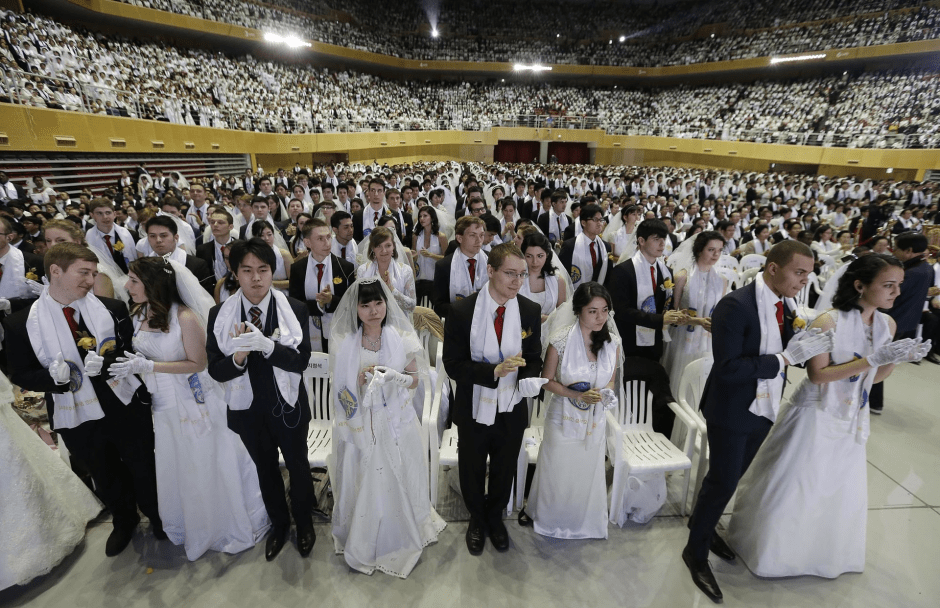
unification mass wedding_February 2016

On Saturday, February 20, approximately 15,000 couples, or 30,000 people were married at a single event called The Holy Marriage Blessing Ceremony, in GapYeong, South Korea. Popularized by Unification Church founder, Reverend Sun Myung Moon, 3,000 of those couples were married in Korea, while the other 12,000 participated via the internet.

One third of the 3,000 couples who were married in the Church’s CheongShim Peace World Center were renewing their vows. But about 800 of the couples agreed to be matched by the Church, a custom that Reverend Moon had heavily endorsed in the past. In fact, these unions have often brought strangers of different nationality or race together.

Rev. Moon, who passed away in 2012, had presided over some of the biggest mass weddings ever, including 30,000 couple in Washington DC in 1997, and 40,000 couples simultaneously in Korea, US, Brazil and Venezuela in 2009.

The Unification Church and its mass marriages are not without their controversy. To nameHiroko Yamasaki one, since this is a blog about the Olympics, is the case of Hiroko Yamasaki (山崎浩子), who was a member of the Japanese rhythmic gymnasitics team at the 1984 Los Angeles Summer Games. Along with a well-known singer and actress, Junko Sakurada, Yamasaki was married at a mass wedding presided over by Rev. Moon, along with 20,000 people from 130 countries, in August of 1992.

According to this account from the newspaper, The Australian, Yamasaki disappeared. No one knew where she had gone, not even her new husband, Hideyuki Teshigawara. Months later, Teshigawara filed a missing person’s report to the police, which led to a nation-wide search for the Olympian.

And then suddenly, one day, Yamasaki appeared, on television, saying “Everything was a mistake.” She went on to say, “I was placed in a world of delusion where people’s minds were being controlled. So I still cannot figure out to what extent the affection I felt towards Teshigawara was real.”

Over two decades later, Yamasaki is now the national coach of the Japanese women’s rhythmic gymnastics team.

FIG Rhythmic Gymnastics World Championships 2014
Hiroko Yamasaki (JPN), SEPTEMBER 26, 2014 – Rhythmic Gymnastics : Japan’s ?Reinforcement Coach Hiroko Yamasaki during the FIG Rhythmic Gymnastics World Championships 2014 in Izmir, Turkey. (Photo by Takahisa Hirano/AFLO)

Opening Night Gala Presentation and World Premiere of "The Walk
New York, NY – September 26, 2015 – Joseph Gordon-Levitt and Philippe Petit at the Opening Night Gala Presentation and World Premiere of TriStar Pictures’ “The Walk”.
I lie against this narrow strip of unknown land, looking up, until I comprehend: it is a landing field for extraterrestrial vessels. No! A takeoff field: the clouds give it direction – a limitless runway into heaven. It is definitely not man-made, nor of any use to us humans. So uncertain is its length – call it height – and so alien its design, the dreaded word has now infiltrated my heart: Impossible! Impossible! Impossible! it pounds. I can no longer breathe. (From the book, To Reach the Clouds)

The Frenchman looked straight up and knew he had no choice – he had to lay a wire across the two towers of the World Trade Center, and walk into the void.

I just saw the film, The Walk, directed by Robert Zemeckis, based on one of my favorite books, “To Reach the Clouds“, by one of my life heroes, Monsieur Philippe Petit. I watched as if in a dream.

Philippe Petit color

Philippe Petit is not an Olympian, but he is an athlete nonpareil. The wooden balance beam that a female gymnast leaps and flips on is four inches (10 cm) wide. The steel cable that Petit walks is steel braided cable 5/8″ in diameter – essentially a toe or two wide. A woman on the balance beam would stand four feet (1.24 meters) above the floor. Petit danced on his wire 1,368 feet (417 meters) above ground. He crossed the 138 feet (42 meters) expanse between the two towers, not once, not twice, but 8 times. Petit traipsed, bowed, stood one legged, spun 180 degrees on this very highwire on that August 7 morning in 1972….for 49 minutes.

The “Coup”, as Petit has called this act of defiance and triumph, has a degree of difficulty unthinkable in any competition at the highest levels.

The Walk, as a movie, was a technical masterpiece. It is the first time in my mind that 3D and IMAX have come together with narrative and directorial vision to produce a story telling event of such visceral impact that you feel suspended a quarter mile high. (Yes, in the scenes depicting “the Coup”, my palms were sweating, and the nerves in my rear were tingling.)

the walk joseph gordon levitt
Joseph Gordon Levitt in The Walk
Petit is an inspiration. People can say “Do the impossible”. But Petit did.

It starts, as it does with all incredible achievers, with a dream.

You need dreams to live. It is as essential as a road to walk on and as bread to eat. I would have felt myself dying if this dream had been taken away from me. The dream was as big as the towers. There was no way it could be taken away from me by authority, by reason, by destiny.

Watch an interview of Philippe Petit from this fantastic documentary by Ric Burns called “New York – The Center of the World“, a history of the World Trade Center.

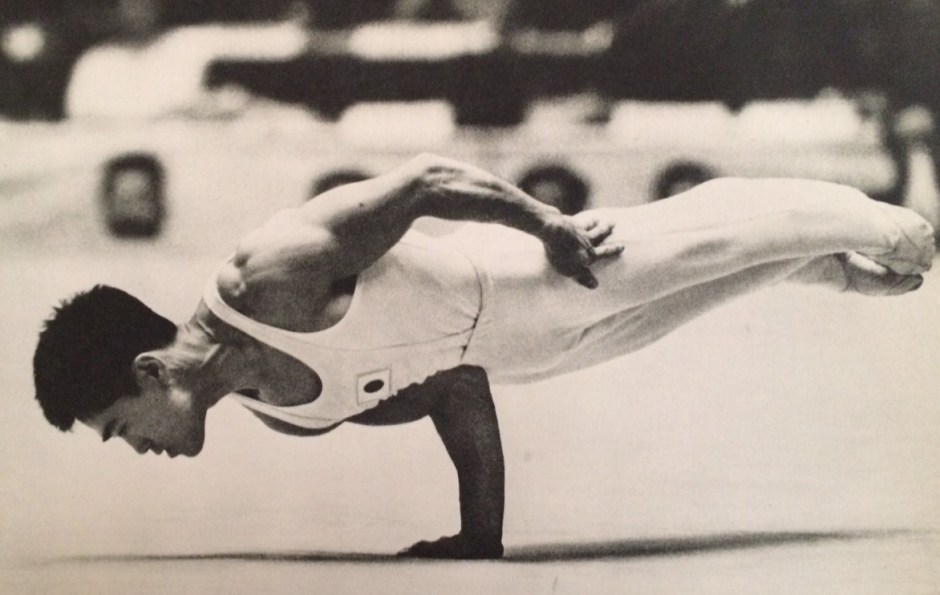
Yukio Endo_Tokyo Olympiad_Kyodo News Service
Yukio Endo, from the book Tokyo Olympiad_Kyodo News Agency

By the time the 1964 Tokyo Olympics rolled around, gymnast Boris Shakhlin of the Soviet Union had won nine Olympic medals in Melbourne and Rome, including four gold medals in 1960. Until 1980, his total Olympic medal haul of 13 was the most by any male athlete until 1980.

Shakhlin certainly had an opportunity to continue his championship ways in Tokyo. Except that Yukio Endo, and perhaps all of Japan, stood in his way.

Boris Shakhlin_XVIII Olympiad Tokyo 1964_Asahi Shimbun
Boris Shakhlin, from the book XVIII Olympiad Tokyo 1964_Asahi Shimbun

Endo won the men’s individual all-around gymnastics competition, which includes compulsory and optional events in six events: the vault, floor exercise, pommel horse, rings, parallel bars and horizontal bar. After all was said and done, Endo had a total score of 115.95 out of a total 120 points, edging out three competitors who tied for second with scores of 115.40.

In other words, 0.55 separated gold from silver. The problem is, Endo had what could be described as an awful effort on the pommel horse optional. As American gymnast Dale McClements described in her diary at the time, “Endo sat on the horse 2 times and dismounted with bent legs.”

According to the Japan Times, Endo had a considerable lead over his teammate Shuji Tsurumi and Shakhlin before the pommel horse optionals. “Japanese spectators were biting their nails fearing that the last moment error would cost Endo the gold medal. The event was halted 10 minutes as Japanese team manager Takashi Kondo made a strong appeal to the judges that the faults should not be counted too much. While the Russians glowered, spectators burst into cheers when the judges finally raised their scoring flags. All four were unanimous giving Endo 9.1 scores which assured him of the gold medal.”


Yukio Endo
Yukio Endo, from the book, Tokyo Olympiad_Kyodo News Agency

Another American gymnast who witnessed Endo’s performance, Makoto Sakamoto, told me that the pommel horse is arguably the hardest of the six disciplines. “It’s the most difficult event to stay on. There are so many opportunities to fall and slip off. You can hit a slick spot, or you sit down. He missed! I remember saying, ‘Darn it, the best gymnast in the world is crumbling.’ Then he got a 9.15, and I thought, ‘what a gift!’ Anyone else would have gotten an 8.2 or 8.4. He got a 9.15.”

In other words, the 0.55 edge would have disappeared if Endo had not

Roy_summer vacation_1967 maybe
Roy, sometime between the Tokyo and Mexico City Olympic Games.

On this, the last day of 2015, I’d like to thank everyone for their support of my blog – The Olympians. I have posted at least once every day since I started the blog on May 1. Out of about 300 posts, I’ve selected 25 that I personally like, in good part because I’ve had the great fortune to talk with the people mentioned in these stories.

  1. A Helicopter View of US-USSR Relations, Olympic Style
  2. American Gymnast Makoto Sakamoto and Memories of Home: Post-War Shinjuku
  3. Arnold Gordon (Part 1): Befriending Judy Garland at Manos in Shinjuku
  4. The Banning of Headgear in Boxing: The Convoluted World of Protecting Our Athletes
  5. Clumsy Handoff, Beautiful Result: A World Record Finish for the American 4X400 Relay Team in Tokyo
  6. Coach Hank Iba: The Iron Duke of Defense Who Led the Men’s Basketball Team to Gold in 1964
  7. Creativity by Committee: The 2020 Olympic Emblem and the Rio Olympic Mascots?
  8. Crowded, Noisy, Dirty, Impersonal: Tokyo in the 1960s
  9. The Dale McClements’ Diary: From Athlete to Activist
  10. Doug Rogers, Star of the Short Film “Judoka”: A Fascinating Look at Japan, and the Foreigner Studying Judo in the 1960s
  11. Escape from East Berlin in October 1964: A Love Story
  12. Escape from Manchuria: How the Father of an Olympian Left a Legacy Beyond Olympic Proportions
  13. Fame: Cover Girl and Canadian Figure Skater Sandra Bezic
  14. Frank Gorman: Harvard Star, Tokyo Olympian, and Now Inductee to the International Swimming Hall of Fame
  15. The Geesink Eclipse – The Day International Judo Grew Up
  16. India Beats Pakistan in Field Hockey: After the Partition, the Sporting Equivalent of War
  17. The Narrow Road to the Deep North
  18. On Being Grateful: Bob Schul
  19. Protesting Via Political Cartoons: Indonesia Boycotts the Tokyo Olympics
  20. The Sexist Sixties: A Sports Writers Version of “Mad Men” Would Make the Ad Men Blush
  21. “Swing” – The Danish Coxless Fours Found It, and Gold, in Tokyo
  22. Toby Gibson: Boxer, Lawyer, Convict
  23. Vesper Victorious Under Rockets Red Glare – A Dramatic Finish to One of America’s Greatest Rowing Accomplishments
  24. What it Means to Be an Olympian: Bill Cleary Remembers
  25. Who is that Bald-Headed Beauty: The Mystery of the Soviet Javelin Champion