DAVID AND RICHARD ATTENBOROUGH - 2001
Richard and David Attenborough, 2001; photo by N Cunard/REX (336048j)


His older brother, Sir Richard Attenborough was known for playing iconic roles in blockbuster films, like Squadron Leader Roger Bartlett in The Great Escape, or John Hammond in Jurassic Park. But Sir David Attenborough is known for the iconic voice of nature films, that lilting, authoritative tone which brings a cheeky gravitas to the serious drama and dramatic silliness of all creatures great and small.

As a teaser to promote the 2014 Sochi Winter Olympics, Attenborough was brought on board by the BBC to provide a cultural anthropological assessment of the ice-bound homo sapien known as the “curler”.

Click on the video below to see nature and all its rituals, as if you are a fly on a barren tree in the frozen tundra.

Our planet, the earth, as we know it, is unique. It contains life even in its most barren stretches. In all my years of exploration, these are the creatures I find most curious. For the first time ever, filmed over the course of three afternoons in deepest Russia, using the world’s most state-of-the-art cameras, this…is…curling.

Here we have a pack of sliding curlers. Watch as the Alpha female displays her dominance over the herd by tapping the end of the frisking broom to check for rogue insects. This is a precise exercise. Off she goes, gently but flamboyantly launching the oversized walnut down the frozen river. The Alpha female’s job is now complete. It’s down to the herd to frantically follow the walnut down the river, gently frisking the foreground.

Past the red line the walnut goes. This is nature at its most vulnerable. You’ll notice a group of other walnuts are already near the flat, round nest. These are from other sliding curlers who thrust their nuts down earlier. This is to mark their territory. The aim of this ritual is to land your walnut in the center of the nest. The frisking is frantic and often futile, making no difference to the success of the net thrust. But it’s playful and all part of what makes this game the sliding curlers play so magical. Look how happy it makes them!

To see an authentic narration by Sir David Attenborough, watch this fascinating clip called “Flight of the Dung Beetle”.

 

Indian Club Variety

In 1932, George Roth won the gold medal in India Club Swinging.

I had no idea what that was, but if my imagination were allowed to run wild, my first thought would not have been sport.

Back to the Olympics.

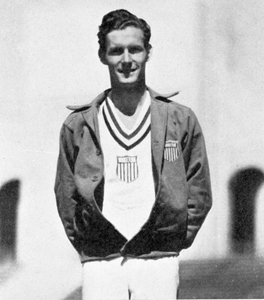
George Roth
George Roth, gold medalist in indian clubs, 1932 Los Angeles Olympics

Roth, who won his gold medal at the Los Angeles Olympics in 1932, and was so poor he could not afford to travel to across the city to get to the LA Coliseum and receive his gold medal in the award ceremony. He had to hitch a ride three times, and I suppose at that time, only the wealthy had cars, because of his impromptu taxi drivers was the famed entertainer, Jimmy Durante.

Indian Club swinging in 1932 was experiencing its death throes as a competitive sport. Popular really only in North America, Indian Clubs had its last major competition in 1953. Today, a few health gurus market Indian Clubs as an excellent way to build lung capacity, strengthen shoulder joints, and build general upper body strength.

OK, so what is Indian Club Swinging? Here’s how Roth describes it in the book, Tales of Gold:

Indian clubs look a little like bowling pins, but they are skinny and have long necks with a small, round knob at the top end. What you do is twirl them around your body – in front, in back, and on the sides – without letting them touch each other or yourself. The routines lasted for four minutes, and you couldn’t stop or hesitate or repeat any pattern that you already had done.

Below is a video showing the basic movements for Indian Club swinging.

So why do we call this sport, Indian Club Swinging? Back in the day, when the sun never set on the British Empire, and the Kings and Queens of England were the rulers of India. Europe, particularly London, was experiencing the nastiest effects of the Industrial Revolution – overcrowded, polluted, disease-ridden cities. At the same time, men of

I Am Orlando
Photo by Prince Williams / WireImage

Shavonte Zellous is a guard on the New York Liberty WNBA basketball team, who was on a flight back home to Orlando when she heard the news of a man unleashing the full fury of an automatic rifle into a unknowing crowd of revelers. The nightclub where over 50 people were murdered, Pulse, is in her neighborhood, five minutes from her high school.

This link takes you to The Players’ Tribune, and Zellous’ heartfelt angst as a gay person dealing with the irrationality of hate. “What am I doing that’s so bad that makes you want to kill me? That makes you hate me?”

Helene Mayer's Salute at 1936 Berlin Games
Helene Mayer’s Heil Hitler Salute at the 1936 Games
This is not a Hollywood script.

An Olympic fencer, gold medalist at the 1928 Amsterdam Games and six-time national champion in Germany, Helene Mayer was a golden girl and likely eager to participate in her country’s Olympics in 1936.

While studying international law in the US in the early 1930s, she got surprising news. Her membership in a major fencing organization, The Offenback Fencing Club, was rescinded. The reason? Her Jewish heritage.

Mayer was surprised to learn that her father was Jewish. And apparently, she denied that fact. As explained in the fun-fact-filled book, The Book of Olympic Lists by David Wallechinsky and Jamie Loucky:

She was the perfect embodiment of the Nazis’ conception of Aryan womanhood, except for one detail – her father, a doctor who had died before the Los Angeles Olympics (in 1932), was Jewish. Mayer did not think of herself as Jewish, particularly after her father’s death.

Naturally, the German authorities were not going to invite Mayer to the Berlin Games three years later. The Hitler regime intended to allow not a single Jewish athlete to compete. But the German authorities were also desirous of pulling off a public relations coup by hosting the Olympics, showing the world that Germany was a nation of superior standing, representing world peace and inclusion. Under pressure, they decided to ask two Jewish athletes to compete on the German national team – a high jumper, as well as a fencer – Helene Mayer.

While she received pressure from Jewish groups in the US to not go to the Olympics, Meyer was overjoyed to return to Germany for the Berlin Olympics. She was open for her love for her home country.

Helene Mayer portrait

And while she did not win the women’s individual foil championship for Germany, she placed second, good enough for silver and a spot on the medal stand. Quite amazingly, when the Hungarian national anthem was being played for gold medalist Ilona Elek, Mayer, one of only two Jewish athletes added to the team, reluctantly by the German authorities, held out her right arm in a Heil Hitler salute. As is described in this article, the image is striking: “Her face is determined. Her posture is perfect. Her arm points strong and fierce. She leaves no doubt as to what she is doing.”

What was Ilona Elek, whose father was Jewish, thinking when she saw Meyer to her left show her definitive support for the Arayan Race. What was Meyer feeling, as she stood in

Papa Massata Diack
Papa Massata Diack

The recent allegations that payments were made in connection to the bidding process for the 2020 Olympic Games is concerning. In order to understand who, what, where, when and why, I have looked into the reports available on the internet, and have tried to put together a timeline with explanations. I have tried to include links, many of which are from The Guardian, a newspaper based in London.

It doesn’t look good.

  • Sometime between 2010 and 2014: Likliya Shobukhova, a top marathoner from Russia, had paid€450,000 in exchange for covering up doping violations. In other words, Shobukhova was extorted.
  • July 2013: A payment of €1.3 million (USD1.5 million) called “Tokyo 2020 Olympic Game Bid” was sent from a Japanese bank to a bank account in Singapore, under a company called Black Tidings. The Black Tidings account is under the name of a Singaporean, Ian Tan Tong Han, who was a consultant to a company called Athlete Management Services, a company that “was set up to market and deliver the commercial rights granted to it by the IAAF“. According to the article referred to by the link, Tan was very close to Papa Massata Diack, the son of then-IAAF president and IOC leader, Lamine Diack. The article also alleges that Papa Massata Diack was part of an “informal governance system for the IAAF.”  Lamine Diack was a voting member of the IOC during the 2020 Olympic bidding process in 2013, so people can only wonder if the payments had an impact on the vote.  Additionally, French authorities are currently investigating Papa Massata’s request for USD5 million from the Qatar Olympic committee in exchange for support in their bids in the 2017, 2019 and 2021 World Athletic Championships.
  • September, 2013: On September 8, 2013, it was announced that Tokyo won the bid to host the 2020 Summer Olympic Games.
  • October, 2013: A second payment was made from Japan to the Black Tidings account, making the estimated total payment from a bank account in Japan to Black Tidings “at least US$2m (1.4m pounds)”.
  • March, 2014: An arrangement was agreed upon in which Shobukhova would accept a suspension in exchange for a “refund” of €300,000, off of the original €450,000 extortion payment, primarily because the cover up failed. This payment was made from a bank account in Singapore, listed under Black Tidings.
  • December, 2014: Diack Sr was arrested for alleged acceptance of more than €1 million in bribes to cover up doping violations. He is currently being investigated by French authorities.
  • January, 2016: The Guardian reported on the contents of leaked emails that Papa Massata Diack arranged to have “parcels” delivered to influential members of the IOC in May, 2008 in an attempt to gain support for Qatar in its bid to host the 2016 Summer Olympics.
  • May, 2016: The head of Tokyo 2020, Tsunekazu Takeda, has admitted that such payments were made to Black Tidings, but states that the payments are for legitimate services rendered. Takeda has launched in an investigation into these payments.

In other words, there is a consistent set of allegations of payments connected to Papa Massata Diack, an influential figure in international sports, to cover up illegalities or quietly provide support. The vehicle connected to Diack is a company called Black Tidings, which has been linked to the doping cover up of marathoner, Shobukhova, and the Tokyo bid for the 2020 Olympics.

These reports sadden me. What will we learn next?

Schatz Athletes 1

I was 20 years old. A friend and I bought the cheapest seats in Madison Square Garden for a New York Knicks – Los Angeles Lakers game. Sometime during the game, we made our move from the nose-bleed seats downwards, going down steps, slipping by ushers, sliding over barriers, getting closer and closer to the court. And suddenly, there we were, walking courtside. And there they were, the NBA players, and I couldn’t believe how big they were. I vividly recall staring at Kareem Abdul Jabbar as we nonchalantly strolled the sideline. He was huge!

Schatz Athletes 3

Olympians on the whole I suppose share this fascination. In the Olympic Village, you essentially have the very best athletes in their disciplines in the world, and very often, body shape and size are determinants in who reaches world class. As the anonymous author of “The Secret Olympian” wrote:

The best thing about the Village, even better than the famous people, food and free stuff is the amazing variety of humankind. Pick a corner in the shade and sit and watch for half an hour. It’s like going on a human safari or to the Crufts of all mankind: all colours, shapes and creeds. The contrast emphasises the wonderful diversity of the human race. Watch a basketball game and everyone’s tall – so no one looks it. In the Village you might get a 14-year-old Russian gymnast sitting between a 130kg Turkish weightlifter and a seven-foot Chinese basketball player.

Schatz Athletes 2

I am currently reading a fascinating book by David Epstein called The Sports Gene: Inside the Science of Extraordinary Athletic Performancehe Sports Gene: Inside the Science of Extraordinary Athletic Performance, which goes deep on the eternal debate of whether it is nature or nurture that determines one’s life’s direction, one’s future avenues for success. Here are some of the author’s observations regarding physical attributes of athletes in specific sports, and the strong correlation between them and success:

  • One reason that marathon runners tend to be diminutive is because small humans have a larger skin surface area compared with the volume of their body. The greater one’s surface area compared with volume, the better the human radiator and the more quickly the body unloads heat. Heat dissipation is critical for endurance performance, because central nervous system forces a slowdown or complete stop of effort when the body’s core temperature passes about 104 degrees.
  • Athletes who have to rotate in the air – divers, figure skaters, and gymnasts. In the last thirty years, elite female gymnasts have shrunk from 5’3″ on average to 4’9″.
  • Measurements of elite Croatian water polo players from 1980 to 1998 show that over two decades the players’ arm lengths increased more than an inch, five times as much as those of the Croatian population during the same period.
  • Top athletes in jumping sports – basketball, volleyball – now have short torsos and comparatively long legs, better for accelerating the lower limbs to get a more powerful lift off.
  • Professional boxers come in an array of shapes and sizes, but many have the combination of long arms and short legs, giving greater reach but a lower and more stable center of gravity.
  • The world’s top competitors in the 60-meter sprint are almost always shorter than those in the 100-, 200-, and 400-meter sprints, because shorter legs and lower mass are advantageous for acceleration.
  • Longer trunks and shorter legs make for greater surface area in contact with the water, the equivalent of a longer hull on a canoe, a boon for moving along water at high speed.

The pictures in this post are by Howard Schatz, who has taken photos of athletes and compiled them in a coffee book called Athlete.

Schatz Athletes 4

Pauli Nevala throwing in Tokyo_Tokyo Olympiad Kyodo News Agency
Pauli Nevala throwing at the 1964 Olympics, from the book Tokyo Olympiad_Kyodo News Agency

Terje Pedersen was the golden boy of javelin throwing from Oslo, Norway. He was 193 cm tall, weighing 93 kilograms, blond and handsome, and was the first person ever to throw a spear over 90 meters, setting a world record at 91.72 meters only five weeks prior to the start of the Tokyo Olympics in 1964.

For the citizens of Norway, Nevala may have been expected to take home gold, joining three other Finnish throwers who had won gold in the javelin throw in prior Olympics. And yet, on that cold and wet day on October 14, 1964, Pedersen threw poorly, his best throw of 72.1 meters, nearly 20 meters off of his world record, fell .21 cm short of qualifying for the finals.

The golden boy was out. For desperate Finns, in walked an unlikely hero, or as Neil Allen, who chronicled the 1964 Games in his book, Olympic Diary Tokyo 1964, called Pauli Nevala, the “lucky” Olympic champion. There’s not much written in English about the javelin competition, but Allen mentioned that Nevala was not as popular as Pedersen, and that in fact, “his selection for the Finnish national team prompted several hundred letters to the athletics association saying he was not good enough to go to Tokyo.”

Terje Pedersen
Terje Pedersen

Was Nevala unliked for some personal reason? As Pedersen had just set the world record so convincingly, was there room for only one national hero in the emotional mindshare of Norwegians? I don’t know. But Nevala assumed the mantle regardless. Nevala was certainly a deserving javelin thrower, his personal best of 86.33 being very close to the world record at the time in July 1963, but in the qualifying round at the Tokyo Games, he was in the middle of the pack with throws in the low 70s.


In the final round, Nevala improved, throwing 76.42 meters and then 78.39 meters. In the fourth throw, he uncorked a throw of 82.66 meters to take the lead. Gergely Kulcsar of Hungary and Janis Lusis of the Soviet union tried desperately to hit that mark, but fell short as the long wet day dragged on. Nevala was the unexpected Finnish and Olympic champion. Below is footage of his winning throw.

In an AP report at the time, the javelin coach for Finland, Hans Oeverland, painted a bleak picture for his countrymen, saying the competition was “quite disappointing for us and disastrous for Pedersen. But we will make no excuses. The weather was bad but it was the same for all competitors. I guess it all was a question about nerves.”

Hmmm…but what of Finnish champion Nevala?

Gergely_Kulcsár,_Pauli_Nevala,_Jānis_Lūsis_1964 on medal stand (color)
Gergely Kulcsar, Pauli Nevala, Janis Lusis


Houses are seen destroyed in Kumamoto_Telegraph
Houses are seen destroyed in Kumamoto. Credit: Taro Karibe/Getty

On April 14, 2016,  some five weeks ago, an earthquake with a magnitude of 6.2 hit Kumamoto City in the western part of Japan, followed two days later by a stronger earthquake of a magnitude of 7.0. Close to 50 people have been reported killed, while over a thousand people were injured.

While this pales in relation to the triple disaster of March 11, 2011 when an earthquake in the northern part of Japan resulted in devastating tidal waves and radiation leaks from a devastated nuclear power plant, there are still thousands of people living in shelters in Kumamoto, down from a peak of over 180,000 a few days after the earthquakes.

In modern day Japan, large earthquakes often result in significant hardship for large numbers of people. And just as it was a concern in 2016, it was equally a concern in 1964. On September 3, 1964, The Mainichi Daily News published an article noting the 41st anniversary since the Great Kanto Earthquake. On that day, a magnitude 7.9 earthquake struck Tokyo, impacting areas as far and wide as Yokohama and surrounding prefectures of Chiba, Kanagawa and Shizuoka.

For those who have seen the very large and very heavy Great Buddha statue in Kamakura, this 84,000 kg statue moved nearly a meter due to the earthquake. Death estimates from this earthquake range from 100,000 to 180,000. Over half a million homes were destroyed and nearly 2 million were left homeless. These casualties were the result not only of the initial earthquake, but also due to subsequent fires and tsunami.

Because the Great Kanto Earthquake occurred so long ago, there have long been underlying fears of another one hitting Tokyo any day. This is true today as much as it was in 1964. In fact, the headline for the Mainichi Daily News article was “If Kanto Quake Hits Now, More than 23,000 May Die.”

Earthquake Casualty Estimates_Mainichi Daily News_Sept 1964
The Mainichi Daily News, September 3, 1964

According to the article, police and fire department officials released a report estimating possible damage due to a similarly sized earthquake occurring in 1964. These authorities stated that some 43,000 wooden houses in Tokyo would collapse. The article states, quite clinically, that “over 23,000 people would be killed or would become missing by the initial collapse of residences. Also 40,000 people would be injured, seriously or slightly.”

But the article goes on to say, casualties “would quickly increase if subsequent disasters, such as tidal waves, fires and traffic mishaps take place.” And in a major earthquake in a major metropolis like Tokyo at the time, that was likely. The article continues by stating that fires in over 300 parts of Tokyo would break out, the ability to deal with all those fires being inadequate. If a tsunami hit Tokyo’s water front, some 1.3 million people would be in the way. Half the major roadways and highways, more than half of telephone communication capability, a few major bridges and about 100 railway bridges, as well as hundreds of places storing combustible materials would all be damaged.

And in fact, an earthquake did hit Tokyo on October 1, 1964, only 9 days prior to the commencement of the Tokyo Olympics.

When will the next big one hit Tokyo? It’s probably best not to dwell on that…..

Mourad Laachraoui victorious
Mourad Laachraoui (center) wins gold in the European Taekwondo Championship on May 18, 2016.

It is hard to imagine. You train and train in relative anonymity, hoping for a spot on the team that takes you to the Olympics. And when you finally make the team, you become the topic of terrible news.

On May 18, Mourad Laachraoui won gold in the European Taekwondo Championships, and earned the right to represent Belgium at the Rio Olympics. The 20-year-old defeated Jesus Tortosa of Spain to take the 54-kilogram division championship.

The victory triggered a media avalanche, for Laachraoui has the misfortune of being the younger brother of Najim Laachraoui, the now infamous terrorist who made the bombs used in attacks in Paris on November 13, 2015, and the explosions at the Brussels Airport on March 22 2016. In a time when Laachraoui should be ecstatic with glee and glowing with hope, he and his family read such headlines: “Mourad Laachraoui: Suicide bomber’s brother wins European gold”.

Najim Laachraoui at Brussels Airport
Images of Najim Laachraoui at the Brussels Airport

Najim had apparently disconnected from his family when he moved to Syria in 2013. When asked about his brother in the aftermath of the Belgium bombings, Mourad said he was “sad and ashamed.” “Our family has the same questions you all have,” he said in March. “He [Najim] used to be a nice intelligent guy. I couldn’t believe it.”

According to this article, the lawyer for the Olympian said that Najim “was dead to Mourad from as soon as he went to Syria. He said the family were no longer able to live their lives normally and could not even go to the shops.” Apparently, since Najim died in the suicide bomb attack in Brussels, the family has lived holed up in their home with curtains closed at all times. Mourad said at the time, though, that he would continue to fight and win a spot to represent his home country of Belgium.

And fight and win he did.

But the victory is not yet so sweet.

Shoichi Yokoi

Dateline: Wednesday, September 2, 1964

Guam, UPI: Two men believed to be World War II Japanese Army stragglers are living a game of hide and seek with authorities on this United States tropical island in the Western Pacific Ocean. Scattered reports circulated about two men seen wearing long beards and G-strings scrounging for food. The most recent report came from Jose G. George, an employee of the Hawaiian Rock Company on Guam.

About a month prior to the opening of the Tokyo Olympic Summer Games, and over 19 years since the end of the Pacific War on August 15, 1945, reports of seeing yet another set of Japanese military stragglers were made. The Japanese fought to protect a massive area from Indonesia to Manchuria after their comprehensive attacks and invasions that commenced with Pearl Harbor in December, 1941.

When the war ended, most Japanese were either imprisoned or repatriated to Japan. But in the years after the Pacific War, there have been some 80+ cases of Japanese turning themselves in, being uncovered and taken in or killed. Most of these cases were in the 1950s and 1970s. Very often, the Japanese were uncertain that the war had ended and wanted to make sure they avoided capture by the enemy.

Sergeant Shoichi Yokoi Displays Clothes to Guam Police
Shoichi Yokoi shows his clothes at a police station in Guam.

The two men in the UPI report were said to be “seen wearing long beards and G-strings scrounging for food”. The man who saw them, Jose George, was driving a truck when he saw the two unusually dressed and famished men. It was also reported that one of the stragglers had a gun, pointed it at George, but the gun failed to fire. The Marines searched but could not find the two reputed Japanese stragglers.

What’s interesting is that in January 1972, a Japanese man, Corporal Shoichi Yokoi, was captured on Guam. Was Yokoi one of the men who Jose George some 7-and-a-half years earlier?

After serving in Manchukuo, the Mariana Islands and finally Guam, he went into hiding with ten other soldiers after the American forces captured Guam. In 1972, Yokoi was alone when he was found out by two local fishermen and captured. When Yokoi returned to Japan, he was an overnight sensation.

“It is with much embarrassment, but I have returned,” said Yokoi on his arrival back in