ujlaky-Rejto IldikoShe is one of the greatest fencers of all time, winning two gold medals at the 1964 Tokyo Summer Games on a strong Hungarian squad, one in individual foil, and another in team foil, four years after winning a team silver medal in Rome. She went on win silver and bronze medals in Mexico City, Munich and Montreal, for a total of seven medals over five Olympic Games.

And Ujlaky-Rejto Ildiko was deaf.

And just as true in Budapest as it is anywhere else in the world, a child with differences – in this case, ear pieces, reading lips and general inability to react to the sounds of the world around her – gets mocked and mired in low self-esteem.

While it is hard to find verbatim comments in English by Ildiko, there is this quote from a deaf fencer named Jennifer Gibson, who explains the challenge. “Being the only one at school who wore hearing aids was not easy and in fact, it was extremely difficult. It was the same with sports, I was the only kid who wore hearing aids on the teams I’ve played on. At the time, in the 70‘s and 80‘s, most teachers and coaches were ill prepared to deal with someone like me. They lacked the proper training and understanding on how to teach to people with a disability, particularly hearing loss. It was essentially a whole new ball game for all of us. From a very young age, I’ve had to be very forward about my hearing loss and inform the teachers or coaches that I couldn’t hear them, particularly in large or noisy environments. Very few of them took the initiative to find alternative means of communicating with me such as using a clipboard or talking to me one on one.”

ildiko at tokyo games
Ildiko, left, competing at the 1964 Olympic Games

Ildiko likely had similar experiences to Gibson, except decades earlier. She picked up fencing at 15. She worked with coaches who instructed her by giving feedback and direction on paper. But there is no getting around the fact that hearing the clash of blades is key feedback to the fencer. Again, here is Gibson explaining the challenge for deaf fencers: “One issue is that some fencing calls rely on hearing the blades come in contact with each other which means I am unable to do that. Bear in mind that it’s also very difficult to see the fencers faces due to the tight metal weave of the mask. When they try to talk to me while wearing the mask, I actually hear very little.”

But as we see from time to time, those with the will to overcome challenges often find a way to slingshot to phenomenal accomplishment.

women's hungarian foil team 1964_Ildiko 2nd left
Ildiko with the Hungarian women’s foil team (2nd from left)

Opening Night Gala Presentation and World Premiere of "The Walk
New York, NY – September 26, 2015 – Joseph Gordon-Levitt and Philippe Petit at the Opening Night Gala Presentation and World Premiere of TriStar Pictures’ “The Walk”.
I lie against this narrow strip of unknown land, looking up, until I comprehend: it is a landing field for extraterrestrial vessels. No! A takeoff field: the clouds give it direction – a limitless runway into heaven. It is definitely not man-made, nor of any use to us humans. So uncertain is its length – call it height – and so alien its design, the dreaded word has now infiltrated my heart: Impossible! Impossible! Impossible! it pounds. I can no longer breathe. (From the book, To Reach the Clouds)

The Frenchman looked straight up and knew he had no choice – he had to lay a wire across the two towers of the World Trade Center, and walk into the void.

I just saw the film, The Walk, directed by Robert Zemeckis, based on one of my favorite books, “To Reach the Clouds“, by one of my life heroes, Monsieur Philippe Petit. I watched as if in a dream.

Philippe Petit color

Philippe Petit is not an Olympian, but he is an athlete nonpareil. The wooden balance beam that a female gymnast leaps and flips on is four inches (10 cm) wide. The steel cable that Petit walks is steel braided cable 5/8″ in diameter – essentially a toe or two wide. A woman on the balance beam would stand four feet (1.24 meters) above the floor. Petit danced on his wire 1,368 feet (417 meters) above ground. He crossed the 138 feet (42 meters) expanse between the two towers, not once, not twice, but 8 times. Petit traipsed, bowed, stood one legged, spun 180 degrees on this very highwire on that August 7 morning in 1972….for 49 minutes.

The “Coup”, as Petit has called this act of defiance and triumph, has a degree of difficulty unthinkable in any competition at the highest levels.

The Walk, as a movie, was a technical masterpiece. It is the first time in my mind that 3D and IMAX have come together with narrative and directorial vision to produce a story telling event of such visceral impact that you feel suspended a quarter mile high. (Yes, in the scenes depicting “the Coup”, my palms were sweating, and the nerves in my rear were tingling.)

the walk joseph gordon levitt
Joseph Gordon Levitt in The Walk
Petit is an inspiration. People can say “Do the impossible”. But Petit did.

It starts, as it does with all incredible achievers, with a dream.

You need dreams to live. It is as essential as a road to walk on and as bread to eat. I would have felt myself dying if this dream had been taken away from me. The dream was as big as the towers. There was no way it could be taken away from me by authority, by reason, by destiny.

Watch an interview of Philippe Petit from this fantastic documentary by Ric Burns called “New York – The Center of the World“, a history of the World Trade Center.

Sazae-san_I'm Against Price of Bath Going Up

Japan’s economy is not terrible. Nor is it robust. Generally speaking, the Japanese economy has been pushing hard against the weight of deflation with little result. GDP has dropped, and so have average wages. Prime Minister Shinzo Abe, through his mixture of fiscal stimulus, monetary easing and structural reforms, so-called Abenomics, is striving to get momentum rolling the other way, driving inflation and wages up, and getting people consuming and the economy pumping.

In the early 1960s, the economy was booming. And while inflation didn’t appear to be getting out of hand, at least according to the numbers, people like Machiko Hasegawa felt it. She wrote about it in her comic strip, Sazae-san. In the strip above, from the book, The Best of Sazae-san – The Olympic Years“, Hasegawa-san is able to reflect the average citizen’s perception that the price of everything is going up.

And in the strip below about people commuting on a bus, Hasegawa-san is showing that everybody was feeling the pinch.

And yet, it wasn’t by no means a desperate time for Japan. It was indeed a time of optimism and hope. After all, the Olympics were in Japan.

Sazae-san_Not Much Inside

Flushing Meadows_five
Me, several years after the closing of the New York World’s Fair in Flushing Meadows.

First things first. Novelist and futurist, Isaac Asimov had a caveat. If the world is destroyed by a thermonuclear war, his predictions would be meaningless. Got it.

isaac asimov
Isaac Asimov

Since there has been no nuclear war of significance, here are a few of the predictions Asimov made in the New York Times in August, 1964. Asimov visited the huge, big-tent event in the world that year that was not the Tokyo Olympics – the World’s Fair in New York, which happened to be in my backyard of Flushing, Queens.

By 2014, electroluminescent panels will be in common use. Ceilings and walls will glow softly, and in a variety of colors that will change at the touch of a push button. A quick search reveals that available in the marketplace is electroluminescent advertising displays (which are paper-thin flexible panels), electroluminescent paint, electroluminescent wallpaper, and something more commonly known, electroluminescent fashion.

There is an underground house at the fair which is a sign of the future. Suburban houses underground, with easily controlled temperature, free from the vicissitudes of weather, with air cleaned and light controlled, should be fairly common. The reason Asimov gives for this idea is Man’s urge to control its environment, as well as expand the amount of land to grown more food to feed a growing world population. But another reason will be the Mega-city Trend, the continued massive migration to big cities that puts tremendous pressure on the infrastructure. Singapore, where I lived for a few years, has a population of 5.5 million people on a land mass of 710 square km, a country half the size of Los Angeles. The Red Dot, as it is affectionately called, will be considerably more dense as the government predicts the population to grow to 7 million in the near future. Singapore has built upwards with its skyscrapers, and outwards with land-fill areas, but is now planning underground working facilities on a scale not commonly seen. Designs for the 300,000 square-meter Underground Science City will be 30 to 80 meters below the surface, with plans to hold a working population of over 4,000.

Singapore Underground Science City
The planned Singapore Underground Science City

Robots will neither be common nor very good in 2014, but they will be in existence. The I.B.M. exhibit at the present fair has no robots but it is dedicated to computers, which are shown in all their amazing complexity, notably in the task of translating Russian into English. It will be such computers, much miniaturized, that will serve as the “brains” of robots. The way Asimov describes robotics, and I suppose, artificial intelligence is far less aggressive than his imagination in his novels. I haven’t read that many Asimov works, but I do know that he was one of the most significant minds behind a philosophical framework or set of rules regarding the relationship between Man and Robot: The Three Laws of Robotics. Additionally, I recall his brilliant character, Hari Seldon in Asimov’s Foundation Series, a man who developed psychohistory, a precursor, to me, of what we now call Big Data.

If you want to watch something historic, as well as geeks geeking out, here’s an incredible video of IBM’s Watson beating two humans at Jeopardy. The two humans are Jeopardy champions.

Much effort will be put into the designing of vehicles with “Robot-brains” vehicles that can be set for particular destinations and that will then proceed there without interference by the slow reflexes of a human driver. I suspect one of the major attractions of the 2014 fair will be rides on small roboticized cars which will maneuver in crowds at the two-foot level, neatly and automatically avoiding each other. Two obvious parallels to today’s technology: self-driving cars, which are all the rage, as well as maglev technology. By 2020, there are some who claim that Japan will have significant driverless transportation on the roads when the Olympians arrive.

The maglev train, which is already operational in Shanghai, will connect Tokyo to Osaka in an hour, achieving a speed of 500 kph, although it won’t be in operation until 2027.

Pictograms for Women and Drinking Water
Pictograms used at the 1964 Tokyo Olympics, from the book, “The Games of the XVIII Olympiad Tokyo 1964 – The Official Report of the Organizing Committee”
If you don’t speak Japanese, travelling in Japan is a challenge. You’re in a train, you pull into a station, you peer through the window as the train decelerates desperately trying to figure out what station you’re at, scanning for English, any English at all.

The next best thing to words are symbols. The signs for men and women’s toilets come in a gazillion varieties, but they are most often a variation of a theme. Symbols, if done right, can cut to the chase.

foreign friendly pictograms

With a continued increase in foreign tourists to Japan, and a spike in international guests in Tokyo during the 2020 Olympics expected, the Geospatial Information Authority of Japan (GSI) released a new set of map symbols which they believe will be more intuitively understood by visitors. The old map symbols included an “X”. In the West, “X” may mark the spot of treasure, but in Japan, it meant police station. The old map represented a temple with a swastika, which is too much of an emotional jolt to many with its strong association with Nazism, despite its far longer association with Hinduism and Buddhism.

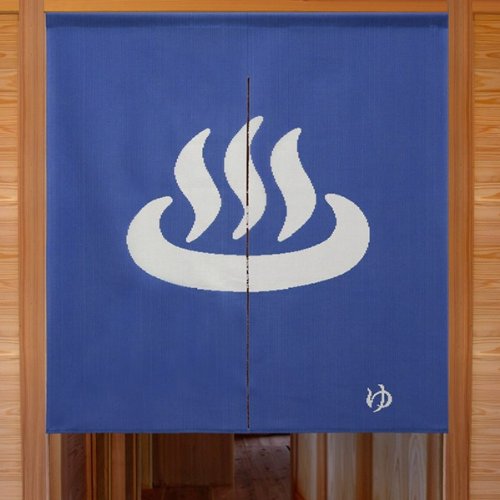
Fortunately, the GSI decided not to replace the symbol for onsen. The three wavy steamy lines bathing in an oval is a personal favorite.

onsen symbol

The pictograms of today were born out of the pictograms of the 1964 Tokyo Olympics. These Games were the first to be held in Asia, and Japan realized they had a language problem. In addition to translation, designers figured that use of symbols would be a powerful and efficient way to get foreigners to the right place. In fact, the Tokyo Olympics proved to be filled with design opportunities for the best in the country as the ’64 Games were essentially the first time an Olympic Games systematically used pictograms to represent each of the sporting events, or direct people to places.

As this blog post states, “…for such a huge national event, needless to say the design side of things was very important too and it engaged the talents of the industry heavyweights at the time.” One of the heavyweights was Yoshiro Yamashita, who designed these event symbols.

events pictograms 1964

The symbols that represented facilities were said to have been created by a team of ten designers.

pictograms at Tokyo Olympics_The Games of the XVIII Olympiad Tokyo 1964 Report
From the book, “The Games of the XVIII Olympiad Tokyo 1964 – The Official Report of the Organizing Committee”

Sazae-san_Looking Out for the Sad Student

I really didn’t expect to see such a dark scene in a Sazae-san comic strip. But there it was.

Sazae-san notices a sad student walking out of the school grounds where exam results were posted. Sazae-san is so concerned that she follows the student, and is relieved to see her return safely home. What was Sazae-san worrying about? Maybe this young woman would be so distraught she would try to do harm to herself.

In Japan, these exam results determine whether you get into the school you want: Tokyo University, Kyoto University, Keio University or Waseda University, for example. Graduating from those prestigious schools will likely determine your short-term career, as well as your long-term life prospects. Parents, grandparents and the children themselves realize that a lot is riding on their chances to pass these university exams.

Japan has always had relatively high suicide rates, as you can see in the chart below. These days, Japan’s rate is about 60% higher than the global average. Back when Machiko Hasegawa was penning these Sazae-san cartoons, the suicide rate was significantly higher.

Suicide deaths per 100000 trend

So suicides were a concern of the day. And while it is unclear whether there was a strong correlation between suicides and young people under tremendous academic pressure, it certainly was in the cultural conversation. Here are two more cartoon strips from the book The Best of Sazae-san – The Olympic Years“, illustrating the fear that one student has just trying to learn whether he passed a university exam or not, and another showing the level of deception that Sazae-san’s brother Katsuo is willing to go to in order to explain how he is doing in school to his father.

Sazae-san_I passed telescope

Sazae-san_I Passed

zhabotinsky mexico city

In 1960 and 1964, weighlifting champion, Yury Vlasov, marched into the stadium in the Olympic opening ceremonies holding the Soviet flag aloft with one hand, some 15kg over several hundred meters.

But at those Games in Tokyo, he surrendered his championship to Leonid Zhabotinsky, a monster of a man nearly 2 meters tall and 160 kilograms. A man who had a flair for the dramatic, Zhabotinsky may have psyched out the champion, Vlasov, as related in this previous post.

And so with the passing of the torch, came also, the passing of the ceremonial bearing of the flag in the Olympics. That’s Zhabotinksy above in Mexico City, continuing Vlasov’s traditional one-handed feat of strength.

On Thursday, the Big Zhabo, a hero to a young Arnold Schwarzenegger, as related in this NY Times obit, passed away at the age of 77.

Yukijirushi butter ad_Asahai Graf Tokyo Olympics Special Issue_November 1964
An ad for butter and cheese by the dairy company, Yuki Jirushi. From the November 1964 Asahi Graf, Tokyo Olympics Special Edition

A derogatory term in Japan for foreigners at the turn of the 20th century was “batta-kusai” (バタ臭い), literally “stinks of butter”.

In the 16th and 17th centuries in Japan, when the Portuguese and Dutch established relations and trade with the Tokugawa Shogunate, the Japanese were exposed to non-Japanese who had meat and milk in their diets. The Japanese, due to the influence of Buddhism and Shintoism, were forbidden from eating meat, and thus by extension, dairy products. On top of that, Japanese were generally lactose intolerant.

Because of the fundamental differences in diet, the Japanese thought, quite simply, that Westerners, with the residue of beef, milk and cheese in their systems, reeked.

Milking at a small farm in Japan 1933_Mainichi Photo Gallery
Milking at a small farm in Japan in 1933_Mainichi Photo Gallery

But when Emperor Meiji came to power in the late 19th Century, the emperor and his government embarked the country on a massive modernization campaign to make not only the Japanese military, science and industry equal to the levels of excellence in the Western industrialized world, but also the size and strength of Japanese people.

According to this article, the Meiji Government not only lifted the ban on meat and dairy-products consumption, they put the word out, quietly, that the Meiji Emperor also enjoyed meat, cheese and milk.

Jersey cows arrive to Japan from New Zealand 1953_Mainichi Photo Gallery
Jersey Cows arrive from New Zealand to a farm in Japan in 1953, from the Mainichi Photo Gallery

Clearly, the Meiji Government was also picking up advanced marketing techniques, such as celebrity endorsements to sell products. But when the 1960s rolled around, using data to back your claims was all the rage. The advertisement at the top of the page was published in November, 1964 in Asahi Graf’s Tokyo Olympics Special Issue. The headline text states, “These Children Will be the Strength of Japan in the Future”. The company making this statement is “Yuki-Jirushi”, one of the dairy products companies (along with Meiji) established by the Emperor Meiji.

The statistics shared in the ad show how, from 1955 to 1962, the height of the average 5-year old went from 104 to 106.1 cm tall while the average individual daily consumption of dairy products (I suppose they mean butter and cheese) went from 0.8 grams to 5.4 grams.

Distirbution of Milk Containers 1955_Mainichi Photo Gallery
Distribution of milk containers in Japan in 1955, from the Mainichi Photo Gallery

A few years later, an AP article from May, 1969 cited a government survey indicating the trend was continuing. “A ministry survey showed the average height of 11-year-old boys has increased by 4.6 inches over the past 68 years. Girls of the same age had an increase of 5.4 inches. During the 1900-1968 period, the 11-year-old boys gained 13.6 pounds and the girls 18.9 pounds in weight, the survey said.”

The article went on to explain that the Allied Occupation under the

Roth Saari Hetz on the Podium_Asahi Graf_30October1964
Left to Right: Roy Saari, Dick Roth, Gerhard Hetz, silver, gold and bronze medalists of the 400 meter individual medley at the 1964 Tokyo Games

“I can withstand pain. In fact, I love pain.”

Olympic champion, Dick Roth, referred to pain as his advantage. The 1964 gold medalist in the 400-meter individual swimming medley believed he could tolerate more pain than almost any of his competitors. And when you’re an Olympic-level swimmer, a combination of holding your breath and stretching your body to its physical limits creates oxygen debt.

Oxygen is vital to breaking down glucose to provide your body with energy. But when the body can’t get enough oxygen to create energy, it releases lactic acid, a substance that can create energy without oxygen. When there is more lactic acid in your blood than can be burned off, you get pain. And the more intense your physical activity, the more intense the pain can be.

Dick Roth with medal

And Roth’s pain was intense. As described briefly in an earlier post, Roth was one of the young American swimmers favored to do well in his swimming event. But literally hours after the Opening Ceremonies of the Tokyo Summer Games, Roth was tossing and turning in discomfort and then tremendous pain.

Roth got himself out of bed at 6 am, got to the Olympic Village infirmary. The nurse poked and probed. The swim team doctor did blood tests and then left him alone in his bed. He was 24 hours from competing in the Olympic Games. “This was not the way to calm me down,” thought Roth. Then finally, they told him. He was going to be transported to a US Army Hospital in Western Tokyo and have his appendix removed.

“I was so blown away they had to bring in a counselor to calm me down,” wrote Roth. “The ambulance ride to Tachikawa is a blur. The only thing I remember is pulling up to the hospital entrance and thinking I was going to die.”

The doctors told Roth that they would have to take out his appendix ASAP. He said no. They somehow prepped Roth for the operation and asked a member of the US Olympic Committee to sign off on the operation since Roth was still a minor at 17, but the USOC didn’t want to take responsibility. They eventually tracked down Roth’s parents who of course wanted to OK the operation. But their son was adamant. “My parents came in to see me before they signed, thank god. I begged them not to let the doctors take it out. I really wanted to swim. What if they were wrong? So began hours of debate back and forth with phone calls to the States for third and fourth opinions. In the end, my parents made a deal to take all responsibility, an unbelievably tough decision.”

The Roths and the doctors agreed that Roth would not exercise except to swim in the heats and that he would have blood tests every four hours. Roth was back in the Olympic Village that evening and went to sleep. The next day, he swam relatively poorly in the heats, 15 seconds slower than his personal best, but still made it into the finals.

“Everyone is on the same level physically,” Roth told me. “So it is all mental. On any given day anyone can win. We all knew about pain. You had to swim through the pain. I would get myself into oxygen debt and when I couldn’t add 2 and 3, when I thought I couldn’t go any further, I knew I was in the right place.”

And as he was resting in bed waiting for the finals to begin, he wrote that pain was a part of his mental preparation. “All that day I swam the race in my mind and felt the pain over and over and over. I was obsessive. But I got to watch my confidence build back up. I remember it very clearly.”

What Roth didn’t remember clearly was the 400 meter finals race, which is 100 meter sprints in four different styles: butterfly, backstroke, breaststroke and freestyle. “I really don’t remember the race very well,”

Sazae-san_You Didn't Do Your Homework Thief

Japan is an incredibly safe city. With over 13 million strangers jampacked together, you might think that the crime and violence that plague other cities in the West might be evidenced in Tokyo. But that isn’t the case.

I won’t go into factors here. But I was surprised to see that in the world of Sazae-san in the early 1960s, crime was not an unknown quantity. In the cartoon at the top of the page from the book The Best of Sazae-san – The Olympic Years“, Sazae-san jokes about the incompetence of a con-man. In the cartoons below, the illustrator Machiko Hasegawa is able to make light of kidnapping and theft.

Sazae-san_Don't Worry I Won't Kidnap You


Sazae-san_It Was a Cheapie

The reality is, crime may very well have been on the minds of many Japanese in Tokyo at the time. As this line graph of violent crime rates from 1950 to 1996, Japan actually had higher rates of violent crime than Sweden, the United States and the UK in the late 1950s early 1960s. That was likely a product of the post-war years as Japan was crawling its way out of a decimated landscape, both economically and physically.

Total Violent Crime Rates 1950 to 1996
From the book, The Great Disruption, by Francis Fukuyama

Another popular signal of this anxiety was the powerful 1963 film, “High and Low”, by director Akira Kurosawa, starring actor Toshiro Mifune as a rich industrialist who must come to grips with the kidnapping of a child. Here is a wonderful summary and analysis of the film by New York Times film critic, A. O. Scott.