Yukio Endo_Tokyo Olympiad_Kyodo News Service
Yukio Endo, from the book Tokyo Olympiad_Kyodo News Agency

By the time the 1964 Tokyo Olympics rolled around, gymnast Boris Shakhlin of the Soviet Union had won nine Olympic medals in Melbourne and Rome, including four gold medals in 1960. Until 1980, his total Olympic medal haul of 13 was the most by any male athlete until 1980.

Shakhlin certainly had an opportunity to continue his championship ways in Tokyo. Except that Yukio Endo, and perhaps all of Japan, stood in his way.

Boris Shakhlin_XVIII Olympiad Tokyo 1964_Asahi Shimbun
Boris Shakhlin, from the book XVIII Olympiad Tokyo 1964_Asahi Shimbun

Endo won the men’s individual all-around gymnastics competition, which includes compulsory and optional events in six events: the vault, floor exercise, pommel horse, rings, parallel bars and horizontal bar. After all was said and done, Endo had a total score of 115.95 out of a total 120 points, edging out three competitors who tied for second with scores of 115.40.

In other words, 0.55 separated gold from silver. The problem is, Endo had what could be described as an awful effort on the pommel horse optional. As American gymnast Dale McClements described in her diary at the time, “Endo sat on the horse 2 times and dismounted with bent legs.”

According to the Japan Times, Endo had a considerable lead over his teammate Shuji Tsurumi and Shakhlin before the pommel horse optionals. “Japanese spectators were biting their nails fearing that the last moment error would cost Endo the gold medal. The event was halted 10 minutes as Japanese team manager Takashi Kondo made a strong appeal to the judges that the faults should not be counted too much. While the Russians glowered, spectators burst into cheers when the judges finally raised their scoring flags. All four were unanimous giving Endo 9.1 scores which assured him of the gold medal.”
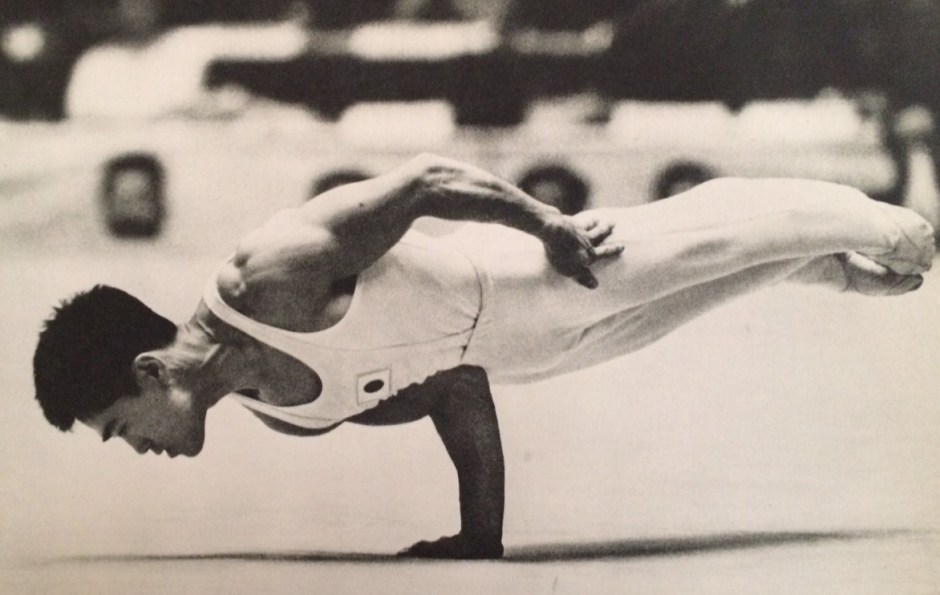
 

Yukio Endo
Yukio Endo, from the book, Tokyo Olympiad_Kyodo News Agency

Another American gymnast who witnessed Endo’s performance, Makoto Sakamoto, told me that the pommel horse is arguably the hardest of the six disciplines. “It’s the most difficult event to stay on. There are so many opportunities to fall and slip off. You can hit a slick spot, or you sit down. He missed! I remember saying, ‘Darn it, the best gymnast in the world is crumbling.’ Then he got a 9.15, and I thought, ‘what a gift!’ Anyone else would have gotten an 8.2 or 8.4. He got a 9.15.”

In other words, the 0.55 edge would have disappeared if Endo had not

People watch fireworks during New Years
People watch fireworks during New Years celebrations at Copacabana beach in Rio de Janeiro on January 1, 2016.AFP PHOTO/ YASUYOSHI CHIBAYASUYOSHI CHIBA/AFP/Getty Images

If you ask me – do you want to be freezing in Times Square or swaying in a tropical breeze on the Copacabana when the clock strikes 12 and the fireworks bring in the new year – I have to say, at least for 2016, it’s gotta be Rio.

And to signify the start to Brazil’s 2016 Olympian coming-out party, the fireworks launched to the theme music of the Olympics.

Ah, but which theme? As you can see below when you click on the image below, they play the music actually called “Olympic Fanfare and Theme”. 2016 New Year Fireworks Rio de Janeiro_ao vivo

The “Olympic Fanfare and Theme” was created by famed composer, John Williams, who was commissioned by the United States Olympic Committee to compose a theme for the Los Angeles Olympic Games. In 1984, John Williams had already created the iconic musical themes for Jaws, Star Wars, Superman and Indiana Jones, so it was not a stretch to select Williams.

To be fair, there are always new songs and anthems created for each Olympic Games. The Indie band Elbow created the theme for the London Games in 2012.

And when Europeans in general think of theme music for the Olympics, they likely think of Vangelis and his theme from the movie, Chariots of Fire.

But, as explained in this great summary article from the Smithsonian, American audiences were trained by the networks in the 1970s, primarily ABC, to associate the Olympics with Leo Arnaud’s “Bugler’s Dream”, which begins with those familiar bass drum beats leading into a trumpet fanfare.

So in the 1990s, there were two themes in America associated with the Olympic Games. At that time, NBC had the rights to the Games, and

1932 Olympics

President Herbert Hoover was inaugurated as the 31st President of the United States on March 4, 1929, during a period still known as the Roaring Twenties, when wealth and excess were touchstones of American culture. Nearly 8 months later, the façade came crumbling down as the stock market crashed, sparking the onset of the Great Depression.

While President Hoover, a staunch Republican, directed the government to invest in large public works programs – think Hoover Dam – he was unfortunately more well known for the shanty towns that sprung up all over America housing the dispossessed and despairing – think Hooverville.

hooverville

Hoover was naturally invited to Los Angeles, to represent the federal government at the 1932 Olympic Games hosted in Los Angeles, California. But Hoover declined, becoming only the 2nd sitting president (after Teddy Roosevelt in 1904) not to participate in an Olympic Games on US soil.

As was stated in this Time Magazine article, Hoover knew his Presidency was in trouble and that in an election year, he needed to stay close to power in Washington DC. “’For him to be away from Washington for three weeks would be a national disaster,’ White House aide Lawrence Richey said, according to Bill Watterson’s The Games Presidents Play.”

Ironically, perhaps, it was during the Olympic Games in Tokyo when President Herbert Hoover drew his last breath. He was nearly 90 years old, and like the Los Angeles Games in 1932, the 1964 Games was nary a thought.

Hoover Dies 1964
Japan Times, October 21, 1964

girl from ipanema record cover

As Olympians were prepping for the 1964 Tokyo Olympics, it’s quite possible they were training, cooling down or relaxing to the song, The Girl from Ipanema. The Brazilian Bossa Nova hit was released in the US on July 25, 1964, went to number one in the US peaking at number five for the year, and charted highly in markets all over the world.

The music from the song, often one of the first examples that come to mind when one thinks of elevator music, was composed by Antonio Carlos Jobim for a film. The lyrics were composed by Vinicius de Moraes, as he sat at a café on the beach of Ipanema, a swanky part of Rio de Janeiro. And indeed, there is a girl from Ipanama who caught the eye of Moraes as she walked by the cafe every day – Heloisa Eneida Menezes Paes Pinto.

Heloisa Pinto
Heloisa Eneida Menezes Paes Pinto, aka “The Girl from Ipanema”

Astrud Gilberto, who sang the bossa nova classic, was selected for the English-version of this song because she happened to be one of the few Brazilians who could speak English decently. And thus was born one of the shining symbols of Brazil – The Girl from Ipanema – said to be the second most recorded pop song in history, after Yesterday, by The Beatles.

And as we enter 2016, and await the start of the Olympic Summer Games in Rio de Janeiro, we hope that Rio walks in as fresh and lovely as the Girl from Ipanema:

Tall and tan and young and lovely
The girl from Ipanema goes walking
And when she passes, each one she passes goes, “Aaah…”
When she walks, she’s like a samba
That swings so cool and sways so gently
That when she passes, each one she passes goes, “Aaah…”

Roy_summer vacation_1967 maybe
Roy, sometime between the Tokyo and Mexico City Olympic Games.

On this, the last day of 2015, I’d like to thank everyone for their support of my blog – The Olympians. I have posted at least once every day since I started the blog on May 1. Out of about 300 posts, I’ve selected 25 that I personally like, in good part because I’ve had the great fortune to talk with the people mentioned in these stories.

  1. A Helicopter View of US-USSR Relations, Olympic Style
  2. American Gymnast Makoto Sakamoto and Memories of Home: Post-War Shinjuku
  3. Arnold Gordon (Part 1): Befriending Judy Garland at Manos in Shinjuku
  4. The Banning of Headgear in Boxing: The Convoluted World of Protecting Our Athletes
  5. Clumsy Handoff, Beautiful Result: A World Record Finish for the American 4X400 Relay Team in Tokyo
  6. Coach Hank Iba: The Iron Duke of Defense Who Led the Men’s Basketball Team to Gold in 1964
  7. Creativity by Committee: The 2020 Olympic Emblem and the Rio Olympic Mascots?
  8. Crowded, Noisy, Dirty, Impersonal: Tokyo in the 1960s
  9. The Dale McClements’ Diary: From Athlete to Activist
  10. Doug Rogers, Star of the Short Film “Judoka”: A Fascinating Look at Japan, and the Foreigner Studying Judo in the 1960s
  11. Escape from East Berlin in October 1964: A Love Story
  12. Escape from Manchuria: How the Father of an Olympian Left a Legacy Beyond Olympic Proportions
  13. Fame: Cover Girl and Canadian Figure Skater Sandra Bezic
  14. Frank Gorman: Harvard Star, Tokyo Olympian, and Now Inductee to the International Swimming Hall of Fame
  15. The Geesink Eclipse – The Day International Judo Grew Up
  16. India Beats Pakistan in Field Hockey: After the Partition, the Sporting Equivalent of War
  17. The Narrow Road to the Deep North
  18. On Being Grateful: Bob Schul
  19. Protesting Via Political Cartoons: Indonesia Boycotts the Tokyo Olympics
  20. The Sexist Sixties: A Sports Writers Version of “Mad Men” Would Make the Ad Men Blush
  21. “Swing” – The Danish Coxless Fours Found It, and Gold, in Tokyo
  22. Toby Gibson: Boxer, Lawyer, Convict
  23. Vesper Victorious Under Rockets Red Glare – A Dramatic Finish to One of America’s Greatest Rowing Accomplishments
  24. What it Means to Be an Olympian: Bill Cleary Remembers
  25. Who is that Bald-Headed Beauty: The Mystery of the Soviet Javelin Champion

chicago blackhawks 2015 stanley cup champions

THREE – Chicago Black Hawks and Nine Olympians Take the Stanley Cup: The Chicago Blackhawks beat the Tampa Bay Lightning 4 games to 2 for their sixth NHL championship. On that Chicago team were Kimmo Timonen whose long and distinguished career included bronze and silver medals for Team Finland in 1998, 2006, 2010, 2014; Jonathan Toews and Duncan Keith who won gold for Team Canada in 2010 and 2014 in Sochi, along with fellow Canadians Patrick Sharp and Brent Seabrook who won gold medal in 2014; Patrick Kane who won silver on the USA team in 2010; Johnny Oduya, Marcus Kruger, Niklas Hjalmarsson who won silver on the Swedish team in Sochi in 2014; Brad Richards Canada: who competed for Team Canada in 2006; and Marian Hossa of Slovakia who competed in 2002, 2006 and 2010.

Platini and Blatter

TWO – FIFA Scandal and Ban: The FIFA Ethics Committee banned FIFA president Sepp Blatter and UEFA head and FIFA heir apparent Michel Platini from all football-related activities for eight years, sparking hopes of greater transparency and an end to corruption and bribes which impact FIFA decisions. For a brilliant explanation of the scandal by John Oliver, all the way back in June, 2014, watch this video.


Russia Track Banned.jpg

ONE – Russia Track and Field Team Banned: After it was revealed that Russian athletes were illegally doping thanks to a state-run program, the International Association of Athletics Federations (IAAF) decides in November to suspend the All-Russia Athletic Federation, essentially all Russian track and field athletes, from participating in international competitions, including the upcoming 2016 Rio Olympics. Here is the documentary that sparked the investigation.

See this link for 13 through 15, 10 through 12, 7 through 9, and 4 through 6.

US team

zaha-hadid-japan-national-stadium-0

SIXProposed 2020 Olympic National Stadium Design Dropped Due to Pricetag: The $2 billion price tag for the new National Stadium in Tokyo proved to be too high. The Prime Minister of Japan, Shinzo Abe, faced down the president of the Tokyo Organizing Committee of the Olympic and Paralympic Games, and former prime minister, Yoshiro Mori, and send the committee back to the drawing board. This decision effectively removed the possibility of the stadium debuting for the 2019 Rugby World Cup in Japan.

No Boston Olympics

FIVE – Both Hamburg and Boston Drop Out: Both Hamburg, Germany and Boston, Massachusetts, USA were selected by their respective national Olympic committees to bid for the 2024 Summer Games, but both ended pulling out after referendum votes indicated the Games would not be supported by the cities’ citizens. While the bid for the 2024 Games remain competitive, with Budapest, Los Angeles, Paris and Rome still in the running, the reputation of the Games for their high cost, facilities that serve little purpose after the Games, the disruption to business and everyday life to locals, among others, continues to grow.

US Women Celebrate 2015 World Cup Victory

FOURUS Defeats Japan to Win Women’s World Cup: US had beaten Japan in the Olympics, but Japan was the reigning World Cup Champion. US goes into Rio with hopes of winning their fourth consecutive Olympic championship. The US team currently has 11 Olympians who only know gold: Christie Rampone in 2004, 2008 and 2012, Abby Wambach in 2004 and 2012, Tobin Heath, Carli Lloyd, Amy Rodriguez, Hope Solo in 2008 and 2012, Sydney Leroux, Alex Morgan, Kelley O’Hara, Megan Rapinoe, Becky Sauerbrunn in 2012.

See this link for 13 through 15, 10 through 12, and 7 through 9.

Bruce and Caitlyn_cover to cover

NINE – Meet Caitlyn Jenner: Jenner reveals in July that she would no longer be known as Bruce Jenner, sparking a dialogue about what it means to be transgender. The 1976 gold medal-winning pentathlon men’s champion’s cover story on Vanity Fair, and follow-up television interviews helped broaden the world view on people who identify themselves as transgender.

Day Thirteen: The Championships - Wimbledon 2015
LONDON, ENGLAND – JULY 12: Serena Williams of the United States and Novak Djokovic of Serbia dance on stage at the Champions Dinner at the Guild Hall on day thirteen of the Wimbledon Lawn Tennis Championships on July 12, 2015 in London, England. (Photo by Thomas Lovelock – AELTC Pool/Getty Images)

EIGHT – Olympians Serena Williams and Novak Djokavic Win 3/4 of their Grand Slams: Williams won the Australian Open, the French Open and Wimbledon in 2015. She is a four-time gold medalist, winning gold in doubles in 2000, 2008 and 2012, as well as the singles championship in 2012. Djokavic won the Australian Open, the French Open and Wimbledon in 2015. Djokavic now has a total 10 Grand Slams, and took the bronze medal in singles play in Beijing in 2008.

fc barcelona uefa.jpg

SEVEN – Barcelona FC Wins the Treble: In the 2014–2015 season, Barcelona win La Liga, Copa del Rey and UEFA Champions League titles, becoming the first European team to have won the treble twice. Olympians on Barcelona FC include Javier Mascherano (gold for Argentina in 2004 and 2008), Lionel Messi (gold for Argentina in 2008), Neymar (silver for Brazil in 2012), Luis Suarez (competed for Uruguay in 2012)

See this link for 13 through 15, and 10 through 12.

jordan spieth masters-champion

TWELVE – Jordan Spieth Wins 1/2 of Golf’s Grand Slam: Spieth, who won the US Open and the Masters, reminds fans of a young Tiger Woods. He and other golfers will make their Olympic debuts in Rio.

usain-bolt-1440338045-800

ELEVEN – Sprinter Usain Bolt Returns to Form: Bolt won the 100m, 200m and 4x100m at the World Championships in August, overcoming injuries and slower times up till then, as well as rival Justin Gatlin. Bolt has six gold medals, three each in the 100m, 200m and 4×100 relay at the 2008 Games in Beijing, as well as the 2012 Games in London.

yuzuru hanyu

TEN – Yuzuru Hanyu Breaks Records: Gold medalist in mens’ singles figure skating in 2014, Hanyu skated better than anyone has ever skated in 2015,finishing the year by breaking the world record for short programs first at the NHK Trophy tournament in November, and then again in the Grand Prix Final in Barcelona in December.

See this link for 13 through fifteen.

What would a blog be without a list! Here is my countdown to the Top Fifteen Sports Stories of 2015. Over the next five days, I will share three stories each day that involved the Olympic Games, Olympians or Olympians to be. Here are number 13 – 15, featuring Mayweather, Rousey and Kobe.

Manny Pacquiao-vs Floyd Mayweather-2015-Fight-of-the-Century

FIFTEEN – Olympian Floyd Mayweather Defeats Manny Pacquiao: In the long-awaited match in May, Mayweather won the welterweight championship fight in a unanimous decision over Pacquiao. Mayweather is a bronze medal winning champion at the 1996 Atlanta Summer Games.

Ronda Rousey Holly Holm tale of the tape

FOURTEEN – Olympian Judoka Ronda Rousey loses to Holly Holm: In an attempt to defend her Ultimate Fighting Championship, Holm ends Rousey’s streak of 12 victories in a row in November. Rousey won a bronze medal for the United States in judo (-70kg).

Kobe Bryant USA_Basketball_Dunk_Wallpaper_Olympics

THIRTEEN – Two-time Olympian Kobe Bryant Announces Retirement: Bryant won gold with the US Men’s basketball team in Beijing in 2008 and in London in 2012.