This is a fascinating report from France24 on the state of Rio de Janeiro one year prior to the start of the Olympic Games. More than anything else, security is the biggest concern for the government and for residents. Brazil is considered one of the most unequal societies in the world, and the gap between the haves and the have nots so great that drug gangs, crime and violence have been a constant background to life in Rio.
While the government has beefed up its police force with the addition of 37 additional special protection units, violence between gangs, and between gangs and police continue. Four thousand have already died from such violence in 2015, many happens when the torch is extinguished, the banners taken down, and the excitement gives way to thoughts of making ends meet in the coming years.
Yoichi Masuzoe, Governor of Tokyo, speaking at the American Chamber of Commerce
Yoichi Masuzoe was in his first year of high school, and a competitive sprinter in the 100 meters, running it in 11 seconds. And he remembers watching the Tokyo Olympics on television. And like the uplifting spectacle of the wedding between Crown Prince Akihito and Princess Michiko in 1959, the Olympics raised the spirits of a nation, including the future governor of Tokyo.
On September 24, 2015, Governor Yoichi Masuzoe, gave a talk for the American Chamber of Commerce of Japan called “City for the Ages: The Magnetism of Tokyo in 2020 and Beyond.” I had never seen the Tokyo governor speak before, but he was definitely in full pitch mode, charming the packed room with the greatness of the food and drink in Japan, which almost everybody in the audience already had an appreciation for. It was the governor’s vision of Tokyo as a pedestrian and biker paradise that raised eyebrows and hopes.
He remembers the brightness of the Tokyo Games, but he also remembers the dust of the construction and the shadows created by the highways that started to snake through the city. He bemoaned what he called the “motorization” of Tokyo, how the smaller rivers were filled by rubble from the war, covered over by roads. As governor of Tokyo, what he pledged to the audience was a drive for the “de-motorization” of Tokyo. He said he would push for a significant increase in bicycle lanes, as well a plan like Boris Bikes in London. He said he would push for the elimination of the highways he believes blight the center of the city.
The Edobashi Interchange 1964, from “The Games of the XVIII Olympiad Tokyo 1964”
He said that the city of Tokyo today, with its highways, its loss of riverways, and its roads packed with cars, was due to an infatuation with money. Making money is important, he emphasized to the chamber of commerce members. But he emphasized that the pursuit of money should not come at the expense of time – time to enjoy a cup of coffee in a more pedestrian-friendly Shibuya, time to have a satisfying family life and a successful career, particularly for women, time to walk, bike and even boat around the safest, cleanest metropolis in the world.
It’s a lofty vision. It’s an Olympian vision. Will the Tokyo governor get us there? Visit us in 2020 and see for yourself!
Is this Arnold Gordon? From the book, “XVIII Olympiad Tokyo 1964”
I wrote in a very recent post about the closing ceremony at the XVIII Olympiad in Tokyo about how an orderly march turned into a disorderly lovefest, which the athletes remember with great fondness. I also wrote about a mysterious character who appeared from nowhere in the National Stadium wearing the number “351” on his shirt and ran along the track. The AP report I referenced stated that the man was Arnold Gordon, a citizen of Sierra Leone.
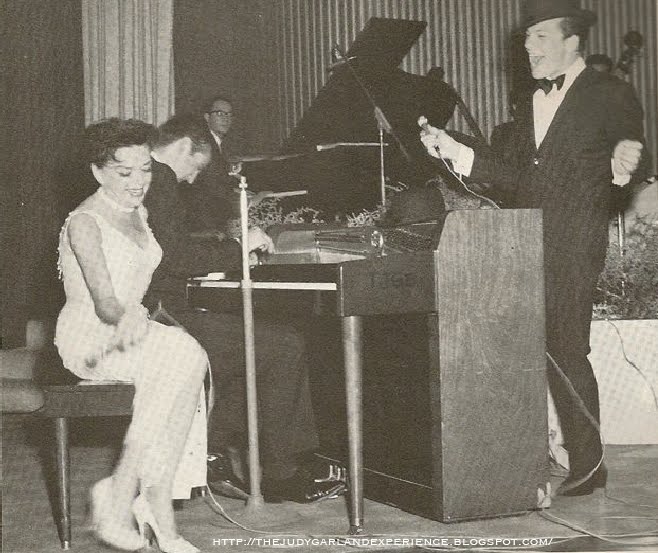
In this interview from the BBC in its coverage of the London Games in 2012, a man named Arnold Gordon talks about how he (and apparently two others) made their way through security to crash the party as it were. My guess is that Gordon is not from Sierra Leone as the AP cites, but from England. Not only did he have wondrous encounters with Judy Garland, as described here, Gordon joined the biggest party in Japan simply by walking on the field. Here is how he told the story.
We decided we would gate crash the closing ceremony so three of us got dressed up in track suits and sneaked into the stadium. They caught the other two, but I was able to run around the stadium, waving to the crowd. They were shouting, urging me on. And I waved and I waved and I ran and ran until was caught and dragged off, out of the stadium.
You can find the above interview starting at the 1 hour 1 minute mark of this program called, Saturday Live BBC.
Per David Price, ” June 23, 1964 … joining the Allen Brothers for a song during the opening night of their of their Tokyo Hilton engagement.”
Arnold Gordon was having a blast. He made his way from England to Tokyo so he could to the Tokyo Games in 1964. He hitchhiked from Paris to Pakistan, took a boat to India and then another boat from Bombay to Tokyo. He got to see boxing and gymnastics, as well as enjoy the nightlife in the area around the Olympic Village.
According to this fascinating interview of Gordon, taped by the BBC as part of the run up to the London Olympics in 2012, Gordon told this tale. You can find it starting at the 1 hour 1 minute mark of this program called, Saturday Live BBC.
I was living in Shinjuku, which was the great center of Tokyo, where everything was happening, I was sharing a house with some Australians. Now and again some of the athletes when they finished their running and jumping or whatever they did would come around to our house, and sit and drink beer. I remember a couple of Russian athletes were brought down to our house because it was a getaway from being watched and being looked after.
We would go out and eat and drink. It was wonderful. There were so many people there. Lots of artists who were working therein cabarets and shows. And we would meet after midnight at a restaurant called Manos, which was run by a rather crazy Russian. It was where we went to eat Russian food. People would come down after they finished their acts. The atmosphere was quite fun. One of the artists who was appearing in Tokyo at the time was Judy Garland. And she used to come down there after she finished her cabaret act. We got to know her very well. We got to sit and talk with her. She used to buy us drinks. It was a small group of foreigners so you got to know each other very well. In fact, one of my best friends, Peter, in fact eventually married her daughter Liza. So we mixed very well.
One evening they were playing one of her records, old vinyl, so she went up to the DJ and grabbed the vinyl off the turntable and said that’s a horrible recording. I can sing better than that. And then she sat at the piano, and sang “Over the Rainbow”. I’ll never forget it. Just thinking about it gives me shivers down my spine. It really was magical. Everybody stopped and listened to her. OK her voice was not as good as it used to be before, but it was Judy Garland singing to us, “Over the Rainbow”. But to see her, she was a bit short and dumpy. Not as attractive as she was earlier in life. But she was a feisty, fun person to be with. She sat at the piano and sang. Even today, 40 years later, I can still feel a tingle when I hear Judy Garland singing as if she is only singing to us. Oh it takes me right back, to my youth. It really does.
She was the best, holding the world record in the women’s javelin throw from May 1960 to October 1964. Elvira Ozolina, the native Latvian who was representing the Soviet Union at the 1964 Olympics, was primed to repeat as Olympic champion in Tokyo, after taking gold in Rome in 1960.
However, you have to play the game as they say. And when the competition ensued, Romanian Mihaela Penes threw nearly 7 meters better than Ozolina to win the gold medal. Ozolina threw poorly, and the Rome Champion landed in fifth place.
Then the rumors began to swirl. The US wire services filled newspapers across the country with this story from AP.
Various headlines from AP news wire stories on Ozolina
“There’s a bald-headed beauty who speaks Russian roaming the Olympic Village today. And a new Olympic mystery is swirling around her. Less than 24 hours ago the girl had beautiful, shoulder-length chestnut hair. Then she walked into a Village beauty parlor and ordered it shaved off. She walked out 20 minutes later, tears streaming down her face and her head bald as a billiard ball.”
The press suspected that it was Ozolina, but the Russian officials and press so strongly denied the report that the mystery remained a mystery. In fact, Ozolina appeared in a press conference a few days later. The AP report, without directly saying so, hints that Ozolina was now wearing a wig, but Ozolina waved the idea off. When asked why she cut her hair off, she said “Cut my hair off? Take a good look at my head.”
So did she, or didn’t she? As they say, only her hairdresser knows for sure.
Hair Salon in Olympic Village, from the book “Tokyo Olympiad 1964_Kyodo News Agency”
Indonesia and North Korea pulled out of the 1964 Olympics. The Vietnam War was raging a few thousand kilometers away. China tested its first atomic bomb. Lyndon Johnson was facing off against Barry Goldwater in a testy US presidential campaign. The Soviets launched the first three-man spaceship. The Warren Report on the Kennedy assassination was released.
Prime Minister Hayato Ikeda
On top of it all, in October, 1964, on the eve of the Tokyo Olympics, the health of the prime minister of Japan was teetering.
In the first week of October, it was reported that Prime Minister Hayato Ikeda had a throat condition and might not be able to attend the opening ceremonies. Fortunately, when the Games opened on October 10, the prime minister was able to preside over the Games.
Ikeda became prime minister of Japan in 1960 as the famed Japanese economic miracle really began to gain steam. In addition to building pension and health insurance schemes for the country, Ikeda created a vision of doubling the income of the Japanese by the end of the decade. Akin to Kennedy’s moonshot vision, Ikeda captured the imagination of the country, and continued to preach that Japan’s economic success was just getting started.
When the Olympic Games ended on October 24, the flame extinguished and the word “Sayonora” flashing on the large National Stadium screen, Japan was universally recognized for having emerged as a legitimate success story, from an Asian nation that re-built itself from the rubble of war to a powerful force in the global economy. Hayato Ikeda, who was born in Hiroshima a year before the turn of the century, was able to witness this as the leader of the country.
And then a day later, on October 25, he announced his resignation. The tumor in his throat was simply not going to allow him to continue as leader. He was hospitalized for three months, had an operation in August, 1965, and then passed away on August 13, 1965.
As Wikipedia notes, a leading economic historian described Ikeda as “the single most important figure in Japan’s rapid growth. He should long be remembered as the man who pulled together a national consensus for economic growth.”
John F. Kennedy and Hayato Ikeda, from the JFK Library
The Closing Ceremony of the 1964 Tokyo Olympics, October 24, from the book, “XVIII Olympiad Tokyo 1964”
To many Japanese, so much was riding on the success of the 1964 Olympic Games, particularly the need to avoid shame, and to project the image that Japan can run a global event flawlessly, in a first class fashion. And for the most part, they did. The Japanese were justifiably proud that their country pulled off the first Olympic Games in Asia.
So on Saturday, October 24, the final day of the 1964 Olympic Games, after everything had proceeded to near perfection, the Closing Ceremony was to be the icing on the cake. And to many it was…except that the athletes did not behave exactly as they were supposed to.
According to the procedures of the Olympic Organizing Committee, the objective was to “carry out all the ceremonies in a well-defined and orderly manner.” The athletes were relieved and ready to celebrate after months of preparation and a few weeks of intense pressure and competition. The officials and supporting staff were also likely very relieved that everything was working to plan. So it’s possible that during the closing ceremony, inhibitions as well as the will to police them crumbled.
“We were told we had to stay in line,” US gymnast Rusty Mitchell told me. “That lasted 5 minutes as we all started taking pictures, exchanging pins. It was disorderly and fun.”
From the book, “XVIII Olympiad Tokyo 1964”
For whatever reason, the athletes came into the stadium arm in arm with athletes from different countries, whether friendships had been struck up during the two weeks of competition, or right then and there. And there was plenty of horsing around, in ways that ordinarily would not have been permitted in rule-rigid Japan.
The ceremony was invaded by a non-athlete who just jumped into the mix, the mysterious number 351 on his shirt. As AP explained, a citizen from Sierra Leone named Arnold Gordon, jumped on the track as the athletes were marching in. “Normally, a cordon of police would have swooped down and gobbled him up before he had taken more than a dozen steps. Instead, the Japanese officials acted as if he did not exist. The crowd, stunned at first by this interruption of the show, soon accepted it as a big joke, laughed and waved as the volunteer pranced around the 400-meter oval, waving in reply to every cheer. ‘It was a just a gag,’ he said afterward. ‘I did a television commercial in this suit, and decided to pull this stunt for the fun of it.’ Emperor Hirohito, graying, bespectacled and nattily attired in a business suit, showed little emotion during this and the more serious proceedings.”
From the book, “XVIII Olympiad Tokyo 1964”
According to Stars and Stripes, “a group of New Zealand athletes made a gallant – if not successful – bid to be the star attraction during the Olympic Games closing ceremonies Saturday night. The Kiwis, before a packed audiences in National Stadium, stopped in front of the Imperial Box and bowed low several times to Emperor Hirohito and Empress Michiko. Then distance runner Bill Baille drew cheers and applause when he threw a kiss at the emperor, Hirohito acknowledged by waving his hat. Baille was completely out of the medal picture. He placed sixth in the 5,000-meter run – and they didn’t strike any medals for the 50-meter kiss throw.”
But then, all good things must come to an end, and Japan bid farewell in the dying light of the dusk, and offered their best wishes to the city that would next host the Olympiad – Mexico City.
As John McBryde, captain of the Australian field hockey team told me, “what really made it special, (the closing ceremony) took place as dusk was approaching. By that time we were all strolling in, in a very leisurely fashion, it had become dark. And when the flame was extinguished, it was suddenly gone. There was no light. And then, up popped the sign for Mexico city. Everybody was in tears.”
It was February 22, 1980. The American men’s ice hockey team were in a locker room in upstate New York, preparing for a game against the Soviet Union in the Olympic Winter Games. Bill Cleary was the head coach of ice hockey power, Harvard University, and he stopped by the locker room to wish his friend, Coach Herb Brooks, good luck. They talked, and then Cleary left the room.
“Then I see the trainer chasing after me and says Herb wants me to go back in to talk to the boys. So I went back and this is what I said: ‘I know what’s going through your mind. You feel isolated here in upper state New York, oblivious of what’s going on in the rest of the world. But you have captivated our entire country and everyone is pulling for you. There are 20 guys pulling for you more than anyone. And that’s the 1960 team. There is only one outcome. You’re going to win!'”
To Cleary, member of the 1960 US ice hockey team, the first American team to win gold in the Olympics, being an Olympian is an honor. When he attended his first Olympics in 1956 in Cortina Italy, he remembers being 21, a kid who never left Boston thrust into the incredible beauty of the majestic Alps. “I thought the sky was so beautiful and was so close it was going to come down on you. Heaven was right there. And we were marching in the parade during the opening ceremony, not long after World War Two and the Korean War, and in came the Russians, the ogres.” But they weren’t there to fight. They were there to compete in sports. “That’s what makes the Olympics so special,” said Cleary. “Olympians can do more for world peace and good will than all the politicians in the world.”
(L-R): Bill Cleary, Dick Meredith, Weldy Olson, Dick Rodenhiser, and John Mayasich were on the 1956 and 1960 US teams
But Cleary believes being an Olympian is also an obligation, an obligation to demonstrate a bond across nationalities and generations, to continuously uphold an Olympic spirit. He remembers the performance and the behavior of the US Men’s ice hockey team at the 1998 Nagano Games. He didn’t like the addition of professional athletes, but when they reacted to poor performance at the Games by vandalizing the locker room, he was miffed. “I was really upset about that. They should have been proud to compete, but instead they were burning their uniforms. We are Olympians. We should take great pride when we represent our country.”
In contrast, Cleary remembers a time in Czechoslovakia he will never forget. In 1983 Coach Cleary took his Harvard hockey team over to Prague. It was Christmas time, but you could tell the locals were having a tough time, he said. On the second to last night of this tour, the interpreter informed him that a fellow Olympian from the 1960 Czech ice hockey team wanted to see him. And when they pulled into a small coal-mining town called Koln, Cleary stepped off the bus to be greeted by Czech goaltender, Vladimir Dvoracek.
“And all of a sudden Dvoracek, he sees me, and shouts ‘Bill, Bill!’ He brings me inside to a room and says ‘coffee, beer, coke?’ He wanted to know what my life was like, about my teammates, about the US. It was almost like he was interrogating me, he had so many questions. Finally, I said I got to go and prepare the team for the game. We warm up, and at the end of the warmups, they play the national anthems. I see my friend Dvoracek and he grabs the microphone. He tells the audience, ‘I want you all to welcome my good friend Bill Cleary. We have not seen each other in 25 years. Our countries are not friendly, but we are friends. We are Olympians and we are friends.’ I am getting goosebumps right now just thinking about it.”
Czech goaltender, Vladimir Dvoracek, sits in the front row, fourth from the left.
After the game they met again, and Dvoracek brings out a scrapbook with pictures of his hockey career until it comes time for me to leave. “He was sad, kind of tearful that I was
The team was set. Nobody on the team wanted the new guys. So when Bill and Bob Cleary joined the US ice hockey team at the deadline, just prior to the start of the Olympic Winter Games in Squaw Valley California, their reception was, well, icy. “When we arrived on the rink in Denver, the other players walked by us without saying a word,” Bill Cleary told me recently.
“I thought, well, this is going to be fun.”
The brothers Cleary were members of the US ice hockey team and Olympic champions, not in 1980 – the Miracle on Ice- but in 1960, the so-called “Forgotten Miracle”. While Jim Craig, Mike Eruzione, and Mark Johnson became house-hold names at Lake Placid in New York, by beating the Russians on their way to gold and glory, the 1960 US ice hockey team did that first.
Captain Jack Kirrane, star goaltender Jack McCartan, John Mayasich, the Christian brothers, and the Cleary brothers shocked the hockey world by knocking off perennial powers Canada, the Soviet Union and Czechoslovakia in succession. The Cleary brothers alone accounted for 24 points in the seven Olympic games, and they weren’t even on the team two weeks before.
As Bill told me, they were businessmen first. He and his brother Bob were just starting a fledging insurance company. Bob was married and Bill was soon to be. Playing in the Olympics would have meant lost revenue. But the coach of the US team, Jack Riley, was heading a team that was struggling, losing to teams across the country. So Riley was persistent. “He kept calling me. I don’t know how many, but quite a few. I finally said, if you want to take me, you have to take Bobby too. Bobby was good, the leading collegiate scorer in the country, and was on the 1959 World Championship US team.”
Coach Riley convinced Bill Cleary to join, and with him came his brother Bob. This led to two cuts from the team, one very famous one – Herb Brooks – the eventual coach of the 1980 US team. But this decision proved decisive. Once the brothers Cleary joined, the team did not lose a single match prior to or during the Olympics.
Bob Cleary passed away a month ago, on September 16.
“Bobby was a classic centerman,” said his brother Bill. “He had a great ability to know where people were on the ice, a sixth sense. And he smelled the net. In the game against the Canadians, he scored the first goal. If you ever watch the game, he won the face off, and when Mayasich passed toward the net, Bobby was prone in the air when he chipped the puck into the net.”
Bill and Bob Cleary were brothers on the team, but when they first arrived on the team, as remarked on earlier, there was no brotherly love for them. It took one game in the Olympics to turn that around, according to Bill. “When we first got on the ice for the first game, my brother passed it to me. I shot the puck and it hit the other winger, and the puck went into the net. There’s a great picture of the three of us hugging each other. And when we started to win, it got better.
“Today, you would never know we had those problems in the early days. We’re all very close today.”
Many remember the 1980 Men’s Ice Hockey Team. But we cannot forget the 1960 team. Here’s the trailer of the film, “Forgotten Miracle”, depicting the journey of that pioneering American hockey team.
There will be 2 new additions to the list of sports showcased in next years 2016 Summer Olympics. The 2 sports are rugby sevens, and golf. Rugby and golf actually aren’t new to the Olympics. The 2016 Summer Olympics will mark their return to the event. Fifteen-man rugby had previously been an Olympic sport, debuting […]




You must be logged in to post a comment.