Koebe Bryant high school
Kobe Bryant

The Players Tribune is a internet forum devoted to the athlete’s perspective. Hounded and misquoted by the press, Derek Jeter believed athletes needed a place for them to tell their story in their own words.

One of the features of The Players Tribune is Letter to My Younger Self, an opportunity for athletes to reflect on their youth, and what their current self would have told their younger self.

Kobe Bryant‘s advice to the high school prodigy that he was is interestingly of a financial nature, and somewhat insightful. He explains that giving your friends and loved ones things, nice things, expensive things, is not doing your friends and family a favor. In fact, two-time Olympic gold medalist, and five-time NBA champion, Bryant would tell his younger self that giving things away is an act of selfishness, and not a responsible way to take care of those you care for.

You love them, and they were always there for you growing up, so it’s only right that they should share in your success and all that comes with it. So you buy them a car, a big house, pay all of their bills. You want them to live a beautiful, comfortable life, right? But the day will come when you realize that as much as you believed you were doing the right thing, you were actually holding them back. You will come to understand that you were taking care of them because it made YOU feel good, it made YOU happy to see them smiling and without a care in the world — and that was extremely selfish of you. While you were feeling satisfied with yourself, you were slowly eating away at their own dreams and ambitions. You were adding material things to their lives, but subtracting the most precious gifts of all: independence and growth. Understand that you are about to be the leader of the family, and this involves making tough choices, even if your siblings and friends do not understand them at the time.

When you’re young, you’re care free and often pain free. But the aches and pains of the full-time athlete can take its toll. To world-class athletes, it’s often the mental stress that is the bigger test.

According to three-time Olympic medalist between 1996-2004, Brandi Chastain of the US women’s soccer team, and four-time Olympian, Jackie Joyner-Kersee, managing pain and injury is a key to maturing as an athlete.

Brandi Chastain portrait outside Spartan Stadium
Brandi Chastain

The mental and physical challenges of rehabbing your body will test your patience. Have faith in those moments — they will define your future perseverance. No athlete knows what’s on the other side of significant injuries. Live all of your questions and trust the process. You’ll return a better player, a better teammate, a better person. – Brandi Chastain in The Player’s Tribune

Yes, your leg will be black and blue, and the torn muscle will bring pain unlike anything you’ve ever felt before. Yes, you’ve never been seriously injured before. However, it will be essential that you listen to your physical therapist when they tell you that you’ll be OK. The only thing that will hold you back is a lack of mental toughness at the time.Jackie Joner-Kersee in The Player’s Tribune

And finally, if these athletes were to tell their younger selves to give pause, it would be for their parents, who unconditionally and thanklessly chauffeured them to practice and back, practice and back, practice and back.

Caroline Wozniaki
Caroline Wozniacki

2012 London Olympic semi-finalist, Caroline Wozniacki, wrote about the early morning drives to tennis practice, and how she wished she were more in the moment, more appreciative of those moments in the car.

He’ll wake up early to drive you to the tennis club at 6 a.m. so you can practice before all the matches start. Then, at eleven at night, he’ll jump back in the car with you and take you back to the club so you can practice after the day’s matches have ended. Appreciate everything your family does for you during your childhood. They will sacrifice so much for you. Do yourself a favor and make the most of those car rides. Soak in all the lessons and guidance that Dad provides you — and not just the stuff about tennis. Pay attention to what he is trying to instill in you about life. He and Mom will always stress the importance being a good person, of treating people right, of being respectful and kind. Let that sink in. Allow it to shape who you become.Caroline Wozniacki in The Player’s Tribune

Henrik Lundquist kid

My favorite player on my home team ice hockey team, the New York Rangers, is goalie Henrik Lundquist. The two-time Olympian and gold medalist from the 2006 Turin Winter Games, Lundquist also remembers the long hours his parents drove him through all kinds of weather so he and his brother could play hockey.

Starting tomorrow, your parents will begin their journey, too. They will drive you and your brother hours and hours across Sweden to play hockey. They’ll drive through huge snowstorms. They’ll drive after long days at work. And their reward at the end of those drives will be to sit in cold rinks for hours — helping you get dressed, then watching you play, then helping you get undressed. Years later, when you think back on this time in your life as a grown man with a child of your own, you will finally appreciate what an incredible sacrifice your parents made for you and Joel. – Henrik Lundquist in The Player’s Tribune

Jules Noel

he great long-distance runner, Emil Zátopek, drank a glass of beer after his tough training every day.

The first ever winner of the marathon, Spyridon Louis, was said to have made a pit stop at his uncle’s tavern for a glass of wine before winning gold at the 1896 Athens Olympics.

But discus thrower, Jules Noël, was a beneficiary of the US government’s decision to suspend the importation and imbibing of alcohol.

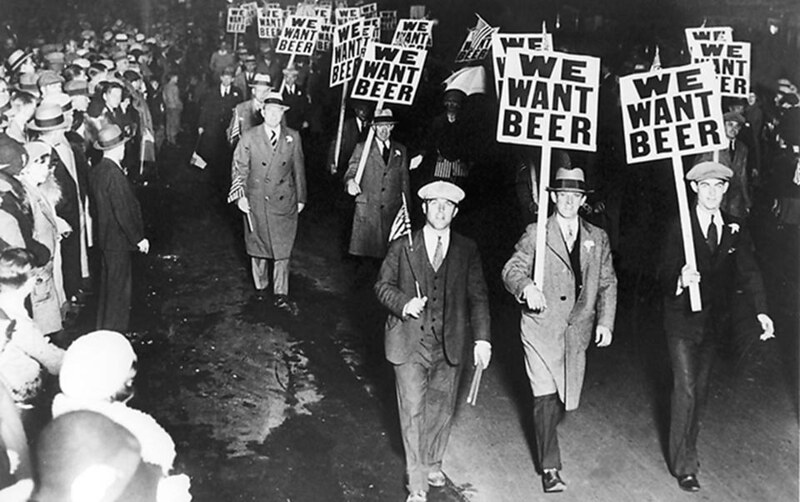
From 1920 to 1933, it was illegal to produce, import, transport and sell alcoholic beverages. This teetotaler era in the United States, known as Prohibition, happened to be in force during the 1932 Olympics hosted in Los Angeles, California.   But according to David Wallechinsky and Jaime Loucky in their book, The Book of Olympic Lists, “in the interests of international goodwill the US government suspended its prohibition against alcoholic beverages to allow French, Italian and other athletes to import and drink wine.”

Anti prohibition protest in New York City
Anti Prohibition Protest in New York City in 1932.

Frenchman, Noël, believed that “wine was an essential part of his diet,” according to sports-reference.com. Apparently, the world record holder and eventual gold medalist in the discus throw, John Anderson, led nearly the entire competition. But in the fourth and final round, after Anderson’s leading throw of 49.49 meters, Noël was reported to send a discus way past Andersen’s best throw at the time. But apparently, “the officials were watching the pole vault and did not see it land. Noël was given an extra throw but could not produce his top throw again and he would eventually place fourth.”

Before his mighty but unofficial throw, Noël was said to be “swigging champagne with his compatriots in the locker room between rounds at the discus event.”

True?

In vino veritas!

Tokyo Big Site in Odaiba

There were fears at one stage that costs of the Tokyo2020 Olympics would balloon to some USD30 billion, which would approach the USD40 billion that was spent on the 2008 Beijing Olympics.

While it is unlikely that cost estimates will drop to the initial budget of USD7.5 billion, the amount presented to the selection commission of the IOC at the bid presentation, the IOC and the organizers of Tokyo2020 are hoping to get the costs below USD 15 billion.

Currently, costs estimates for Tokyo2020 are JPY1.8 trillion or nearly USD16 billion. But there are always hidden costs, or at least costs not spoken about openly, like cost overruns. In this March 2017 article, The Japan Times cites Asahi Shimbun, which reported that “the original bid estimate for constructing new Olympic venues was ¥499 billion and that is now ¥680 billion. Transportation costs have increased from ¥23.3 billion to ¥140 billion, security from ¥20.5 billion to ¥160 billion and ‘software’ expenses from ¥257 billion to ¥520 billion.”

Currently, organizers intend to host the media and broadcasting center for the 2020 Tokyo Olympics at Tokyo Big Sight, which is a large convention center in the Odaiba waterfront district. To accommodate the Olympics, plans include closing off the convention center to all trade shows from April 2019 to November 2020. In a January, 2017 article, The Japan Times cites The Japan Exhibition Association, which claims that the shut down could translate to more than ¥1 trillion in lost sales and affect 1,000 companies associated with the exhibition industry, including booth decorators and logistics firms, if exhibitions are canceled or downsized.

It’s a “matter of life and death,” said Masato Suzuki, deputy general manager of Tokyo-based manufacturer Sanko Tsusho Co. Ltd.’s inspection equipment department. “We small and midsize firms don’t want the Olympics if it means canceling or scaling down exhibitions. It’s by far our most important business opportunity,” he said, adding that about 70 percent of his company’s sales are generated by clients established at the exhibitions.

In a May, 2017 article in Japan Today, it was reported that the city government may be losing a fight to get the national and regional governments to pick up part of the costs of refurbishing sports venues or building temporary sports venues in locales outside Tokyo. As an example of possible costs unanticipated by the organizers in Tokyo, the governor of Kanagawa is looking to add to the bill. Enoshima, the intended venue for sailing events, is a part of Kanagawa prefecture. Governor Yuji Kuroiwa believes his prefecture will have to compensate fishermen who will be prevented from fishing during the Olympic Games, and thus will lose revenue.

Very often, organizers cite the increase in tourism revenues for a city and country hosting the Olympics. But that argument is countered by economist, Andrew Zimbalist, in his book, Circus Maximus – The Economic Gamble Behind Hosting the Olympics and the World Cup. He explained in his book that at big tent events like the Olympics or the World Cup, tourism actually falls.

Still another problem is that when a foreign soccer fan spends $100 at a Brazilian restaurant during the World Cup competition, it might not be a net gain for the Brazilian economy. This is because between June 12 and July 13, 2014, there may have been tens or hundreds of thousands of people (tourists or businesspeople) who would otherwise have traveled to Brazil but instead chose to avoid the congestion, tight security, and high prices during the World Cup and either went elsewhere or stayed home.

This plays out in real life: tourism in Beijing fell during the 2008 Summer Games, as it did in London during the 2012 Olympics. That is, even counting the athletes, the media, the administrators, and the Olympic tourists, the total number of visitors to these cities fell during the month of the Olympic Games. Further, some local residents may have the same impulse that foreigners have: they believe their city or country will be excessively crowded and expensive during the mega-event and that the period of the competition would be a good time to take a vacation outside the country. The amount of outbound tourism from China grew by 12 percent in 2008, the year China hosted the Summer Olympics.

Will the pride that comes with hosting a successful Olympics, and the legacy infrastructure of the 2020 Tokyo Olympics outweigh the hidden costs of running the biggest show on earth? That’s the debate that’s taking place as we head towards September 13 and the IOC meeting in Lima, Peru, when IOC members gather to decide on the fates of Paris and Los Angeles.

Yasuhiro Yamashita overcome

Yasuhiro Yamashita won the gold medal in the open weightclass at the 1984 Los Angeles Olympics. He was the most dominant judoka of his generation. And he continues to be one of judo’s great ambassadors to the sport.

In an interview around 2004, Yamashita spoke about a talk he had had with an executive from NBC, the broadcaster in America that held the rights to coverage of the Olympics in the US. When Yamashita asked why judo was not so popular in America, the executive told Yamashita that it might be better to use English terms instead of the Japanese words used to describe the various judo techniques, and that the throws should incorporate a point system. More interestingly to me, the executive said that judo competitors should show more emotion. Yamashita said in the interview that he did not think that would be the right direction for judo.

I believe that the essence of judo should be protected at all costs. This essence is composed of, “Japanese language,” “courtesy and respect toward one’s opponent” and an “attitude that sets great value on the Ippon technique.” If these vital aspects of judo are lost, then the sport loses all the values that it has come to represent. In particular, I believe that the values of courtesy and respect are a most important foundation of the sport. In judo, even if you are victorious, you should avoid all temptation to show off, or to celebrate, and should maintain self-restraint and composure.

Yasuhiro Yamashita overcome 3

And yet, this debate over the proper way of carrying yourself as judoka, true to the way of the founder, Jigoro Kano, was why Yamashita’s victory at the 1984 Olympics was so poignant.

Yamashita carried himself stoicly during the competition, especially after he tore his right calf muscle in his opening match. He claimed in this video interview this attitude was a competitive advantage.

One of my strengths, though, is my grin and bear it attitude, and I knew there was no point in dwelling on it. I focused myself ready for the next match. If my injury became evident, it would make it harder. I was determined not to show any pain in my face and that I would chokehold my opponent to win. And that’s how I went into the remaining matches.

He competed without excuse or complaint, trying his best to hide his limp and intense pain, and ended up winning his four matches to win gold. That’s the judo way.

But when the judge signaled victory to the Japanese over the Egyptian, Mohamed Ali Rashwan, to win the gold medal, Yamashita lept to his feet. He thrust his arms into the air. Tears began to stream down his cheeks. In other words, Yamashita, who lost his chance for Olympic glory due to the boycott of the 1980 Moscow Games, who was at great risk of losing his second chance, had somehow emerged victorious – finally, an Olympic champion. Again, here is Yamashita describing his emotions.

Yasuhiro Yamashita tossed in the airBefore I knew it I was standing up celebrating. I’ve never shown such emotion at a victory before. I had no time to feel anything like that. My injured leg had been hurting so much. I’d been fighting the pain all the way to victory. I just felt, “Yes! I’ve done it!” (Yatta!) I don’t think I really knew what was going on around me.

At the end of the match against Rashwan, you can see Yamashita limp off the mat, pausing to turn around and make a swift bow. He quickly turns around, and limps off. He cannot bend his right knee and yet you can see him racing off the stage and down the steps and into the arms of his teammates, who then proceeded to throw the huge Yamashita into the air with glee.

He could not help but celebrate. He could not maintain his composure. And that was all right. Yamashita had climbed a mountain. And he was on top of the world.

Yasuhiro Yamashita arms raised
Yasuhiro Yamashita after winning gold in the 1984 Olympics, open weightclass, judo

He was 7 years old when he watched the 1964 Tokyo Olympics on television, where the Japanese won three of four gold medals in judo, at the sports Olympic debut. At the age of 10, he started training in judo at his elementary school. A few years later, as a second year junior high school student, Yasuhiro Yamashita wrote a report entitled “My Dream”. He wrote that he could see himself in the future, in the Olympics, watching the Japanese flag raised on the center pole, listening to Japan’s national anthem.

It took another 14 years, but on August 11, 1984, Yamashita had a chance to realize his dream. Up to the Olympics, Yamashita had won 194 straight matches, 189 by ippon, and so was expected to dominate at the Los Angeles Olympics and win gold easily. But his golden victory was far from easy.

First up for Yamashita was Lansana Coly of Senagal. Japan had already won gold in three other weightclasses, which might have put pressure on a less experienced first-time Olympian. But Yamashita made quick work of Coly, winning by ippon in 28 seconds.

Next up was Arthur Schnabel of West Germany. Yamashita needed nearly 3 minutes, but he was able to wrestle Schnabel to the mat and win by ippon. However, when Yamashita stood up to leave the mat, he was limping, favoring his right leg. With two more matches to go, he had torn his right calf muscle during the match.

“To tell you the truth,” Yamashita revealed in this video interview, “when I tore the muscle during the move, I thought ‘damn it!’ It’s a world where the winner rules, and where you can’t afford to show any weakness. I somehow managed to get through that match without letting my opponent know that I was injured. But I was a little depressed after that.”

After his defeat of Schnabel, Yamashita had only 45 minutes to ready himself for the semi-final match against Frenchman, Laurent del Colombo. In the documentary about the Los Angeles Olympics, 16 Days of Glory, Yamashita admitted that he was concerned, saying “in my semi final it was the first time I ever thought I might lose.” While Yamashita said that he would not exploit an injury to an opponent, and would keep to his original strategy, he didn’t know whether del Colombo would honor that unwritten rule.

Del Colombo went right after Yamashita’s right leg, kicking the inside of the leg and sent Yamashita to the mat – a very uncommon occurrence. It was not an ippon, and very quickly, Yamashita turned the tables, threw the Frenchman down and pinned him for victory and a chance for gold in the finals.

There was only one man in the way of Yamashita achieving his dream. This should have been Yamashita’s second attempt at gold, but when Japan joined America’s boycott of the Moscow Olympics, Yamashita had to wait another four years. So here he was, a four-time World Champion, the greatest judoka of his generation, on the verge of winning gold in the Olympics.

Yasuhiro Yamashita overcome 2Resolution came quickly.

Egyptian, Mohamed Ali Rashwan, had made his ways to the finals fairly efficiently. The Japanese and the Egyptian had never faced off against each other. And with the injury to his leg, Yamashita admitted that he had no strategy for the gold medal match. Rashwan went after Yamashita’s right leg, but Yamashita had shifted slightly and found air. Off balance, Yamashita wrapped his mighty right arm around the Egyptian’s waist and back and threw him down. With the full weight of Yamashita’s 128 kilograms, Rashwan flailed around on the mat like a fish flopping around for air. After holding Rashwan on the mat for 30 seconds, the referee declared the Japanese the victor.

Paul Maruyama, a member of the US Olympic judo team at the 1964 Tokyo Olympics, was the color commentator on the American broadcast of the open category finals, and understood the significance of this victory. “Yamashita has won every title there is available to a judo man,” said Maruyama. “But this was the one that eluded him. He made the Olympic team in 1980 but because of the boycott, this was the one title he wanted more than anything else in the world, and he’s got it.”

And so when Yamashita got to the medal podium, Rashwan helping the limping Yamashita up to the highest stand, the Japanese remembered his dream as a 7 year old – to watch the Japanese flag climb the pole while he listened to the Japanese national anthem.

The gold medal around his neck, Yamashita realized that dreams do indeed come true.

The high school girl in Japan is as iconic an image of Japanese popular culture as the ninja, Mt Fuji and Hello Kitty.

For whatever pop psychology reason you want to imagine, the teenage girl in a uniform, particularly those that echo the naval uniforms of Europe in the 19th century, is a constant in Japan’s mainstream (and not so mainstream) culture. More interestingly, the fighting high school girl is a uniquely popular phenomenon in Japan – case in point, the iconic characters of Sukeban Deka and Sailor Moon.

1989 High School Sumo Kanazawa Tournament

In promotion of the 101st High School Sumo Kanazawa Tournament, to be held on Sunday, May 21, 2017, a video called “Sumo Girls Eighty Two Techniques” was released. The Japan pop culture site, SoraNews24, provides details on these 82 techniques.

Most people, however, are likely more interested in the visuals.


Sumo Girls 2

Sumo Girls 1

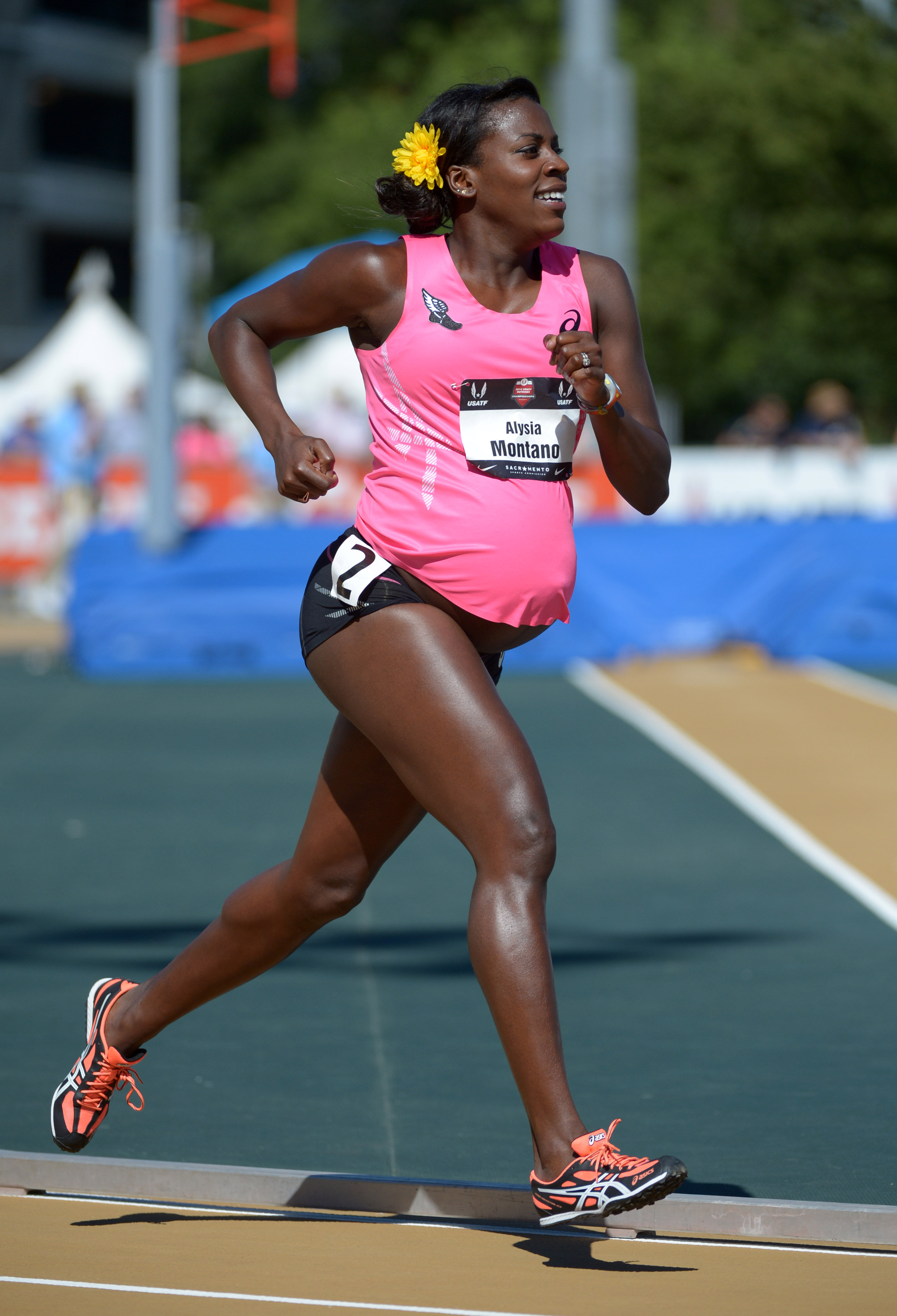
Track and Field: USA Championships
Alysia Montaño competing at the 2014 USA Outdoor Championships

Athletes are always pushing the boundaries – doing and accomplishing things that most others would not try or even think of doing.

When Alysia Montaño was considering whether to compete in her fourth straight USA Outdoor championship in 2014, she made a decision to do so – a daring decision considering she was 8 months pregnant!

This link, which shows a list of athletes who competed in the Olympics while pregnant, is filled with names of people who were 5-months pregnant or less. I wrote about the famed Flying Dutchwoman, Fanny Blankers-Koen, who was three-months pregnant when she won four gold medals at the 1948 London Olympics. Today, it is more and more common to hear about athletes competing while pregnant.

But Montaño race at 8 months was eyepopping. She was not out to win the 800 meter competition at the USA Outdoor Championship. In fact, she completed her race 35 seconds off her personal best. Her objective, as she related in this CNN interview, was to show the world what it looks like for a pregnant woman to be working, even as late as 8 months.

I recognized it was unlikely for people to see a pregnant woman running, in general. I wanted people to recognize that fitness and pregnancy is a really good thing, and this is what it looks like being a professional woman, whether my profession happens to be a professional athlete, or a businesswoman who has to go in an office and work 9 to 5. This is what it looks like for me as a professional athlete and wanted people to see that.

Of course, everyone wonders, is it safe? And Montaño has explained in many interviews that she did consult with her doctors, who not only said it was safe, it is a very good idea for women who are pregnant to exercise. Montaño explained that the immediate concern in running is not to fall. But like walking down the street, when a pregnant woman’s center of gravity is different from when she is not pregnant, she has to always remember to keep the posture upright. Montaño concentrated on doing so during the race.

In Montaño’s interview with ABC News, Senior Medical Contributor Dr. Jennifer Ashton explained that “pregnancy is not a disease,” and “we have to remember, pregnancy, labor and delivery – we have to train for them.”

As explained in this article, only one out five pregnant women exercise according to a study commissioned by the International Olympic Committee, and that “The American Congress of Obstetricians and Gynecologists (ACOG) recommends at least 150 minutes per week of moderate-intensity aerobic activity for women with uncomplicated pregnancies (although contact sports, scuba diving, sky diving, hot yoga or activities with risk of falling should be avoided, reads the organization’s opinion).”

Said Dr. Raul Artal, who co-authored the report, “pregnancy should not be a state of confinement but rather an opportunity for women to continue an active lifestyle or to adopt an active lifestyle if they were not active before.”

Amber Miller
Amber Miller competing at the 2011 Chicago Marathon

Amber Miller certainly didn’t confine herself. At the age of 27, while 39 weeks pregnant, Miller ran in the 2011 Chicago Marathon. It was not publicized, but when people realized she was pregnant, she got a lot of double takes and words of encouragement, as noted in this New York Times Well blog post.

Miller finished the race three hours off her personal best, in 6 hours and 25 minutes, mixing in walking with running. But then after the marathon, she embarked on a second one. While running she experienced contractions. Eight hours after completing the marathon, she gave birth to a baby girl. Which of the two was more difficult? “I don’t feel anything from the marathon, but I do feel what you’d expect after giving birth,” she said the day after.

So for all the mothers who have toughed it out, by just having children, Happy Mother’s Day!

Paris_2024_Olympic_bid_logo.svg

It was 1921 and the International Olympic Committee (IOC) were gathered in Lausanne, Switzerland to vote on the host city of the 1924 Olympiad. Delegates from Amsterdam, Holland, as well as Rome, Italy were confident with its bid to host the 1924 Olympics. The founder of the modern Olympics, Baron Pierre de Coubertin, was 58 years old, and had overseen the birth and growth of the Olympic movement for over 30 years, and announced in Lausanne, he was ready to retire, and that he had a favor to ask of his fellow IOC members.

Would they be so kind as to select Paris, France, his hometown, to be the host of the 1924 Olympic Games?

The IOC members could not turn down the father of their movement, and thus Paris was selected as host of the 1924 Games, much to the chagrin of the delegates for Rome, who stormed out of the meeting. But the Dutch, who had bid for the 1912 Olympics, and ceded to Antwerp, Belgium in 1920, were also selected at this 1921 IOC meeting to host an Olympics, the next one in 1928.

Eventually, the IOC drew up a charter that states a host city must be selected 7 years in advance, probably assuming that changing economic or political conditions might result in regrets over a decision made so far in the future. Possibly they used the 1921 case as its benchmark. But nearly 100 years later, the IOC may need to look confidently into its crystal ball and decide yes, let’s select, both Paris and Los Angeles for the next two Summer Olympics.

On September 13, 2017, the IOC will meet in Lima, Peru to select the host city of the 2024 Summer Olympics among the two surviving candidates – Paris and Los Angeles. There has been speculation for months that they may also select the host city for 2028.

LA_2024_Olympic_Bid_Logo.svgBut which city should go first in 2024, and which city will take the longer-term plunge, agreeing to host 11 years later? Delegates from both bid committees are saying that they are only considering 2024. But from the IOC’s perspective, locking up two cities for the next two Olympics would be a relief as cities and nations are now commonly reluctant to bid for this biggest of big tent events.

Rich Perelman, who edits the insightful newsletter The Sports Examiner, recently posits a scenario for the upcoming selection prior to key IOC visits with the bidding committees in LA and Paris in May. Perelman believes that the IOC needs to reward Paris who has been active in hosting Olympic-spots events, and help turn the tide in Europe, which has seen major cities like Rome, Hamburg and Budapest drop bids due to weak support in their own countries.

Perelman explains that later may be better for LA. Even though Los Angeles has fantastic facilities ready to go, particularly an Olympic Village infrastructure that Paris does not currently have, the city of angels still has significant transportation infrastructure issues, among other things, that they could use the time to resolve.

So if one assumes that the members of the IOC vote to select Paris as host of the 2024 Olympics, then Perelman believes that the IOC, driven by president Thomas Bach, have to make a strong offer to Los Angeles to accept the rights to host in 2028. Such inducements would include start-up funding for four year from next year, say USD10 million a year, and perhaps early access to monies from television rights and sponsorships prior to 2022, which is when such payments would normally be made for a 2028 host city selected in 2021.

Interestingly, I have yet to see a scenario if the IOC vote to select Los Angeles as host in 2024. Would Paris agree to wait 11 years and host in 2028?

In 1921, Los Angeles also bid to host the 1924 Olympics, but failed. In 1923, the IOC met in Rome to decide on the host city of the 1932 Olympics, nine years later. The IOC selected Los Angeles. And the circumstances then may be similar to the circumstances today. The IOC had only one bid for 1932 – Los Angeles. If Paris wins the bid in September, the IOC may think they have only one bid for 2028 – Los Angeles. Will history repeat?

Posto da Torre
Posto da Torre in Brasilia, Brazil.

The Posto da Torre is a busy gas station in Brazil’s government seat of Brasilia. Before 2013, Posto da Torre (Tower Gas Station) was just one of many of gas stations in the capitol. After 2013, Posto da Torre became the symbol of corruption in Brazil.

A drug investigation by police into a money exchange shop located on the Posta da Torre property revealed that billions of dollars secretly skimmed from the accounts of Petrobras, Brazil’s state oil enterprise, as well as construction companies, were moved into the hands and accounts of Brazil’s most prominent politicians. In fact, over 100 of Brazil’s top politicians have been implicated in what is today called Operation Car Wash, known in Portuguese as Operação Lava Jato.

One of the more well-known names caught up in web of Operation Car Wash is former mayor of Rio de Janeiro, Eduardo Paes, whose name has appeared on lists of people receiving payments from construction companies, presumably related to the development projects for the 2016 Rio Olympics. According to this post from Inside the Games, Paes is alleged to have received over USD5 million from from engineering giant Odebrecht.

Paes, who ended his role as mayor at the end of 2016, has denied wrongdoing, calling allegations “absurd”.

Former Brazil President, Henrique Cardoso is also under investigation for taking bribes from Odebrecht, has spoken recently about Operation Car Wash and its significance. “Car Wash has played a very important role in Brazil because it lifted the lid, which was necessary. But that will not resolve things immediately. It is a process,” he said in this Reuters article. “How do you change a culture? With time and by setting a good example – there is no other way.”

An interesting aside: there is no car wash in Posto da Torre. As The New York Times cheekily point out, the closest this Brasilia gas stop has to a car wash is a laundromat. At any rate, it is money that gets washed, not cars. When politicians will come clean is anyone’s guess.

Paula Radcliffe's world record setting marathon time
Paula Radcliffe’s world record setting marathon time

When Bob Beamon set the world record in the long jump at the 1968 Mexico City Olympic Games, his victory was so dominating that the record held for nearly 23 years. Perhaps as amazing, when Mike Powell finally broke Beamon’s mark, Powell’s world record has held even longer – now over 25 years.

The European Athletics Association (EAA), the governing body for athletics throughout Europe, are making recommendations to bring greater integrity to historical track and field records that could result in the erasure of Powell’s records from the books. As far as I can gather, the EAA is assuming that standards for doping tests were not robust enough in the 1990s, and thus it is possible to assume that existing records from that time are suspect.

To that end, the EAA is proposing to the International Association of Athletic Federations (IAAF) to adopt the following standards for athletics records, according to The Sports Examiner:

  • Performances would have to be achieved at competitions on a list of approved international events where the highest standards of officiating and technical equipment can be guaranteed;
  • The athlete will have been subject to an agreed number of doping control tests in the months leading up to the performance, and
  • The doping control sample taken after the record is stored and available for retesting for 10 years.

According to The Guardian, blood and urine samples have been stored by the IAAF as early as 2005. Thus the current speculation is that any track and field record set prior to 2005 no longer demonstrate acceptable levels of integrity. Not surprisingly, holders of records set prior to 2005 are outraged.

Jonathan Edwards, who set the current world record holder in the triple jump in 1995, said “I thought my record would go some day, just not to a bunch of sports administrators. It seems incredibly wrong-headed and cowardly and I don’t think it achieves what they want it to. Instead, it casts doubts on generations of athletics performances.”

Jonathan Edwards
Jonathan Edwards and his world record setting jump

Paula Radcliffe, also quoted in the Guardian article, expressed dismay at the inference her record in the women’s marathon set in 2002 is thanks to doping. “I fully understand the desire and need to restore credibility to our sport but don’t feel that this achieves that,” said Radcliffe. “It is yet one more way that clean athletes are made to suffer for the actions of cheats.”

And here’s how Radcliffe expressed herself in Twitter.

I am hurt and do feel this damages my reputation and dignity. It is a heavy-handed way to wipe out some really suspicious records in a cowardly way by simply sweeping all aside instead of having the guts to take the legal plunge and wipe any record that would be found in a court of law to have been illegally assisted. It is confusing to the public at a time when athletics is already struggling to market itself.

As quoted in The Sports Examiner, the EAA president, Svein Arne Hansen of Norway, believes that these recommendations are essential to improving the integrity of records in sport. “Performance records that show the limits of human capabilities are one of the great strengths of our sport, but they are meaningless if people don’t really believe them. What we are proposing is revolutionary, not just because most world and European records will have to be replaced but because we want to change the concept of a record and raise the standards for recognition to a point where everyone can be confident that everything is fair and above board.”

Hansen is not alone and has an ally in the IAAF president, Sebastian Coe. “I like this because it underlines that we [the governing bodies] have put into place doping control systems and technology that are more robust and safer than 15 or even 10 years ago,” said Coe. “Of course, for this to be adopted for world records by the IAAF it needs global approval from all area associations. There will be athletes, current record holders, who will feel that the history we are recalibrating will take something away from them but I think this is a step in the right direction and if organized and structured properly we have a good chance of winning back credibility in this area.”

Coe speaks to the challenge of driving dramatic change. Will the records of Powell, Edwards and Radcliffe, among others, be wiped from the record books? Stay tuned.