The Artistry of Stephen Curry_NYTimes
From the article, The Artistry of Stephen Curry, New York Times

Stephen Curry is 6 ft 3 (1.91 m) tall and 190 lbs (86kg) – above average tall, but kinda small for NBA standards. And yet, if he makes the US Men’s basketball team, and the US wins the gold medal in Rio this summer, Curry has the potential to stand on top of the international basketball marketing world.

After Curry’s Golden State Warriors won the NBA championship last May, and after the holiday shopping season, Curry’s jersey is the most popular. The only shoe more popular than Michael Jordan’s for Nike is Curry’s for Under Armour. This fascinating ESPN article explains, in fact, how Nike lost Curry to Under Armour in one of the great sports marketing signings of all time. According to sports marketing impressario, Sonny Vaccaro, the man who signed Jordan for Nike, Curry didn’t fit the mould, and was overlooked by Nike, which already had Curry under contract.

“He went to Davidson,” said Vaccaro. “He was always overlooked. He was skinny, he was frail, he was all the things you weren’t supposed to be. He never got his due. All of a sudden, like a bolt of lightning, Steph Curry is on the scene. And this is the hardest thing for Nike to swallow right now. What you’re witnessing is a phenomenon. This is like Michael signing with Nike in ’84. He’s going to morph into the most recognizable athlete. And why is he going to be that? Because he’s like everybody else.”

tall and short in basketball
The long and the short of it in basketball.

The average height of a human male ranges from 5ft7in/170 cm to 5ft11in/180 cm tall. So relative to the average height of an NBA player, which probably averages a foot taller, Curry is, well, short. And yes, he is an athletic freak whose body control is at a level of balletic precision. But more importantly, he is the greatest three-point shooter of all time. And while an NBA team loves the athletic big guy who can shoot threes (e.g.; Detlef Schremph, Kevin Durant), the three-point line is the realm of the guard, either the point guard or shooting guard, the shortest guys in the game.

Actually, the NBA has always had a love for the tall guy. There’s an obvious structural reason for that. When James Naismith created the game of basketball, he conveniently attached a peach basket to the rails of a running track that ran above the floor of the gym in Springfield, Illinois in 1891. Those rails happened to be 10 feet off the ground.

“That arbitrary decision to put the basket at ten feet caused the game of basketball to take shape around the tallest players,” said Roman Mars, in this fascinating piece called “The Yin and Yang of Basketball“, in one of my favorite podcasts, 99% Invisible.

As the game developed, it became obvious that the taller you are, the easier it is for you to defend the basket, and certainly, to score. And in the 1960s, the slam dunk became popular, particularly among black players. As the 99PI podcast went on to explain, the dunk became a symbol of black power, and was seen as such a threat that the NCAA, America’s governing body for college sports, banned the slam dunk from 1967 to 1976.

While the NCAA decision was likely a racially-driven one, the slam dunk was also primarily the domain of the tall player. And at that time, the NBA was getting a bit boring as people basically threw the ball into the tall center, who would take a very high-percentage shot. The ABA, an emerging competitor basketball league, saw an opportunity to draw fans that the NBA could not: they introduced the three-point line in 1967. As ABA commissioner, George Mikan (a big man in the NBA himself) said, the three pointer “would give the smaller player a chance to score and open up the defense to make the game more enjoyable for the fans.”

Twelve years later, the NBA also adopted the three-point shot, a radius some 25 feet (7.6 meters) from the basket. And while it was seen as a gimmick and seldom attempted in the early years, the three-point shot has become a strategic tool in the coach’s toolkit, and the

BCCJ Paralympics Event 1
British Chamber of Commerce Japan panel discussion: “What About the Paralympics”.

Rina Akiyama is totally blind in both eyes, but that didn’t stop her from learning how to swim and eventually becoming a champion swimmer.

Hisano Tezuka is deaf, but that didn’t stop her from becoming a skiier, determined to compete at the highest levels in the Deaflympics.

Daisuke Uehara does not have the use of his legs, and was turned off by people encouraging him to take up wheelchair basketball, and gladly took up the sport of ice sledge hockey, helping Japan to Paralympic silver at the Vancouver Games in 2010.

On March 25, I had the honor of listening to the stories and views of these retired athletes, who were asked by the British Chamber of Commerce in Japan to join a panel discussion entitled, “What About the Paralympics”, an event with the aim of raising awareness of Paralympic sports in Japan. In my research on the Olympics, I have spent little time on the Paralympics, an event that started with a competition for war veterans with spinal cord injuries at the same time as the 1948 London Games. The first official Paralympic Games were held in conjunction with the Rome Summer Games in 1960, and have continued ever since, growing consistently in popularity and significance.

Rina Akiyama
Rina Akiyama, gold medal winner of the 100-meter backstroke at the 2012 Paralympic Games in London_Getty Images

What I learned is that the Paralympic Games is not about disabled athletes, but about athletes with tremendous ability. If Japan (or any society) values diversity and strives to be more inclusive, then a mind shift needs to take place. The BCCJ, like elements in the public sector, the private sector and NPOs, believe people need to stop making the so-called disability of a person the number one characteristic of a person, and need to start understanding the abilities of that person that allow growth and avenues for that person to achieve his or her potential.

In the case of Paralympic participants, these people are athletes, some of them as intense and brilliant as their so-called able-bodied colleagues.

Akiyama began swimming at 3. At 10, she read a book about the Paralympics, and from

Sidd Finch
From April 1, 1985 issue of Sports Illustrated

I was vulnerable.

My favorite team in sports, The New York Mets, were actually up and coming, after 13 years of supreme suckiness. Hope springs eternal, but it was especially true for Mets fans in April of 1985.

And when Sports Illustrated came out with the story, “The Curious Case of Sidd Finch”, I was ecstatic. Really, the Mets have a prospect who can throw a fastball 168 mph (270 kmh)? He wore one shoe, he played the French horn – well these eccentricities were proof that it had to be true. After all, there were pictures of him, and his locker was between those of George Foster and Darryl Strawberry. After 13 years in the wasteland, our savior had come!

George Plimpton wrote the piece that set off a media firestorm. TV news crews were sent to Florida to interview the mystery pitcher on the Mets. But no one could find him. And then two weeks later (remember, this is pre-social media), New York Mets fans woke up.

April Fools.

Writing an April Fools story is walking a fine line between incredulity and credulity. It’s got to be believable enough, and yet outlandish enough to make you go, “Say what?” Here are a few April Fools’ stories regarding the Olympics.

On April 1, 2014, this video was released announcing that skateboarding would be an Olympic sport in 2016. A day later, it was revealed to be a prank. Of course, as we know now, skateboarding is actually one of the five new sports that Tokyo 2020 is recommending for the 2020 Games.

Last year, twelve-time Olympic medalist over five Olympic Games, Dana Torres, announced she was coming out of retirement to compete at the Rio Games. Yes, she was 47. But yes, she was a swimming legend and still in fantastic shape.

Dana Torres Twitter

In April 2008, the UK Telegraph placed their April Fools story so far in the past it had to be true – that the 1900 Olympics in Paris featured a poodle-clipping competition. This story

C K Yang
Subject: Yang Chuan-Kwang. 1960 Olympics. Rome, Italy. Photographer- George Silk Time Life Staff merlin-1140594

They called him the Asian Iron Man, a title befitting the only Asian ever to set a world record in the decathlon, the ten-event, two-day athletic event that is as grueling an athletic competition there is.

As the first non-Westerner to set a world record for the decathlon in 1963, experts pegged C. K. Yang as a heavy favorite to win gold in Tokyo in 1964, and prompted this profile in the August, 1964 edition of the popular magazine, Boy’s Life. In this article, they wrote about Yang’s humble origins, a small, sickly boy. Not mentioned in the article was that he was born in the poorest, most isolated part of mainland Taiwan – Taidong.

So when the arguably greatest athlete in Asian history provides his list of key behaviors for training for championship performance, the readers of Boy’s Life might have taken note:

  • Determination.
  • Discipline yourself.
  • Practice with a purpose.
  • Don’t just run and run, and then go home.
  • Watch people running.
  • Appreciate what your coaches are doing for you.

Let ‘s look at a couple in detail:

Determination. “Want to do it, know that you can do it, then DO IT!”

Yang came up with Nike’s famous marketing phrase years before the company was created…but he knew from experience that being determined is a good part of the battle. When he made the cut to represent Taiwan in the Asian Games in 1954, he was probably going to compete in the broad jump or the high jump. When he went to his country’s training camp in preparation of the Asian Games, he began fiddling with other disciplines. Yang hurldle UCLAHe explained this in detail in this Sports Illustrated article:

Yang’s curiosity and competitive drive moved him to experiment with other events, hitherto strange to him. He set up a bicycle and used it as an impromptu hurdle. He read a Japanese book on hurdling – Yang speaks and reads Japanese fluently because of his schooling under the Japanese occupation – and studied its illustration. “I tried to bring the whole thing together in my mind,” he said, but his coach became irritated because Yang was not concentrating on his jumping. Yang said, “I told him I just can’t jump every day. If I practice hurdling today, maybe tomorrow I can jump more higher.” And I did. I jumped 2 or 3 inches higher.

And as the article continues, Yang did the same for javelin, the discus and the shotput, excelling in this new events to the point where the coach had to say, “How’d you like to try decathlon?”

Appreciate what your coaches are doing for you. Appreciate the fine equipment you have to work with, and then give your best. I came all the way to this country to take advantage of the coaching and equipment available here. Through track I have received an education, and because of this, I have given track everything I have.

Drake and Yang
Yang, and his coach at UCLA, Ducky Drake, to his right

In the Sports Illustrated article, Yang tells this touching story about how people need to have empathy for others who try so hard. He explained to the author of the article, Robert Creamer, that people made fun of him when he was about 15, and he suddenly grew. He was so tall and thin compared to his friends that people derisively nicknamed him “Bamboo”, and laughed at him, which Yang was understandably sensitive to. He told this story about how his baseball coach helped him gain his confidence.

In practice when I throw the ball I was – so funny form, you know? I couldn’t throw hard. The athletes start laughing at me. I was so happy to join them, and I was so embarrassed when they laugh at me. The coach was mad. He bawled them out who laughed, and he said, “if you laugh at people someday he will be much better than you are. You better not laugh at people. You never know. He have a long way to go, and maybe he can learn faster than you and someday laugh at you. Put yourself in that position. Suppose people laugh at you. How do you respond to them? How do you feel?” Said, “think about it.” And they didn’t laugh at me anymore.

C K Yang Sports Illustrated Cover
World’s Best Athlete – C. K. Yang December 23, 1963 X 9612 (X 9456) credit: Mark Kauffman – contract (BG Eric Schaal)

Before there was Jeremy Lin or Yao Ming, Tiger Woods or Se Ri Park, Nomo or Ichiro, or even Bruce Lee for that matter, there was C. K. Yang.

Iconic Asian athletes are far and few between, but Yang Chuang-Kwang, or C. K. Yang as he was popularly known, was called The Greatest Athlete in the World several times in the late 1950s and early 1960s.

Competing in three Olympics as a decathlete – Melbourne in 1956, Rome in 1960 and Tokyo in 1964, Yang of Taiwan set an indoor record for the pole vault in 1963, set the world record in the decathlon later that year, and still is the only Asian to ever hold the world record in that category. And in an epic, down-to-the-wire finish, Yang lost the gold medal to his best friend and biggest competitor, Rafer Johnson of the United States, at the Rome Summer Games.

He did not win the championship, but he made an entire nation, and quite possibly, an entire race proud. And there was one person in particular who was immensely proud – Mr S. S. Kwan.

Yang sat down with Robert Creamer of Sports Illustrated for a lengthy interview, and in this article, Yang expressed his keen gratefulness to Kwan, who was a successful architect and businessman who supported Yang’s development. In fact, Kwan, who was the president of the China National Amateur Athletic Federation in Taiwan, personally financed Yang’s travel and living expenses when Yang visited the United States to get experience in AAU meets.

Ducky Drake
Ducky Drake

Eventually, it was recommended that Yang stay in the US, where he enrolled at UCLA to train under the renowned coach, Ducky Drake, and become teammates with rising star, Rafer Johnson. Kwan supported it all.

“He (Kwan) was like a father, you know,” Yang told Creamer. “And then at Rome, I got second place, Mr. Kwan was so happy. I never saw him so happy as he was at Rome. He said, ‘Ahh! Now I have


rikidozan unleashed

Rikidozan was one of the most well-known people in Japan in the 1950s. Starting out as a sumo wrestler, Rikidozan made his mark taking on American wrestlers, and defeating them. This time is only a few years removed from the end of the American occupation, a psychologically disorienting time as Japanese swung from superior overlords in Asia to beaten and despairing at the end of the Pacific War. Taking on the Americans in the ring and knocking them into submission (even if they were to script), built up the morale of the Japanese, and made Rikidozan a national hero of unparalleled stature.

The picture below is a testament to Rikidozan’s pulling power. In the 1950s in Japan, black and white televisions were available, but were still too expensive for the common person. Movie theaters were booming, but they could not show live broadcasts. So when there was a major event broadcast live, the major Japanese networks like NHK and NTV would set up televisions at train stations, temples, shrines and parks and invite people to watch free of charge. And no one pulled in the crowds like Rikidozan.

street corner tv 3
AP Photo/Max Desfor

One December evening in 1963, Rikidozan was at a night club called The New Latin Quarter in downtown Tokyo when he apparently bumped into another person as he was leaving the rest room. Rikidozan apparently demanded that the other person, a gangster named Katsushi Murata, to apologize. Murata did not, Rikidozan wrestled Murata to the ground, and Murata sent a knife blade into the wrestler’s abdomen. Rikidozan died a week later.

Ten months later, on October 23, on the second-to-last day of the Tokyo Olympics, Japan was again reminded of Rikidozan when they read the news that Murata had been sentenced to 8 years in prison.

The Tokyo Olympics lifted the spirits of Japanese throughout the country in those magical two weeks in October, 1964. Rikidozan, the Father of Japanese Pro Wrestling, had already been doing that for years.

Ibitihaj Muhammad
Ibitihaj Muhammad

Ibitihaj Muhammad was invited to speak at South by Southwest (SXSW), the popular culture, media, technology conference in Austin, Texas. When she arrived to check into the conference, she was asked to remove her hijab so that a photo ID could be taken.

During the panel discussion entitled, “The New Church: Sport as Currency of American Life”, Muhammad said “I had a crappy experience checking in. Someone asked me to remove my hijab isn’t out of the norm for me. Do I hope it changes soon? Yes, every day.”

Muhammad is the first Muslim woman to join Team USA and represent America in the Olympics. She is a sabre fencer who got into fencing when she noticed as a young teenager that fencers have to cover their entire body from head to toe. In other words, she can wear her hijab and compete without any concern for what people will think or feel.

But fencing may be one of those uncommon sports where one can wear something on your head without a rule being invoked or disapproving stares cast your way.

In August 2014, officials of the International Basketball Federation (FIBA) at an international basketball tournament in China insisted that two Sikh players representing the India team play without their turbans. Why? Because FIBA rules state that “Players shall not wear equipment (objects) that may cause injury to other players”, which apparently includes hijabs, turbans and yarmulkes.

Despite the fact that the opposing players in that game did not mind that the Indian players wore turbans, and that the coach of the Indian team, Scott Flemming had apparently already attained approval from FIBA for his players to wear turbans, FIBA officials at the game still decided that the rules were the rules.

I know that US bureaucracy has a few rules for headshots for passports and driving licenses, and I know they don’t allow you to wear anything on your head. But as it turns out, the US government realizes that while rules are rules, you do need to be flexible in maintaining other rules (e.g.: the first amendment of the US constitution). The US State Department clearly states that there is an exception for headgear used “for religious purposes” are allowed, as long as the face is fully visible.

US Passport Photo Rules Headgear
US State Department passport photo rules

Hijabs, turbans and yarmulkes in various sports like basketball and soccer have not proven to be a safety risk, any more than any other piece of clothing worn during a competition. And yet, the fact that Muhammad is in the news because she is wearing a hijab in addition to the fact that she is a gifted athlete, and that I am writing this blog post indicates that the hijab and the turban are less about safety and more about a conflict of values.

There is power in being the first. It would be wonderful for Muhammad to do well at the Rio Olympics, to show a whole generation of Muslim women in America (and perhaps in other countries) that values and attitudes can change, and that new possibilities for them are opening up.

Moon Tae Jong of South Korea (L) passes
Moon Tae Jong of South Korea (L) passes a ball as Amjyot Singh of India (R) defends during their preliminary round match between South Korea and India at the 26th Asian Basketball Championships in Wuhan in China’s central Hubei province on September 17, 2011. South Korea won 84-53. AFP PHOTO / LIU JIN (Photo credit should read LIU JIN/AFP/Getty Images)
Snell in 800 meters in Tokyo
Peter Snell ahead of George Kerr of Jamaica, Wilson Kiprugut of Kenya (bronze) and Bill Crothers of Canada (silver)

Peter Snell was confident. He had ran a time trial run of 800 meters in 1 minute and 47 seconds, a very fast time in 1964, despite the poor conditions of the track. This is when he knew he was peaking at the right time, and thought, not only could he win the 800, but also the 1500 meter competition at the Tokyo Olympics.

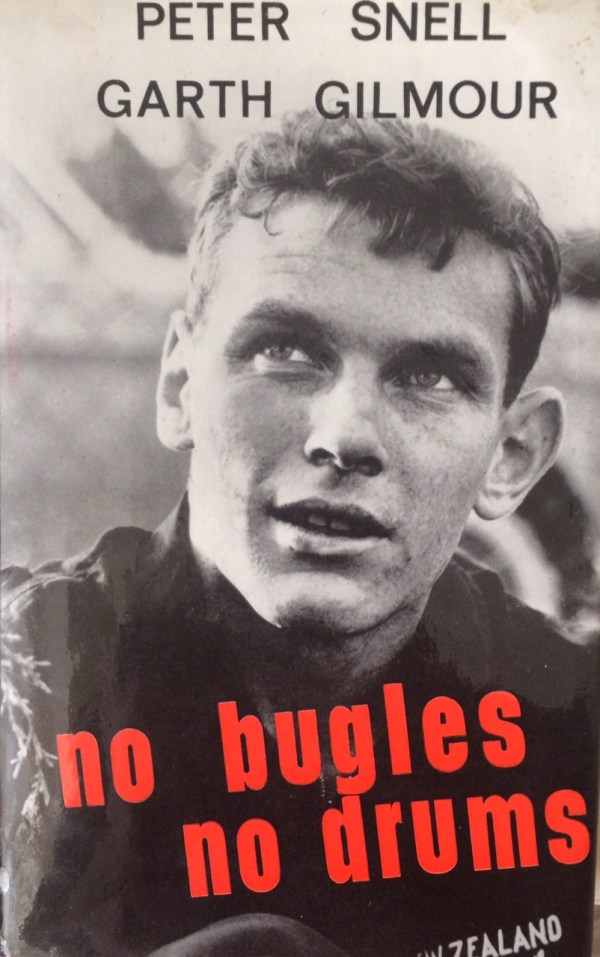
In the finals of the 800 meters, Snell drew the first lane, which he thought was unlucky because he would have to either “go like a madman and hit the front so you can maneuver with the field behind you and allow only as many pass as you want, or you can start slowly and try to work your race from the back of the field,” he wrote in his autobiography, No Bugles No Drums. “Either way can be troublesome and an in-between start can cause all sorts of jostling and tangling.”

With that understanding, Snell chose the first option with the intent of just trialing the lead runner, Wilson Kiprigut of Kenya, who was expected to jump out to a fast start. By sticking to the shoulder of the pacesetter, he would be able to avoid being boxed in and slowed. As it turned out, Kiprigut did not race out to the lead, and Snell ended up boxed in amidst a group at the front.

With 250 meters, Snell’s plan was to go all out. But he was trapped.

My pre-race plan had called for a sustained sprint from about 250-to-go. Now the whole position was confused. I was running easily within myself and, unlike Rome, where the circumstances were similar, I felt I was capable of dropping back out of the box, going around the field and still being able to challenge. That’s what I had to do. This involved two separate moves: a surge from the rear of the field to about fourth position with a clear run three or four wide which took me to the end of the back straight; then a second and final effort as I fought past Kiprugut and Kerr, who were locked together, and sprinted desperately into the curve. It was desperate because my plan had gone wrong and my run was coming late against fast finishers.

Snell on the victory stand_800 meters
Crothers, Snell and Kiprugut

But soon, desperation gave way to elation. Snell hit the tape, setting an Olympic record. Despite having to drop back and swing wide to take the lead, Snell still relaxed at the end, as he wrote, “subconsciously” holding back for the 1500 meter competition to come.

Watch this video highlighting Snell’s exciting victory in the 800 meter race in Tokyo.

Peter Snell
Peter Snell of New Zealand, from the book “The Olympic Century – XVIII Olympiad”


Peter Snell was the 800-meter Olympic champion, coming out of relative obscurity to set an Olympic record at the 1960 Olympic Games in Rome and win the gold medal. But in Tokyo in 1964, Snell was not only the favorite in the 800 meters, he and many others were expecting him to compete and win in the more glamorous 1500-meter race.

While our stereotypical view of Olympic champions are they are super confident and expect to win, the reality is that many oscillate between expectations of victory and the inevitability of disaster. Peter Snell of New Zealand may have exemplified the latter.

As British Olympic reporter, Neil Allen, noted in his book, Olympic Diary Tokyo 1964, Snell was shy and filled with doubt prior to the start of competition.

Two years ago the shy New Zealander and I had sat on the grass in Geraldon, Western Australia, and I had listened to him ponder, with worried brow, his problems in training for the forthcoming Commonwealth Games. Now he was behaving as though he was the last man in the world to hold the records for 800 meters, 880 yards and the mile, the last man you could imagine had won the Olympic 800 meter title four years ago.

“Running both events here might take it out of me, you know,” he said, staring at the ground. “My training was going so badly back at the beginning of last month that I got to the pitch where I couldn’t care less about the Olympics. There are times when you wonder how on earth you could run a 4:30 mile. You no longer have the ability to punish yourself.”

After a successful trial run in the 800 meters, Snell decided he would go for both the 800 and 1500 meter championships. He understood the ramifications of having to run heats in both races, with the possibility that the effort and strain of competing in both could mean doing poorly in both. And those doubts would not go away, as Snell wrote in his autobiography, No Bugles, No Drums.

My most nerve-racking period of the Games was the night before my first race. I’d made the decision to try for the double and promptly that night all sorts of doubts crowded into my mind in a sleep-wrecking procession. Quite seriously I wondered whether the decision was the right one. I felt I could produce a really good performance over 1500 meters. But if I ran in the 800 meters first, there was a strong possibility that not only could I run out of a place in that event – or even fail to qualify at all – I could find myself too tired for the 1500. I could, through tackling both, miss out on both. Was I being too greedy?

No Bugles No Drums