Doug Rogers_Judoka_10828_LG
Doug Rogers in the documentary, “Judoka”, by director Josef Reeve

“So far in my film career, I’ve been an SS trooper, a submarine commander, and the fastest gun in the East,” said Doug Rogers of his part-time work in Japan in the early 1960s. “But I’m getting tired of being the villain. I want to be a hero for a while.”

And so, he became the hero. Doug Rogers not only won a silver medal in the first Olympic Judo championship ever at the Tokyo Summer Games in 1964, he starred in a short black and white documentary by director Josef Reeve – “Judoka“. (This link takes you to the full-length high def version.)

Rogers moved to Tokyo at the age of 19 in 1960 after learning all he could about judo in Montreal, Canada. The birthplace of Judo, Japan, was where judoka from all over the world aspired to train. Rogers was part of a small but growing number of foreign judoka desiring to train in the Kodokan, and grapple with the university students and policemen who made up the most competitive pool of judo talent in the world.

The documentary is a wonderful look inside the mind of Rogers as he reflects on his five years in Japan, on the judo training regimen, and more broadly, on life in Tokyo in the mid-1960s. The scenes of Rogers resting in his small apartment, walking his neighborhood streets and attempting to get in a crowded train are impactful, cleanly framed on black and white film.

Judoka_Rogers Outside his Apt
Screen capture of Rogers outside his apartment, from the documentary, “Judoka”

It’s the training scenes, up close with occasional slow motion takes, that demonstrate the intensity of the judoka’s training – the opening scene when they are running barefoot shouting “ichi…ni”, when they are doing push-ups, or when they are sending each other tumbling to the mat. Rogers talks about how fortunate he was to be able to train under legendary judoka sensei, Masahiko Kimura. Kimura’s training regimen was brutal, but effective. Rogers explained that they would do 600 push ups a day, sometimes a thousand, explaining that they all knew it was unreasonable to push their bodies that far, except that, they did indeed get stronger.

As Rogers said in the film, “No one before Kimura, no one after. I’m the only Westerner he ever taught. He said I could be champion. In fact he says I must be champion. I don’t think Kimura recognizes physical limitations. He just trains beyond whatever happens to come up. For me, he says he stays up nights thinking of ways to make me stronger, better. With him I can win now.”

The humbleness of the documentary’s production is echoed by the humility of Rogers’ words, when he ruminates on life in Japan. The film is only 18 minutes long, and yet you get a quick sense from the narrative that Rogers grew from a boy to a man in Japan. In a wonderful passage where he and another judoka named Morita are filmed at an empty Budokan (the stadium built for the Olympic Judo championships in 1964), Rogers reflects on how his thinking matured.

“I went into judo trying to be tough and be strong. But I found as you get more and more skillful, the desire to act big and tough, sort of works the other way. I know I have the skill now. I don’t have to talk about it.”

Doug_Rogers,_Isao_Inokuma,_Parnaoz_Chikviladze,_Anzor_Kiknadze_1964
Doug Rogers (far left), Isao Inokuma, Parnaoz Chikviladze and Anzor Kiknadze at the 1964 Olympics

Rogers would go on to become a judo champion as a member of the Takushoku University team in the All-Japan University Championships, as well as at the World Championships in Rio de Janeiro in 1965. He

Mikio Oda competing at AmsterdamMikio Oda (織田 幹雄) is the first Japanese (in fact, Asian) to win a medal, taking gold in the triple jump in the 1928 Olympics in Amsterdam, Netherlands.

Oda first competed in the Olympics in Paris in 1924, where he finished sixth in the triple jump. Hopping, skipping and jumping to a personal best of 14.35 meters gave Oda the motivation to try again in 1928.

When he took off for Amsterdam, he joined his fellow members of the Waseda University track team and spent two weeks on the Trans-Siberian railway to make their way through Europe. Oda was disappointed with the food, finding it expensive and not to his taste, and bored with the long trip particularly because he couldn’t train on the train.

Oda portrait Asahi

Oda eventually made it to Amsterdam, and was one of the favorites in a field of 24 competitors. It appears that Oda was a confident person. Part of the reason was because he was the Far East Champion through much of the 1920s. Another reason was that on the day of the competition, the track team supervisor, a man named Takeuchi said out loud, “Today is a lucky day.” As Oda explained in an interview conducted likely in the 1990s, “this utterance was quite suggestive for me and I could be confident that I can win.”

His first jump was strong at 15.13 meters, and Oda was particularly confident since the two people he thought were his major competitors, Ville Tuulos of Finland and Nick Winter of Australia, fouled in their first attempt. Oda said that he believed the soft grounds due to rain had made Tuulos and Winter nervous. Oda eventually achieved a competition best 15.21 meters, doing so three times, while Lee Casey, the silver medalist from the United States could only come as close as 15.17 meters.

While Oda’s achievement was the first time the Olympic Games became known to the Japanese, Oda was not celebrated when he returned from Amsterdam.

“Japanese people at the time were not overly interested in the Olympics,” said Oda. “Therefore I was lucky. I didn’t have to be nervous. Interest to Olympics grew after the 1932 Olympics in Los Angeles, and to its highest at Berlin in 1936. When I won, I didn’t become a star. Newspaper issued a special edition. There was no TV and instant communication systems of today were not yet developed yet. There was no homecoming party. Waseda University also held no party. I think that was just the natures of sports in the public’s mind at that time. The only welcoming party was at my birthplace Kaitaichi-machi in Hiroshima.”

After Amsterdam, Oda graduated from Waseda and joined the Asahi

boxing helmets banned

I didn’t know this.

Olympic boxers are now banned from wearing protective headgear….in order to protect them from concussions.

Say what?

According to this article, the International Boxing Association (AIBA) enacted a rule that disallows “elite male boxers who compete internationally” from wearing headgear because “all available data indicated that the removal of headgear in Elite Men would result in a decreased number of concussions.”

Then I recalled a fascinating Freakanomics podcast, the renown show that features the writer Stephen J. Dubner and the economist Steven Levitt. This particular podcast was entitled “The Dangers of Safety“, and it essentially made the same case, citing the NFL as a case in point. Here’s an exchange between Robert Cantu, a professor of neurosurgery at Boston University, and Dubner explaining how the football helmet actually increases risk of injury.

Cantu: The way, for instance, in football in my opinion that we’re going to have to address this problem, is to eliminate the helmet as the initial point of contact in the act of tackling and even to a certain extent in blocking as well. Quite frankly, when people didn’t have the helmets of the security that there are today, didn’t have the face mask, and you had to worry about your nose winding up in your ear, from using your face in a tackle, you didn’t use your face, obviously.

Dubner: So as the safety equipment gets better, our behavior becomes more aggressive?

Cantu: Absolutely. Very much more aggressive, very much more violent. We’ve seen the same thing happen in ice hockey, as well. When you put face and head protection on people they’re not as worried about taking blows to that area. And so the aggressive nature of the activity is greatly enhanced.

freakonomics Dubner and Levitt

The economist Levitt even had a name for it – The Peltzman Effect, named after Sam Peltzman. “…it’s the idea that you can put in a safety device and people can then feel so much safer in the activity they’re engaging in, that they take more and more risk, to the point where you actually have the opposite effect, that by putting in the safety device, you actually lead to more people being hurt or killed. And the classic example people talk about is seatbelts in cars. And the idea would be without a seatbelt, you feel at risk, and with a seat belt you drive with a much more dangerous fashion, and that could lead to more deaths.”

So, does the Peltzman Effect in reverse come into play with AIBA’s decision? When boxers don’t wear protective headgear, are there fewer concussions as a consequence? The jury is still out. But there has been one unintended consequence – the number of cuts and incidences of bleeding has jumped significantly according to this article. Boxers who had always worn headgear now have to deal with facial cuts so bad they’re forced out of tournaments.

The problems of cuts has become such a concern that AIBA actually reconsidered the rule in 2014, but decided in the end to uphold the ban. So at the Rio Olympics next year, boxers for the first time in decades will not wear headgear…for their safety…or maybe…because it makes for better television viewing.

Brody Blair boxer
Brody Blair of Canada during his men’s middleweight fight against Benny Muziyo of Zambia at the Commonwealth Games.


Bob Schul_Life_30October1964
Bob Schul winning the gold medal in the 5000 meters in Tokyo_Life Magazine, October 30, 1964


Bob Schul was in a room under the National Olympic Stadium, mentally preparing himself for the race of his life, the 5,000 meter competition at the 1964 Tokyo Summer Games. Schul was already filling a little uneasy. It was rainy and cold, so he spent most of his time in his dorm. Then he walked 200 meters in the rain, got on the bus and made it to the stadium, where his coaches ran up to him saying, “Where have you been?” Schul told me that his adrenalin shot up, and he thought he had gotten the time wrong. But they told Schul there was still over an hour before the race, which is exactly how much time he had intended to have. So calming himself down, Schul headed to a small room to prepare himself for his race. A member of the US track team and gold medal hope, Willie Davenport walked into the room.

“Willie Davenport, one of the world’s best hurdlers, was standing in the middle of the room dripping wet,” said Schul. “I knew he had just finished one of his trials. The first race for the US hurdlers should have been a cake walk for them. As I walked by and patted him on the back, I asked him how it went. His response was not what I had expected. He turned towards me and looked at me in the eyes and said, ‘Bob, I didn’t make it.’ Now, when somebody says that sort of thing, you don’t want to be there. I had a race to win and I didn’t want anybody saying to me ‘I didn’t make it’. But I couldn’t get away because he kept talking. I thought, ‘come on, I got to get out of here.’ Tears were coming down and he turned away. What do you say? I stood there and reached out and put my hand on his shoulder. I put my bag against the wall, and went to warm up. I tried to forget that.”

Fortunately, Schul was unaffected, winning the first ever gold for the US in the 5,000 meters. Davenport would recover after being eliminated in the 110m hurdle semis in Tokyo, going on to win gold in Mexico City, and bronze eight years later in Montreal.

The acclaimed author, Frank Herbert, once wrote, “I must not fear. Fear is the mind-killer. Fear is the little death that brings total obliteration.” Herbert’s mantra is particularly true for high performance athletes. The anonymous author who wrote the book, The Secret Olympian: The Inside Story of the Olympic Experience, also spoke of fear, its particular odor and its negative impact.

Fear-is-the-mind-killer-Dune
Kyle MacLachlan as Paul Atreides in the 1984 miniseries, Dune.

“The physiologists can’t measure our sanity. Some of us are going well in training, quick and confident. Probably an equal number are struggling, working harder than they should to make the pace, and it’s those guys (some are friends, some rivals) who are starting to crack up. I can sort of smell this creeping fear of failure, an aura or a vibe around them. It’s like an elephant in the room. No one wants to talk about it. Some have gone very quiet; others are sort of manic. I can tell my best mate has been crying in the loos after training and back in the hotel sometimes. Not good for a grown man.”

The author, Anon, writes that everybody feels the fear. But you need to

Billy Mills on Ive Got a Secret
Lt Billy Mills of the US Marines and his winning smile on I’ve Got a Secret.

Five months after the Tokyo Olympic Games in 1964, four lieutenants from four different branches of the US Military came together as anonymous guests on the game show, “I’ve Got a Secret”. The popular program that broadcasted on American network CBS from 1952 to 1967 in black and white was the less formal, loosey-goosey version of another very popular game show, “What’s My Line?” (See this link for my post on 5-gold-medalist Don Schollander appearing on that program.)

I've Got a Secret

Steve Allen was hosting that show on March 8, 1965, and guest celebrities asked questions to guess what the secret was, ie: who the heck these four military men did. And the guest celebrities – Jayne Meadows, Gary Morton, Betsy Palmer and Henry Morgan – did not have a clue, although they did tend to get, I believe, a bit racy in their questioning.

The four military men were:

  1. First Lt Lones Wigger of the Army who had set a world record in the small-bore rifle, 22-caliber, three position event at the Asaka Shooting Range in Tokorozawa, Saitama
  2. Lt William Stowe of the Navy and
  3. First Lt Joe Amlong of the Air Force who were two members of the US 8-oar rowing crew which beat heavy favorite Germany on the Toda Rowing Course in Saitama
  4. Lt Billy Mills of the Marines, the first American to win the 10000 meters in the Olympics

Here are the four American Military gold medalists in this 7-minute segment from “I’ve Got a Secret”.

sisyphus
Sisyphus

We’re only 8 months away from the launch of Olympiad XXXI. Olympic infrastructure plans are generally on time. Brazilians are generally excited. But the economy is taking a distinct dive.

Unemployment at nearly 10%, despite all of the Olympic-related construction, is the highest it has been in six years, when Rio was awarded the Olympics. Inflation is around 10%. The real has devalued by a third. Brazil’s credit rating dropped to “junk” status in September. And while international athletes will be flowing into Brazil next year, international investment has been flowing out of Brazil. This, as well as the plummeting price of oil in this petro-economy, have contributed heavily to the shrinking of the Brazilian economy again this quarter, the ninth quarter in a row.

The once booming member of the so-called BRIC economies (Brazil, Russia, India, China) is experiencing one of its worst economic crises in a while. How is this impacting the upcoming Olympics? There was a brief social media uproar when Rio Olympic officials announced the need to cut 30% of their budget, including air conditioning in the rooms of the Olympic Village, a decision that was quickly reversed after athletes balked.

It’s unclear what those cuts will impact, but big issues continue to concern…issues that will cost the country not only in expense but also in emotional well-being.

In addition to security in the areas of the Olympic activities, security along Brazil’s massive borders is a “big concern”, as a government auditor revealed “flaws” in the plans to control the 17,000 kilometer border that runs through remotes part of the Amazon and touches 10 other countries in Latin America.

The Associated Press has continued to test the waters planned for Olympic events and have found that “high viral and in some cases bacterial counts are found not just along shorelines where raw sewage runs in, but far offshore where athletes will compete in sailing, rowing and canoeing.” According to this AP article, Rio won the Olympic bid with a promise to clean up the city’s waterways, but “Brazilian officials now acknowledge that won’t happen.”

Garbage on the shore of Guanabara Bay_1June 2015
Guanabara Bay


On top of that, unprecedented levels of corruption in the government-

bangkok marathon
Bangkok Marathon

We have three stories today on the marathon.

First we take you to Bangkok, Thailand, my residence from 1994-2004, where Standard Chartered Bank hosted the annual Bangkok Marathon on November 15. As a part of the day’s event, a half marathon is held. Now for most of the world, half of the 42 kilometer marathon should come to 21 kilometers. And yet, as runners approached their expected times for 21 kilometers, they were surprised to see how far they were from the finish line, and disappointed at how slow their times were. As it turned out, the organizers had extended the length of the course a bit…if 7 extra kilometers is a bit….due to incorrectly informing runners where to make their u-turn. Unlike Singapore Math, Thailand Math won’t be coming to a neighborhood near you any time soon.

Brian Land_Santa at the Philadelphia Marathon
Brian Land had previously run a 1:20 half marathon in the Santa suit. Photograph by Island Photography

Next we take you the City of Brotherly Love, Philadelphia, Pennsylvania, my residence from 1981-1985, where a Guinness World Record was broken at the Philadelphia Marathon on November22. Brian Land, 29, a miler who raced at my alma mater, the University of Pennsylvania, decided to run the Philly Marathon….in a Santa Claus suit. Having run a marathon in 2 hours and 31 minutes, he was seeking to break the record of faux Santa Claus, Paul Simons, who set the then record at the 2009 London Marathon with a time of just under 2 hours and 56 minutes. Training in full Santa regalia at Planet Fitness in early November, and running a half-marathon in the suit, Land was confident. So when Santa Claus came to town for the marathon, he did so in the record time of 2 hours, 54 minutes and 2 seconds.

Tim Peake_astronaut marathoner
Astronaut Tim Peake

And finally, we take you to outer space, overlooking the planet earth, my home planet since 1963, where British astronaut, Tim Peake, plans to run the London Marathon on April 24, 2016. Yes, he’ll technically be in space on the International Space Station, and yes, he’ll be running on a treadmill alone while the other 37,000 run the roads of London. Peake will be tethered to the treadmill so he won’t float away, and will watch a video of the London course as he runs. Apparently, Peake isn’t the first to do so. NASA astronaut, Sunita Williams, also ran a marathon in space in 1997 racing in synch with the Boston Marathon that year. And yet, Peake’s goal is amazing. As he quipped, The London Marathon is a worldwide event. Let’s take it out of this world.”

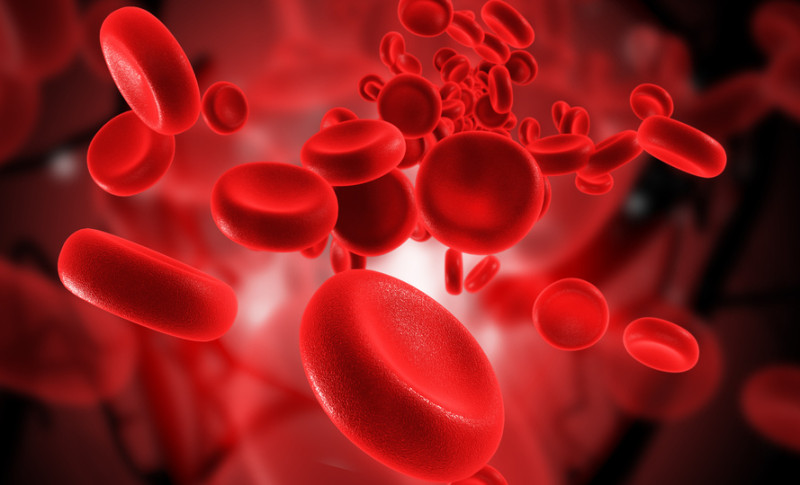
red blood cells

The fuel for muscles are oxygen. The more oxygen, the more rapidly and powerfully muscles can flex. Some people thanks to their genetic makeup have a significantly higher aerobic capacity, or ability to consume oxygen, which enables them to go harder and faster in highly aerobic sports like running, swimming or biking over longer distances.

In the 1970s, those seeking to gain an edge used hormone treatments, for example epitestosterone. The sometimes dramatic effects on the body created suspicion of doping, particularly with regards to the East German team. But a new treatment, which was at the time legal, was becoming popular – blood doping. Also known as blood packing or blood boosting, blood doping was the act of drawing an athlete’s blood prior to a competition, and then after a time, re-introducing that blood back into the athlete’s system via transfusion.

The pioneer research from Sweden, Dr Bjorn Ekblom, discovered that separating the red blood cells from a quart of blood, refrigerating it, and then re-injecting it a month later increased the efficiency of that athlete by 25%, according to Daniel Rosen, who wrote the book “Dope: A history of Performance Enhancement in Sports from the Nineteenth Century to Today.” This research was no secret. Ekblom published it in a paper called “Responses to Exercise After Blood Loss and Reinfusion.”

Dope Daniel Rosen

Blood doping was not illegal at the time. However, in the realm of competition, it was considered sneaky enough not to talk about. But people did whisper about it. And people whispered about Lasse Virén, the Finn who accomplished the only Olympic Double-Double, by winning the grueling 5,000m and 10,000m races in two successive Olympiads – Munich in 1972 and Montreal in 1976.

People whispered that Virén only performed well in the big tent events, but in the years between the 1972 and 1976 Olympics, Virén did not reach champion levels. As Rosen wrote, “given the seemingly few and admittedly poor results in between the Olympics, some have argued that there must have been a secret source from Virén obtained his speed. Virén, on the other hand, insists that he has never blood doped and never needed to. By focusing on the Olympics, to the exclusion of other events, he built up his fitness specifically for those few events every four years.”

Blood doping was officially declared an illegal practice in 1986. But autologous blood doping, the act of reinjecting your own red blood cells back into your system, is not reliably traceable. One test that currently exists requires an athlete to breathe in carbon monoxide, which understandably, athletes balk at.

Lasse Viren wins 5000m gold in Montreal
Lasse Virén of Finland winning gold in the 5,000 meters in Montreal

When you fall in a highly competitive race, it’s over for you, particularly for sprinters. But even in long-distance foot races, falling not only places you way in the back of the pack, it becomes a psychological burden as you see your competitors fly by you.

And yet, Lasse Virén of Finland was not fazed. Virén was competing in the 10,000 meters in the Munich Olympics in 1972. It was the 12th lap of a 25-lap race when Virén’s leg hit the leg of Belgian runner, Emiel Puttemans, sending Virén tumbling to the cinder track. Famed Tunisian runner, Mohamed Gammoudi, also took a nasty spill tripping over Virén’s body. Virén, who fell behind by 20 meters, got up quickly, and re-started those long strides, getting back into the race after four laps.

In the last lap and a half, Virén stepped on the gas. But as this thrilling account from The Guardian relates, the man whose leg sent Virén to the ground 12 laps earlier was now breathing down Virén’s back.

At the bell, Virén raised the pace yet again, and Yifter was unable to respond. The air was suddenly too thick for his limbs. But Puttemans held on. The small Belgian, his face contorting with determination, closed the slight gap that Virén had opened up. ‘I believed I had a chance to win the gold medal,’ he said later. ‘Lasse was five metres ahead and I knew I must take my chance going into the final bend.’ So Puttemans moved on to Virén’s shoulder. The Finn accelerated. ‘As we came round to the home straight,’ Puttemans said, ‘I knew the gold was his.’ You could see Puttemans absorb this painful truth, but make an instantaneous reappraisal of ambition: he looked over his shoulder, to make sure Yifter was far enough behind him to be no threat, and settled for silver.

Virén not only won, but smashed the world record for the 10,000 meter race that had stood for seven years. Virén went on to win the 5,000 meter competition in the Munich Games, accomplishing the so-called “double”, which had been done only three times prior to Virén, and three times after him. Even more amazingly, Virén did it again, winning both the 5,000m and 10,000m races at the Montreal Games in 1976, the only “Double-Double” ever.

You can watch Virén years later watching himself win the 10,000 meter race in Munich on video below.


lennon and ono
John Lennon and Yoko Ono
Today in Japan, it is December 9, but in the US, it is still December 8, the day John Lennon was murdered, the day the music died.

On the closing day of the Munich Olympics in 1972, the torch was extinguished, the lingering waves of joy of Olympic competition and camaraderie merging with countervailing waves of sadness. Eleven Israeli athletes had been killed by the hand of terrorists. According to the book, Secret Olympian: The Inside Story of the Olympic Experience, athletes left the closing ceremony and gathered in the Olympic Village. And as the athletes struggled with their mixed and roiling emotions, a song by John Lennon unified them all.

Lennon Memorial Central Park_14Dec80 #1
At the John Lennon memorial event at Central Park on December 14, 1980_photo taken by Roy Tomizawa
Following the closing ceremony, the athletes returned to the Village and converged on the discotheque. John Lennon’s ‘Give Peace a Chance’ was played several times with its poignant relevance. Fencer Susie Murphy’s overriding memory of Munich was a touchingly united scene with athletes of all nations singing along to Lennon in one unified voice, arms round each other’s shoulders, in defiance of the atrocity.