Lance Wyman
Lance Wyman

Lance Wyman was an aspiring graphic designer in 1966 when he learned that the International Olympic Committee and the Mexican Olympic Committee were looking to hire a team to create the emblem and associated design concept for the entire 1968 Mexico City Olympic Games.

He and his partner, Peter Murdoch, thought to themselves, why not us? They booked a one-way ticket to Mexico City, which is all they could afford, according to this brilliant podcast from 99 Percent Invisible, hoping to make a name for themselves.

Wyman_Mexico_68_Olympics_radiating

One disadvantage the two American designers may have had initially was that they had never been to Mexico, and knew practically nothing about the country’s culture or history. So they embarked on a crash course immediately. When they visited the Museum of Anthropology, examining the stone murals of the Aztec and Mayan civilizations, they were struck by the similarities in artwork centuries before to the 1960s, when op-art was a popular form of expression.

“I actually was floored by some of the early cultures,” says Wyman in the podcast, “because they were doing things that we were doing in a contemporary way with geometry and with graphics.” The podcast went to explain that the bold lines and bright colors and geometric shapes reminded Wyman of the kind of Op art that was popular among contemporary artists back in New York.

lance wyman peter murdoch
Lance Wyman, his wife Neila, and Peter Murdoch (1966)


Wyman thought that they should take advantage of the circles in the digits of ’68, which is the year of the Mexico City Olympics, and blend those circles into the five Olympic rings. Additionally, the techniques of op-art, also known as optical art, which uses techniques of contrast and geometry to create an illusion of movement, were employed as waves of lines surrounding the text and numbers. Those lines were based on a new font Wyman and Murdoch created, made up of three lines that always curved, but never bent.

Their design was so impactful, that the Olympic organizing committee began employing their design in collaterals even before they informed Wyman and Murdoch that they had won the competition.

But the reason why the 99 Percent Invisible podcast is so fascinating is that Wyman’s design concept was so powerful, it was co-opted by a group in some ways trying to undermine the Olympics. And Wyman didn’t mind.

Mexico was undergoing a significant socio-economic and political transformation, brought on by a stronger economy. But there was reason to believe that the fruits of the growing economy was not trickling down to the middle classes or the masses, or at least not fast enough. In Mexico City, anti-government protests were happening frequently enough in the summer of 1968, that the government began to get uneasy that their Olympic Games, scheduled to open in October of that year, were under threat.

As related in a previous post, a series of anti-government protests in Mexico City culminated in a protest where around 10,000 university and high school students met at the Plaza de las Tres Culturas on October 2. The government decided enough was enough, and sent armed troops through the crowds and opened fired. Only 10 days prior to the start of the Mexico City Olympics, dozens, maybe hundreds, maybe thousands were killed that day.

As the podcast explains, students began to co-opt Wyman’s designs. One common image was one of a white dove that was ever present in Mexico – a white image on black. The students went all over town painting red splotches on the dove’s white breast as if it had been pierced by a bullet or a knife.

dove-protest-600x150

As this 99 PI article describes, Wyman’s designs were so universal they could serve both sides of the political war:

Despite his relative isolation at work, Wyman heard about the massacre. “When I heard about it and how severe it was it was a very difficult situation because I was working for the government and I couldn’t do anything about it,” he says. He empathized with the students and had mixed feelings about continuing his work.  But, in a way, he didn’t need to choose between the government and the protesters. His designs found a way to serve both sides.

This is part two of the photographs taken by Dick Lyon, member of the United States rowing team. After his four-man coxless team won the bronze medal at the Toda Rowing course, Lyon had the time to walk around Tokyo with his Bronica Camera. Here are a few of them:

Tokyo 1a

Outside a candy store – It’s a common story during the 1964 Olympics: the best athletes in the world visibly sticking out in homogenous Japan, particularly those who hovered around 200 cm tall. Lyon’s rowing teammates, who joined him in these perambulations around the Olympic Village in Yoyogi, were no exception. Here is Lyon’s rowing mate, Theo Mittet, with two giggling women from the candy shop. Note Mittet’s fancy footwear.

TOkyo 5 001


A pub in Tokyo that appears to be connected to a racetrack – The signs appear to list names of horses and jockies. These “taishyuu sakaba” were low-cost drinkeries for the everyday salaried worker, whom, I suppose, had a love for the horses. This one lists all items as selling for 100 yen, or some 28 cents at the time.

Tokyo 11 reading racing forms


A man studying the horse racing data of the day – This image of intent concentration belies the fact that the Japanese government ultimately decided that this form of gambling was a necessary form of recreation for the average citizen, as well as the well as the tax revenue it generated. The Japanese government thought briefly in the early 1960s about banning such forms of gambling, but thought better of it, according to this report.

Tokyo 1b


Shimbashi Station – In 1964 and today, this was the hangout for salarymen where they ate and drank in the many tiny eateries underneath and near the train tracks.

Tokyo 12a


Ginza and the San Ai Building – In 1964 and today, Ginza is the upscale shopping area of Tokyo, and has for a long time been considered the most expensive real estate in the world. A symbol of Ginza glitz and glamor has been the San Ai Building, a glass tower that has gleamed electric light since it opened in 1962, a couple of years before the Olympics.

Tokyo 13 001


A View from Tokyo Tower – In 1964, the Tokyo landscape around Tokyo Tower was flat. And yet, my guess is that 19 years before, at the end of the Second World War, after enduring considerable firebombing by allied planes, the landscape would have been considerably flatter. In less than two decades, Tokyo was re-built and transformed, a miraculous revival for the world to see.


Ajinomoto Ad_Tokyo Olympics Official Souvenir
Ad from the book Tokyo Olympics Official Souvenir 


It’s 1964 and Ajinomoto is at the top of the world.

Housewives in the growing post-war economies were benefiting from advances in food sciences. In America, it was easy to bake a Betty Crocker cake, or create a Jell-O dessert, or slap together a meal with a Swanson’s TV dinner.

For those who actually had to cook, particularly in Asia, mother’s little helper came in a little glass bottle with white crystals. This chemical substance, when added to food, instantly transformed bland vegetables, soups of meats into something savory and tasty. Created in 1908 by a chemist named Kikunae Ikeda, who extracted an element of sea kelp, Ajinomoto (or “the essence of taste”) became a global phenomenon in the first half of the 20th century.

It started with post-Meiji Era housewives of the upper classes, who believed that to be Western and cultured, they had to cook meals themselves. When they learned how easy it was to enhance the flavor of their prepared meals by adding Ajinomoto, sales took off.

Because this was the era of Imperialism, and Japan had colonies in East Asia, Ajinomoto made its ways to the kitchens of Taiwan and China. Restaurants in Taiwan quickly became addicted to the use of Ajinomoto, and this particular flavor and brand became associated with quality. According to this fascinating history of Ajinomoto called A Short History of MSG – Good Science, Bad Science and Taste Cultures, by Jordan Sand, display of the container that Ajinomoto was shipped in became proof of the quality of that establishment.

Some Taiwanese restaurants and noodle shops helped market the product unsolicited. If the tabletop glass shaker symbolized Ajinomoto’s mature position in the metropolitan Japanese food system, in Taiwan it was the square, gold colored, one-kilogram can, which was first imported in 1928. Food vendors and noodle shops displayed these cans toshow customers they used Ajinomoto. Presumably they did so in part to announce they were not using an imitationbrand, several of which had appeared in the 1920s. The large gold cans had particular significance for individual consumers, too, since Taiwanese merchants began opening them in the shops and selling small quantities by weight.

Ajinomoto ad_Jordan Sand
Ajinomoto advertised in a Chinese magazine from the 1920s. From Ajinomoto kabushiki gaisha shashi [Company History of Ajinomoto Incorporated] (Ajinomoto kabushiki gaisha, 1971), volume 1.
To succeed in China, Ajinomoto was marketed as the Buddha’s hand, again, according to Sand, and was particularly useful in making vegetarian food in China more palatable. And once something in China becomes popular or commonplace, it was only a matter of time before it made its way further abroad. The Chinese diaspora is one of the biggest, and when Chinese immigrants poured into America to help build the railroads, Chinese food became a staple of not only the migrants, but also the locals.

Fast forward to the 1960s, and this miracle food enhancer was at its peak, and beginning its descent. Rachel Carson’s Silent Spring educated the world on the unintended but dangerous consequences of pesticides in our ecosystem and our food supply, and more generally on man’s impact on nature. Eventually, people began to suspect that Ajinomoto, otherwise known as monosodium glutamate (MSG), was making people nervous because of its linkage to headaches, sweating, rapid heartbeats, sweating and even chest pain and nausea. In America, this particular ailment was informally called Chinese Restaurant Syndrome”, thanks to migrant cooks inordinate dependence on Ajinomoto.

Eventually, negative reactions to Ajinomoto in the United States spread to Japan. When the 1970s rolled around, Ajinomoto’s sales fell. Ajinomoto diversified and recovered, and today, Ajinomoto is certainly a giant among food manufacturers in Japan. But at the early parts of its existence, Ajinomoto was a company, by virtue of a single product, that had a significant global impact.

And in 1964, during the Tokyo Olympics, Ajinomoto was held up as one of Japan’s great success stories.

usain bolt mcnuggets

After the 2012 London Olympics, one of the most famous people on the planet revealed in his just-released autobiography something that likely made the hearts of MacDonald’s executives flutter with pride and joy.

In his book, Faster than Lightning, Jamaican Usain Bolt, sprinter nonpareil, said that at the 2008 Beijing Olympics, he essentially lived off of Chicken McNuggets, consuming an estimated thousand of the fried chicken chunks during his time in Beijing. Bolt won gold medals in the 100- and 200-meter sprints, as well as the 4×100 relay. You can be sure that McNuggets were on his menu for his subsequent triumphs at the London and Rio Olympics.

By virtue of being a TOP Sponsor of the Olympics, MacDonald’s had exclusive rights to market itself as a global Olympic sponsor, preventing any other food provider of associating itself with the Olympics. This privilege provided MacDonald’s the opportunities to create the biggest and best MacDonald restaurants in the world right inside the Olympic Villages over the past decades, a favorite dining area for athletes.

But after 41 years as an official sponsor of the Olympics, MacDonald’s and the International Olympic Committee (IOC) decided it was time to part ways.

Perhaps there was a persistent hum of discontent within the IOC that fast food should not be seen as the fuel for so many healthy world-class athletes, which may have needled the executives of MacDonald’s. “The brand relevance is simply not there anymore,” said Patrick Nally, one of the of the architects of the IOC’s revamped marketing model established in the 1980s. “At every games you see a storm of criticism in the media about McDonald’s being present at the Olympics, and that’s just gotten worse.”

Perhaps it was a matter of the bottom line. According to Business Insider, the CEO of MacDonald’s, Steve Easterbook, has been working on a plan to revamp its menu, employ greater digital innovation to its business processes, and cut costs by about half a billion dollars by the end of 2018. The TOP sponsorship is a hefty USD 25 million per year. MacDonald’s exited it’s contract with the IOC three years before the contract’s completion, so that’s a saving of USD75 million in the next three years.

MacDonalds in Olympic Village of 2012 London Games
Athletes Binging on MacDonalds in the Olympic Village After Completion of 2012 London Games

Perhaps it was a revision to Rule 40. This rule was established by the IOC to prevent over-commercialization of the Olympics by anyone who could draw the five Olympic rings or a close approximation of them. By creating a rule and a process for protecting the Olympic brand, the IOC has been better able to ensure TOP Sponsors that they would truly have exclusive marketing rights within their particular industry category.

However, as a concession to athletes, who are heavily supported by their own sponsors, and who have grown increasingly irked by the hammer hold the IOC and TOP Sponsors have on the ability to prevent their own sponsors of even a splinter of exposure around the time of the Olympics, the IOC decided to relax Rule 40. As explained in this Sports Illustrated article, in February 2015, “the international Olympic Committee decided to relax its guidelines to allow ‘generic’ or ‘non-Olympic advertising’ during the Summer Games. This also allows for athletes to tweet and post on social media about non-official sponsors as long as they do not use any Olympic properties or references. The U.S. Olympic Committee has to grant approval to American sponsors and brands.”

Rule 40 enforces a blackout period for the above-mentioned marketing of personal non-official sponsors, that extends from 9 days prior to the Olympic Games to three days after its completion. However, this did not seem to please MacDonald’s. According to Reuters, John Lewicki, the man who oversees MacDonald’s TOP Sponsorship relationship with the IOC, was reported to say last year that “the company would reevaluate its Olympic relationship after changes to a rule that ended a marketing blackout for companies that sponsor athletes rather than the event itself.”

So while athletes won’t have Big Macs or McNuggets to chow down at the 2020 Tokyo Olympics, skiers and skaters will be able to enjoy their fast food fix at the 2018 PyeongChang Winter Olympics in South Korea. MacDonald’s still has an agreement with the South Korean national olympic committee, providing them with marketing rights and access to the Olympic Village. If they can convince Bolt to start a career as a bobsledder like his famous countrymen from of the 1998 Calgary Winter Games, he can be a one-man-marketing machine for MacDonald’s, one last hurrah for a long-time Olympic sponsor.

Nike Cortez and Onitsuka Tiger Corsair

Phil Knight and Bill Bowerman, co-founders of Blue Ribbon Sports (BRS) had thrown down the gauntlet. Despite being in a successful relationship since 1964 with Japanese sports shoe manufacturer, Onitsuka Tiger, and in the middle of an exclusive 3-year agreement to market the increasingly popular Onitsuka Tiger sneakers in the United States, the relationship in early 1973 had disintegrated.

At the end of 1971, BRS produced and sold sneakers under its own brand – Nike, thus challenging the integrity of their agreement with Onitsuka. But it was BRS which fired the first legal shot, filing a suit against the Kobe-based manufacturer, Onitsuka Company. As explained in Sneaker Wars Part 8, Knight and Bowerman believed that Onitsuka had breached their agreement by soliciting other distributors in America before the end of their agreement. Onitsuka then countersued claiming that their trademarks were violated and that they did not solicit other partners in the US until after BRS began marketing Nikes.

According to Kenny Moore in his book, Bowerman and the Men of Oregon, BRS and the leaders of Nike were facing an existential crisis. “If Onitsuka won, BRS would lose the exclusive right to sell the shoes Bowerman had designed. ‘This lawsuit,” Bill said, ‘is win or die.'”

Phil Knight and Bill Bowerman

You can read up on the details of the trial in Moore’s book and various articles on the internet. In the end, a federal judge ruled in Blue Ribbon Sports’ favor, although allowing both companies to market the same shoes in the US, under the condition that BRS had the right to sell them under the trademarked names, including the Cortez, according to this article in The Oregonian.

In the end, Onitsuka Company agreed to pay BRS an out-of-court settlement to end their legal conflict. It took a while to agree to an amount acceptable to both parties, but they finally did. When it came time to sign the agreement and receive payment, Phil Knight and a member of his company’s board, Doug Houser, went to meet the lawyers from Onitsuka company. Houser went on to explain the bizarre interaction that ensued:

The Onitsuka lawyer explained the unorthodox payment method as the result of the difficulty of transferring money out of Japan. He encouraged Knight and Houser to sign some documents.

“And I said, ‘Is that X dollars?'” Houser said.

“And they gulped and said, ‘Well no. It’s illegal to bring that much money out of Japan. And we couldn’t’ bring it all. That’s all you get. But it’s a lot of money and you ought to sign.’ They knew we were desperate and needed money badly.

“But it was grossly unprofessional. Grossly wrong. Morally wrong. Everything about it stunk.

“And Knight said, ‘Eff you. We’re out of here.’

“And we left the conference room and went out into the lobby, punched the elevator button and just like in the movies, just when the elevator opened, the conference room door opened and they hollered, ‘Don’t leave. We’ve got the rest of the money.’

“So we went back into the conference room, they opened a door to an adjoining conference room where there was a second steamer trunk and they said, ‘Now sign the papers.’

After they had officials from BRS’ bankers count the money to assure that their agreed-upon amount was paid in full, Knight signed the papers that brought an end to their legal conflict, and breathed new life into BRS. From that point on, Nike, the goddess of Victory and an emerging brand, began to spread her wings and fly.

Blue Ribbon Sports ad marketing Onitsuka Tiger sneakers

It’s the end of 1969. Blue Ribbon Sports (BRS) is selling Tigers well enough that he, the CEO, Phil Knight, decides to finally become a full-time employee of his own company. BRS has had a fruitful relationship with Japanese sneaker manufacturer, Onitsuka Tiger. The shoe that BRS co-founder, Bill Bowerman, designed – The Cortez – became a dominant running shoe in the run-up to the 1972 Munich Olympics, taking advantage of a running and jogging boom in America.

In the last month of the last year of the tumultuous 1960s, Knight makes his annual trip to Kobe, Japan, to meet the founder and head of Onitsuka Tiger, and later the global brand Asics, Kihachiro Onitsuka. They renew their vows by signing a three-year contract, giving Blue Ribbon Sports rights to market Onitsuka Tigers in the United States, with the condition that BRS sells Tigers exclusively.

The problem for BRS – while they enjoyed the success of selling Tiger shoes, they realized that their contract limited their business range to distributorship, and thus created an increasingly uncomfortable level of dependency on a single manufacturer of sneakers.

The problem for Onitsuka – while they were able to breach the huge American market via BRS, they realized that every year they continued to market in the US through this relatively small and inexperienced player, they were likely leaving millions of dollars on the table unless they expanded the number of distributors in the American market.

Onitsuka was apparently hearing from other American shoe distributors that the potential for US growth was huge, so he realized he had to push harder into the international markets, particularly the US. With that understanding, he hired an aggressive international sales director, Shoji Kitami, to realize his “Onitsuka of the World” strategy, according to Kenny Moore, author of the book, Bowerman and the Men of Oregon. So despite the three-year agreement of exclusivity, midway through, Kitami met with as many as 18 other shoe distributors in America.Bill Bowerman and the Boys of Oregon cover

Knight was concerned that Kitami’s actions were going to lead to a contractual dispute, but Kitami viewed the exclusive nature of their agreement as shackles. Acoording to Moore, as discussions between Knight and Kitami became more contentious, Kitami suggested that Onitsuka Tiger and Blue Ribbon Sports form a joint venture, with Onitsuka holding a 51-percent share of the company.

This was a moment of truth. According to Moore, “the choice was between surrendering the company to Onitsuka or making their own shoes.” And when they thought about it, they were liking less and less their submissive role as middle man. Bowerman had designed a successful shoe – the Cortez – that they could not get manufactured by other companies. And ironically, while Kitani was saying that they need to expand the number of distributors in American to sell more shoes, Knight and Bowerman would scratch their heads since Onitsuka was regularly guilty of not manufacturing sneakers fast enough to meet demand. BRS would put in an order and Onitsuka would routinely export fewer shoes than ordered. How were they going to meet the other distributors’ demands if they couldn’t even meet the demands of their sole distributor?

Knight and Bowerman realized they needed to prepare for a break up with Onitsuka. Soliciting the help of a large Japanese trading company – Nissho Iwai – BRS were able to find another shoe manufacturer as well as secure financing for the initial manufacture of new BRS branded shoes, including 6,000 pairs of The Cortez, which Kihachiro Onitsuka believed to be their own design. This was the chance they needed.

As Moore quoted Knight as saying, “we have them right where we want them. Onitsuka is too slow to react to product development ideas we give them. They never ship what we order. And they’d probably yank the distributorship at the end of the contract in 1972 anyway. What we need is a brand we can control, because we have everything else, the shoes, the top runners. This is the best thing that could ever happen to us.”

Original 1971 Swoosh Design Nike

The logo design was set to grace the new sneaker. Barbara Smit claims in her book, Sneaker Wars, that a design student was paid $35 when he presented the “inverted comma” design, which later was dubbed, The Swoosh. Knight wanted to call the new brand, Dimension 6. As the deadline for producing the sneaker boxes approached, they still did not have a brand name, other than Dimension 6. That is until Jeff Johnson, Nike’s first full-time employee, woke up with an image of Greek goddess of victory in his head. So with a little forceful nudging under the gun of a production deadline, Knight reluctantly agreed to the name, Nike. After all, it was a short name, one that easily fit on a shoe box.

So in the winter of 1971, the Nike brand was born.

My Onitsuka Tiger Mexico City sneakers

I love my Onitsuka Tiger sneakers. I bought white high tops last year, but this year, I bought Made-in-Japan Mexico 66, red leather with golden Onitsuka stripes – they fit like a glove and look great!

When a young accountant and middle-distance runner named Phil Knight put on a pair of Onitsuka Tigers, so many years ago, he must have loved them too. In those early years of the Sneaker Wars, that primarily pit German brands Puma and Adidas against each other, this recent Stanford grad still had his MBA thesis paper in his head – “Can Japanese Sports Shoes Do to German Sports Shoes What Japanese Cameras Did to German Cameras?”

On a trip to Japan in 1962, Knight made it a point to meet Kihachiro Onitsuka, whose company made the Tigers. As Barbara Smit wrote in her landmark book, Sneaker Wars, Knight fast talked his way into a distributorship.

Although he didn’t have any business to his name, Knight cheekily introduced himself as an American distributor, instantly making up Blue Ribbon Sports as a company name. He bluffed so convincingly that Onitsuka gave him an exclusive deal to sell Tiger in the United States.

Onitsuka and Bikila
Kihachiro Onitsuka with Abebe Bikila at that fateful meeting.

So in January, 1964, Knight and his friend, the famed track coach of the University of Oregon, Bill Bowerman, officially formed the company, Blue Ribbon Sports (BRS), and became the exclusive distributor for Onitsuka Tiger athletic shoes. For close to a decade, BRS made Onitsuka Tiger sneakers available to American consumers, as well as Bowerman’s own track team members, including Kenny Moore who wrote the book, Bowerman and the Men of Oregon. One day Moore was in the middle of a casual 20-mile run when he felt pain in his right foot. When Bowerman told Moore to show him his shoe, it was a Tiger model TG-22. After ripping the shoe apart with his hands, he said “If you set out to engineer a shjoe to bend metatarsals until they snap you couldn’t do much better than this,” he said. “Not only that, the outer sole rubber wears away like cornbread. This is not a shit shoe, it’s a double-shit shoe.”

As it turns out, BRS unwittingly marketed the TG-22 as a running shoe, when actually it was a high-jump shoe. Regardless, this shoe autopsy led to a spark of ingenuity in Bowerman – a prototype of a new running shoe: “The outer sole was industrial belting. A cushiony innersole ran the entire length of the shoe, under a shock-absorbing arch support.” Moore explained that he ran thousands of miles in these prototypes, which continuously got tweaked, until finally BRS and Ontisuka decided to mass produce in 1966.

They wanted to call the new shoe, The Aztec, in honor of the coming 1968 Mexico City. Unfortunately, Adidas had already began selling the Azteca Gold. Then Knight had an epiphany – to use the name of the conqueror of the Aztecs. And thus was born the iconic running shoe, The Tiger Cortez.

Blue Ribbon Store Front_onitsuka

The Cortez made BRS a viable company. John Jaquar, who would join the board of directors, would recall the many times Nike tried to discontinue the Cortez. “But people kept wanting them, so they making them,” he would say. “It was the first stable, cushioned shoe for the roads, a comfortable shoe, and so many people liked it that it was the first shoe that made running shoes acceptable in fashion.”

The Cortez helped drive growth for BRS and Onitsuka Tiger in the mid-1960s, proving that the relatively quick decision for Kihachiro Onitsuka to sign Phil Knight up as US distributor was indeed a good one. And yet that decision, eventually led to conflict, and the birth of the world’s dominant sneaker brand – Nike.

Olympic National Stadium design_Kengo Kuma
Images of Kengo Kuma’s National Stadium

When you walk through Meiji Shrine, a peaceful oasis of green in the middle of Tokyo, your pulse rate drops and you forget the hustle bustle of one of Asia’s most dynamic mega-cities. Its location next to the National Stadium for the 1964 Tokyo Olympics and the Olympic Village made the wooded park of Meiji Shrine a wonderful place for runners to train, a la middle distance double gold medalist, Peter Snell.

When images of the planned National Stadium for the 2020 Olympics were released, there was a mixture of groans and puzzlement. Globally renown architect, Zaha Hadid, presented a design of sleek modernity. Frankly, I thought it looked like a bicycle helmet, somewhat out of place in its surroundings.

National Stadium and Meiji Shrine_google maps
National Stadium and Meiji Shrine on Google Maps

Then suddenly, in July, 2015, Prime Minister Shinzo Abe scratched plans for the design of the new National Stadium planned for the 2020 Tokyo Olympics. It was revealed that the estimated cost of the stadium ballooned from JPY252 billion, from the original proposal of JPY130 billion, an approximate difference of USD1 billion. Scrapping Hadid’s design meant a massive delay, resulting in a particularly embarrassing broken promise. Plans to have the new national stadium host the 2019 Rugby World Cup also had to be scrapped, resulting in a move of the tournament to Yokohama.

TOCOG quickly put together another search for a stadium designer. And suddenly, Kuma Kengo, whose design was selected, was in the spotlight. Not only will the cost of the Kengo stadium be closer to the originally proposed estimate (JPY150 billion), the design of the stadium will more seamlessly blend into the environment.

Kuma has built a reputation for his use of wood, and plans to employ wood, particularly wood grown in all prefectures of Japan, to fashion a stadium that folds into the relatively green surroundings, as he explains in this Nippon.com interview:

Instead of the old-fashioned idea of putting up a huge monument, my idea is to create a stadium that people will remember as part of the Meiji Shrine outer gardens, the wooded area in which it’s located. And we’re planning to uncover the Shibuya River, which was put underground during the rapid-growth years, and have it flow at surface level through the stadium grounds. I believe that creating something sustainable for future generations, with the surrounding nature open to the public, is a more important considerations than the physical shape of the edifice, and so that’s what I’ve been focusing my efforts on.

Kuma was 10 years old when the 1964 Olympics came to Tokyo. He remembers witnessing the rapid growth of the post-war years, and being amazed in particular by the two complementary buildings of the Yoyogi National Gymnasium, built for the aquatic and basketball events. According to the Nippon.com article, he remembers often visiting the First Gymnasium designed by legendary architect, Tange Kenzo. “The light shining down from the windows in the high ceiling made the water of the pool sparkle. I was captivated by this sublime sight, and that was what made me decide that I wanted to become an architect.”


Yusuhara Town Hall_Kengo Kuma
Yusuhara Town Hall


Over the years, Kengo has become known for his use of wood in his designs, in ways that recall times when wood was the primary construction material, layered, and exposed to the elements. Design website, Icon, describes Kengo’s work in detail:

Kuma’s approach is perhaps best illustrated by a series of buildings he has built in and around a small town called Yusuhara on Japan’s southern Shikoku island. The Yusuhara Town Hall (2006) sits under a roof and frame of Japanese cedar in a traditional structural arrangement, but one that gives off more than a hint of high-brutalism in the strong articulation of its thick beams and columns. The outside features a series of timber panels of various dimensions, alternating with glazed panels – a genuinely interesting take on the “barcode” facade.

Yuuhara hotel and market_Kengo Kuma
Yusuhara hotel and shops

A small hotel and market (2010) that Kuma built nearby is just as unconventional, with a curtain wall on the main facade made of straw bales and bamboo that can actually be opened out to allow light and ventilation through – a very odd combination of rustic material and hi-tech detailing. But the wooden bridge building (ICON 101) that Kuma built over a road to link a spa and hotel on the outskirts of the town is stranger still. Here is a version of traditional Japanese roof construction blown up to super-large scale, a series of single wooden elements all overlapping and stepping up towards the bridge itself. It is this radical re-imagining of a historic building material or method of construction that one sees time and time again in Kuma’s work.

I’m truly excited for the debut of Kengo Kuma’s national stadium. I feel it will not only be appreciated for its uniquely Japanese sensibilities, but will be a lasting legacy of the 2020 Games, a fitting complement to its green surroundings, particularly the peaceful Meiji Shrine.

“I want to go beyond the era of concrete,” Kuma, 62, said in this Japan Times interview. “What people want is soft, warm and humane architecture. We will show the model of a mature society in the stadium. That’s the way to live a happy life relying on limited natural resources from a small land.”

Kengo Kuma profile
Kengo Kuma
Governor Yuriko Koike

Before Tokyo governor Yuriko Koike came on the scene, the projected overruns for the 2020 Tokyo Olympic budget was expected to take the overall budget to USD30 billion.

Soon after Governor took office, she stated she was determined to cut that budget down to size, vowing not to strap Tokyo taxpayers with any “white elephants”. In partnership with the International Olympic Committee, which feared that ballooning costs would further discourage cities from bidding for Olympics in the future, Koike began asking a lot of questions about the budget.

The IOC then encouraged that a four-party group be created to drive the budget down. For the past year, members of the IOC, Tokyo 2020, Governor Koike and representations from the Japanese national government have been working to ensure a budget of USD15 billion or less. On May 31, 2017, Tokyo2020 organizers that the budget has been reduced to USD12.9 billion, according to Around the Rings.

In comparison to another mature city, the 2012 London Olympics ended up costing USD19 billion.

One of the major hurdles of finalizing the budget was determining who would fund the construction of temporary facilities in venues outside Tokyo, where events like baseball and soccer would be played, for example. In the recently agreed-upon budget, local governments in seven prefectures (Hokkaido, Miyagi, Fukushima, Saitama, Chiba, Kanagawa and Shizuoka) and four cities (Sapporo, Saitama, Chiba and Yokohama) will pay only for costs related to “medical services and security transportation to and from venues, but that Tokyo will cover costs for temporary facilities for venues outside of the Japanese capital”, according to Inside the Games.

Another potentially very good decision by the four-party task force, according to this Tokyo 2020 document, was to create a committee made up members of the four parties to monitor costs. This Management Committee for Collaborative Projects will look to optimize resources and further reduce costs with reviews held on a regular basis.

Jules Noel

he great long-distance runner, Emil Zátopek, drank a glass of beer after his tough training every day.

The first ever winner of the marathon, Spyridon Louis, was said to have made a pit stop at his uncle’s tavern for a glass of wine before winning gold at the 1896 Athens Olympics.

But discus thrower, Jules Noël, was a beneficiary of the US government’s decision to suspend the importation and imbibing of alcohol.

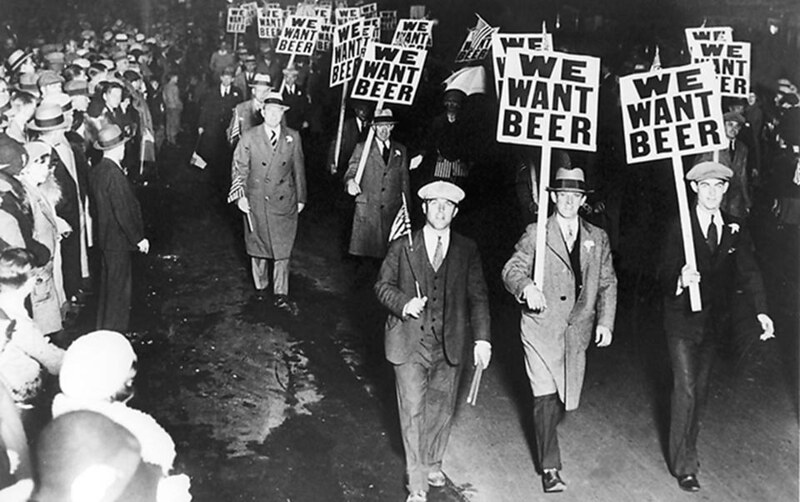
From 1920 to 1933, it was illegal to produce, import, transport and sell alcoholic beverages. This teetotaler era in the United States, known as Prohibition, happened to be in force during the 1932 Olympics hosted in Los Angeles, California.   But according to David Wallechinsky and Jaime Loucky in their book, The Book of Olympic Lists, “in the interests of international goodwill the US government suspended its prohibition against alcoholic beverages to allow French, Italian and other athletes to import and drink wine.”

Anti prohibition protest in New York City
Anti Prohibition Protest in New York City in 1932.

Frenchman, Noël, believed that “wine was an essential part of his diet,” according to sports-reference.com. Apparently, the world record holder and eventual gold medalist in the discus throw, John Anderson, led nearly the entire competition. But in the fourth and final round, after Anderson’s leading throw of 49.49 meters, Noël was reported to send a discus way past Andersen’s best throw at the time. But apparently, “the officials were watching the pole vault and did not see it land. Noël was given an extra throw but could not produce his top throw again and he would eventually place fourth.”

Before his mighty but unofficial throw, Noël was said to be “swigging champagne with his compatriots in the locker room between rounds at the discus event.”

True?

In vino veritas!