High Jump, John Thomas, Lands in Sawdust after Successful 2-Meter Bar Jump, at Olympics – Allposters.com
He lost to two Russians in 1960. And then he fell to a Russian again in 1964.
John Thomas from Boston was a favorite to win the high jump in Tokyo, but could not meet the heightened expectations of a country. Thomas and the gold medalist, Valery Brumel, both cleared a height of 2.18 meters, but neither could clear 2.20 meters. Due to the way high jumping is scored, Brumel had fewer attempts than Thomas on an earlier jump, so won the gold on a tie-breaker.
As he told Stars and Stripes, “I think I did a good job. I wasn’t outjumped. I don’t know how close I came to clearing the bar on that last try. Everyone said I was close, but I don’t know. I felt something hit…it just wasn’t good enough this time.”
Thomas also revealed that he would return home and have an operation on a hernia, a condition that had been identified earlier in the year. But nothing hurt him more than what he perceived as a bitter public and press. In a press conference the day prior to the finals,
“I don’t care what the people think,” the AP quoted him as saying “I am on my own. I can’t trust fans and supposed well-wishers any more. They are fickle and vacillating. If I win, they’re with me. If I lose, they’re the first to desert me and call me a bum. They have no use for losers. They don’t give credit to a man for trying. They have appreciation only for the champion the man who finishes first. I felt proud at getting a bronze medal. But everybody else thought I was a goat. People who had been slapping me on the back ignored me as if I had the plague. I was called a quitter, a man with no heart. It left me sick.”
His rival, Brumel, felt that Thomas was treated unfairly, telling Sports Illustrated that the jumper from Boston faced a “torrent of abuse”.
Valery Brumel at the Tokyo Games in 1964, from the book “The Olympic Century: XVIIIOlympiad”
They say confidence is key to victory. Competitors smell fear like sharks sense blood. When the Soviet high jumper, Valery Brumel, arrived in Tokyo for the Summer Games, his minders made sure no one would see him.
Since winning silver in Rome in 1960, Brumel drove himself with a ferociousness in numerous competitions leading up to Tokyo, and according to the book, “The Olympic Century Volume 16 – The XVIII Olympiad” by Carl A. Posey, Brumel was feeling “that deepening fatigue that comes from driving the machine too hard, too long.” Additionally, he had just lost the Soviet championship to Robert Shavlakadze, who also beat Brumel for gold in Rome. So he trained in a secluded area in Meiji Park, or stayed hidden in a room with his masseur playing chess.
At this stage, Brumel was beaten and haggard, and his 2.01 meter jumps in practice were far from championship level, They were, however, the best he could do.
When Brumel was at his best, people marveled at his form, what the Russians called “pouring the body over the bar like a cascade of clear water.” This was 1964, four years before Dick Fosbury revolutionized high jumping with his “Fosbury Flop”. In the first half of the Sixties, jumpers were still doing the spin roll, and Brumel’s technique was considered one of the best.
“At the heart of Brumel’s special brand of high jumping was a sequence of carefully orchestrated moves that Nijinsky might have envied. A big, powerfully assembled man, Brumel made his run-up with an awkward-looking sprint as he shifted his elbows forward to compensate for his upper body’s gradual backward lean as he approached the bar. He had trained with weights, so that his takeoff was like the explosive uncoiling of a spring. Then, for a moment, he was flying. To clear the bar, every extremity had to be under the fine, split-second control of a bird’s primary feathers. First the folded right leg went over, then the head, the big, friendly mouth extended in a white grimace of maximum effort. The right arm flipped back, adding thrust to bring the rest of his large body over the bar. Once the left arm cleared, the left leg kicked upward, adding dynamic balance. ”
And yet, as the competition in Tokyo began on October 20, Brumel could barely find his form, or generate the energy and enthusiasm necessary to compete for gold. Needing all three attempts, Brumel barely qualified by clearing a height almost every other competitor cleared (2.03 meters). “I appealed to God,” Brumel said later. “Jesus, why are you doing this to me? I’ve never done anyone any harm.”
So on a damp and chilly day on October 21, Brumel started the long slog of the finals, a journey of despair and exhaustion, in which the last man standing would be doing so, barely. As did most of the 20 competitors in the finals, initial jumps of 1.9, 1.95, 2.00, 2.03 and 2.06 meters were easily exceeded. But at 2.09 the competition went from 17 to 10, and then at 2.12, only 5 were left, including Brumel, American’s John Thomas and John Rambo, Swede Stig Pettersson, and Brumel’s Russian rival, Shavlakadze.
Rambo cleared 2.14 meters in one try, but it took Brumel, Thomas and Shavlakadze three attempts, Brumel missing badly in his first two. But something happened when the bar was raised to 2.16. It all came together and the tired Brumel flew over the bar in his first attempt. Thomas made it over in two, while his teammate made it in three, but Pettersen and Shavladkadze crashed out of the competition. And at 2.18 meters, as day ceded to night, Rambo fell by the wayside. At this point, the competition was essentially over.
Hayes Jones in the 110- meter hurdles finals, from the book “XVIII Olympiad Tokyo 1964_Asahi Shimbun”
Hayes Jones was about to run the race of his life. His wife, Odeene Jones, was seated next to Jesse Owens in the National Olympic Stadium, saying to the 4-time gold medalist that Hayes hadn’t been executing on this strategy going into the finals. Owens told her not to be concerned.
And yet, there was Jones, anxiously prepping for the start of the 110-meter hurdles final, placing his starting blocks into the red cinder track. “I was setting up my blocks, and this Japanese official tapped me on my shoulder. I was annoyed. He tapped me again and pointed down. I look at the starting blocks and I see I had placed them backwards. That would have been a disaster. I was nervous.”
And then off went the gun. “I don’t know what happened. I don’t remember one thing about the race. I had run it so many times, I ran this one as rote. I do remember lunging for the tape, but that’s all I remember. I was that focused.”
But when Jones hit the tape, his US teammate, Blaine Lindgren, was there as well, on his left. And Anatoly Mikhailov from the USSR was running through at the same time on his right. “My goodness! Who won?” wondered Jones. “You can look at someone’s eyes and usually know, but we all had that stare – ‘Who won?’ They corralled us underneath the stadium. The Russian coach ran over to his guy. I thought he won. I didn’t see my coach close by – he was against the wall smoking a cigarette. I’ll be damned. I must not have won.”
As was true with almost every single other athlete in Tokyo, Jones trained hard to get to this moment. He and his wife sacrificed financially to be able to train for the Olympics, to make sure he was in top condition and form so that he could be the best in the world. And at that moment of truth, he had to wait and wait. And then the scoreboard lit up. “‘Ladies and gentlemen, the results of the men’s 110-meter hurdles…’ And I watched as the name in the number one slot was being typed J-O-N-E-S U-S-A 13.6 seconds.”
“That’s when I knew I won and my dreams had come true.”
The president of the International Olympic Committee, Avery Brundage, was the one to place the gold medal around Jones’ neck, which Jones found ironic. In 1961, after his return from the Rome Olympics, Jones thought he would use his secondary education degree to become a track coach. According to Jones, Brundage directed Dan Ferris of the USOC to advise Jones that if he accepted a stipend for coaching track in a high school, he would not be eligible for the Olympics. “So I left teaching and began to sell real estate and insurance. The guy who put the medal around my neck was the guy who denied me from pursuing my career dream. But the only thing I could think of was back as a young boy in Pontiac, Michigan, wanting to participate in track and field, and people around me encouraging me to keep trying.”
Jones and his wife went out to town to celebrate the day after his golden victory.
“We were eating steak, probably Kobe steak. All of the sacrifices we made. I couldn’t pursue my educational career in teaching. I had to go out and sell real estate and insurance, not certain how much money I was going to make. My wife was a teacher. I had a little boy on the way. It was challenging trying to make a life for yourself and still have this personal goal. So we were sitting there and we looked at each other, and we burst out laughing.”
CARTOON: Indonesia Withdraws from Tokyo Olympics, Warta Bhakti- 10 October 1964, p1
The day before the opening ceremony of the Tokyo Olympic Games, North Korea and Indonesia decided to boycott the Games. This decision was expected by many as the previous months had seen conflict between Indonesia and major international sports governing bodies.
Indonesia had hosted a regional sporting event called the Asian Games in 1962, refusing entry of athletes from Israel and Taiwan. As a result, The IOC (symbolized by IOC president Avery Brundage in the cartoons) suspended Indonesia, the first time they had ever done so. In reaction to that, Indonesia organized the GANEFO Games, “The Games of the New Emerging Forces”, which explicitly stated that politics and sports were intertwined.
CARTOON: Just wait until it collapses, Warta Bhakti- 26 September 1964
As the time got closer and closer to October 1964, Indonesia was getting impatient to receive formal indication from the Tokyo Olympic Organizing Committee (TOOC) that they would be allowed to participate in the Tokyo Olympics. Indonesia actually was invited to the Olympic Games, but were told by the IOC and TOOC as well as the international governing boards of swimming (FINA) and athletics (IAAF), that athletes who participated in the GANEFO Games could not participate in the Olympics.
CARTOON: We are Not Begging Tokyo, Warta Bhakti – 5 July 1964
On October 9, both North Korea and Indonesia decided to pull their entire teams out of Japan.
While it must have been an incredible disappointment to Indonesian athletes in Tokyo then told to return home on the eve of the Olympics, the press in Jakarta made it clear that the boycott was the right decision. The anti-IOC, anti-Western, anti-colonial backlash was
Yoichi Masuzoe, Governor of Tokyo, speaking at the American Chamber of Commerce
Yoichi Masuzoe was in his first year of high school, and a competitive sprinter in the 100 meters, running it in 11 seconds. And he remembers watching the Tokyo Olympics on television. And like the uplifting spectacle of the wedding between Crown Prince Akihito and Princess Michiko in 1959, the Olympics raised the spirits of a nation, including the future governor of Tokyo.
On September 24, 2015, Governor Yoichi Masuzoe, gave a talk for the American Chamber of Commerce of Japan called “City for the Ages: The Magnetism of Tokyo in 2020 and Beyond.” I had never seen the Tokyo governor speak before, but he was definitely in full pitch mode, charming the packed room with the greatness of the food and drink in Japan, which almost everybody in the audience already had an appreciation for. It was the governor’s vision of Tokyo as a pedestrian and biker paradise that raised eyebrows and hopes.
He remembers the brightness of the Tokyo Games, but he also remembers the dust of the construction and the shadows created by the highways that started to snake through the city. He bemoaned what he called the “motorization” of Tokyo, how the smaller rivers were filled by rubble from the war, covered over by roads. As governor of Tokyo, what he pledged to the audience was a drive for the “de-motorization” of Tokyo. He said he would push for a significant increase in bicycle lanes, as well a plan like Boris Bikes in London. He said he would push for the elimination of the highways he believes blight the center of the city.
The Edobashi Interchange 1964, from “The Games of the XVIII Olympiad Tokyo 1964”
He said that the city of Tokyo today, with its highways, its loss of riverways, and its roads packed with cars, was due to an infatuation with money. Making money is important, he emphasized to the chamber of commerce members. But he emphasized that the pursuit of money should not come at the expense of time – time to enjoy a cup of coffee in a more pedestrian-friendly Shibuya, time to have a satisfying family life and a successful career, particularly for women, time to walk, bike and even boat around the safest, cleanest metropolis in the world.
It’s a lofty vision. It’s an Olympian vision. Will the Tokyo governor get us there? Visit us in 2020 and see for yourself!
Is this Arnold Gordon? From the book, “XVIII Olympiad Tokyo 1964”
I wrote in a very recent post about the closing ceremony at the XVIII Olympiad in Tokyo about how an orderly march turned into a disorderly lovefest, which the athletes remember with great fondness. I also wrote about a mysterious character who appeared from nowhere in the National Stadium wearing the number “351” on his shirt and ran along the track. The AP report I referenced stated that the man was Arnold Gordon, a citizen of Sierra Leone.
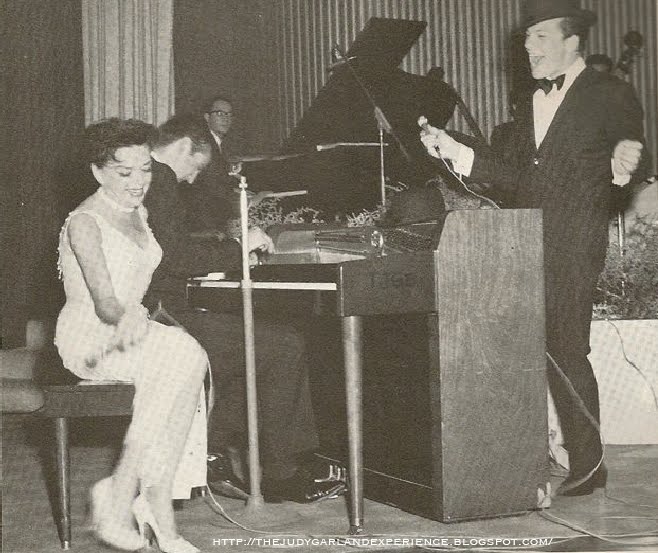
In this interview from the BBC in its coverage of the London Games in 2012, a man named Arnold Gordon talks about how he (and apparently two others) made their way through security to crash the party as it were. My guess is that Gordon is not from Sierra Leone as the AP cites, but from England. Not only did he have wondrous encounters with Judy Garland, as described here, Gordon joined the biggest party in Japan simply by walking on the field. Here is how he told the story.
We decided we would gate crash the closing ceremony so three of us got dressed up in track suits and sneaked into the stadium. They caught the other two, but I was able to run around the stadium, waving to the crowd. They were shouting, urging me on. And I waved and I waved and I ran and ran until was caught and dragged off, out of the stadium.
You can find the above interview starting at the 1 hour 1 minute mark of this program called, Saturday Live BBC.
Per David Price, ” June 23, 1964 … joining the Allen Brothers for a song during the opening night of their of their Tokyo Hilton engagement.”
Arnold Gordon was having a blast. He made his way from England to Tokyo so he could to the Tokyo Games in 1964. He hitchhiked from Paris to Pakistan, took a boat to India and then another boat from Bombay to Tokyo. He got to see boxing and gymnastics, as well as enjoy the nightlife in the area around the Olympic Village.
According to this fascinating interview of Gordon, taped by the BBC as part of the run up to the London Olympics in 2012, Gordon told this tale. You can find it starting at the 1 hour 1 minute mark of this program called, Saturday Live BBC.
I was living in Shinjuku, which was the great center of Tokyo, where everything was happening, I was sharing a house with some Australians. Now and again some of the athletes when they finished their running and jumping or whatever they did would come around to our house, and sit and drink beer. I remember a couple of Russian athletes were brought down to our house because it was a getaway from being watched and being looked after.
We would go out and eat and drink. It was wonderful. There were so many people there. Lots of artists who were working therein cabarets and shows. And we would meet after midnight at a restaurant called Manos, which was run by a rather crazy Russian. It was where we went to eat Russian food. People would come down after they finished their acts. The atmosphere was quite fun. One of the artists who was appearing in Tokyo at the time was Judy Garland. And she used to come down there after she finished her cabaret act. We got to know her very well. We got to sit and talk with her. She used to buy us drinks. It was a small group of foreigners so you got to know each other very well. In fact, one of my best friends, Peter, in fact eventually married her daughter Liza. So we mixed very well.
One evening they were playing one of her records, old vinyl, so she went up to the DJ and grabbed the vinyl off the turntable and said that’s a horrible recording. I can sing better than that. And then she sat at the piano, and sang “Over the Rainbow”. I’ll never forget it. Just thinking about it gives me shivers down my spine. It really was magical. Everybody stopped and listened to her. OK her voice was not as good as it used to be before, but it was Judy Garland singing to us, “Over the Rainbow”. But to see her, she was a bit short and dumpy. Not as attractive as she was earlier in life. But she was a feisty, fun person to be with. She sat at the piano and sang. Even today, 40 years later, I can still feel a tingle when I hear Judy Garland singing as if she is only singing to us. Oh it takes me right back, to my youth. It really does.
She was the best, holding the world record in the women’s javelin throw from May 1960 to October 1964. Elvira Ozolina, the native Latvian who was representing the Soviet Union at the 1964 Olympics, was primed to repeat as Olympic champion in Tokyo, after taking gold in Rome in 1960.
However, you have to play the game as they say. And when the competition ensued, Romanian Mihaela Penes threw nearly 7 meters better than Ozolina to win the gold medal. Ozolina threw poorly, and the Rome Champion landed in fifth place.
Then the rumors began to swirl. The US wire services filled newspapers across the country with this story from AP.
Various headlines from AP news wire stories on Ozolina
“There’s a bald-headed beauty who speaks Russian roaming the Olympic Village today. And a new Olympic mystery is swirling around her. Less than 24 hours ago the girl had beautiful, shoulder-length chestnut hair. Then she walked into a Village beauty parlor and ordered it shaved off. She walked out 20 minutes later, tears streaming down her face and her head bald as a billiard ball.”
The press suspected that it was Ozolina, but the Russian officials and press so strongly denied the report that the mystery remained a mystery. In fact, Ozolina appeared in a press conference a few days later. The AP report, without directly saying so, hints that Ozolina was now wearing a wig, but Ozolina waved the idea off. When asked why she cut her hair off, she said “Cut my hair off? Take a good look at my head.”
So did she, or didn’t she? As they say, only her hairdresser knows for sure.
Hair Salon in Olympic Village, from the book “Tokyo Olympiad 1964_Kyodo News Agency”
Indonesia and North Korea pulled out of the 1964 Olympics. The Vietnam War was raging a few thousand kilometers away. China tested its first atomic bomb. Lyndon Johnson was facing off against Barry Goldwater in a testy US presidential campaign. The Soviets launched the first three-man spaceship. The Warren Report on the Kennedy assassination was released.
Prime Minister Hayato Ikeda
On top of it all, in October, 1964, on the eve of the Tokyo Olympics, the health of the prime minister of Japan was teetering.
In the first week of October, it was reported that Prime Minister Hayato Ikeda had a throat condition and might not be able to attend the opening ceremonies. Fortunately, when the Games opened on October 10, the prime minister was able to preside over the Games.
Ikeda became prime minister of Japan in 1960 as the famed Japanese economic miracle really began to gain steam. In addition to building pension and health insurance schemes for the country, Ikeda created a vision of doubling the income of the Japanese by the end of the decade. Akin to Kennedy’s moonshot vision, Ikeda captured the imagination of the country, and continued to preach that Japan’s economic success was just getting started.
When the Olympic Games ended on October 24, the flame extinguished and the word “Sayonora” flashing on the large National Stadium screen, Japan was universally recognized for having emerged as a legitimate success story, from an Asian nation that re-built itself from the rubble of war to a powerful force in the global economy. Hayato Ikeda, who was born in Hiroshima a year before the turn of the century, was able to witness this as the leader of the country.
And then a day later, on October 25, he announced his resignation. The tumor in his throat was simply not going to allow him to continue as leader. He was hospitalized for three months, had an operation in August, 1965, and then passed away on August 13, 1965.
As Wikipedia notes, a leading economic historian described Ikeda as “the single most important figure in Japan’s rapid growth. He should long be remembered as the man who pulled together a national consensus for economic growth.”
John F. Kennedy and Hayato Ikeda, from the JFK Library
The Closing Ceremony of the 1964 Tokyo Olympics, October 24, from the book, “XVIII Olympiad Tokyo 1964”
To many Japanese, so much was riding on the success of the 1964 Olympic Games, particularly the need to avoid shame, and to project the image that Japan can run a global event flawlessly, in a first class fashion. And for the most part, they did. The Japanese were justifiably proud that their country pulled off the first Olympic Games in Asia.
So on Saturday, October 24, the final day of the 1964 Olympic Games, after everything had proceeded to near perfection, the Closing Ceremony was to be the icing on the cake. And to many it was…except that the athletes did not behave exactly as they were supposed to.
According to the procedures of the Olympic Organizing Committee, the objective was to “carry out all the ceremonies in a well-defined and orderly manner.” The athletes were relieved and ready to celebrate after months of preparation and a few weeks of intense pressure and competition. The officials and supporting staff were also likely very relieved that everything was working to plan. So it’s possible that during the closing ceremony, inhibitions as well as the will to police them crumbled.
“We were told we had to stay in line,” US gymnast Rusty Mitchell told me. “That lasted 5 minutes as we all started taking pictures, exchanging pins. It was disorderly and fun.”
From the book, “XVIII Olympiad Tokyo 1964”
For whatever reason, the athletes came into the stadium arm in arm with athletes from different countries, whether friendships had been struck up during the two weeks of competition, or right then and there. And there was plenty of horsing around, in ways that ordinarily would not have been permitted in rule-rigid Japan.
The ceremony was invaded by a non-athlete who just jumped into the mix, the mysterious number 351 on his shirt. As AP explained, a citizen from Sierra Leone named Arnold Gordon, jumped on the track as the athletes were marching in. “Normally, a cordon of police would have swooped down and gobbled him up before he had taken more than a dozen steps. Instead, the Japanese officials acted as if he did not exist. The crowd, stunned at first by this interruption of the show, soon accepted it as a big joke, laughed and waved as the volunteer pranced around the 400-meter oval, waving in reply to every cheer. ‘It was a just a gag,’ he said afterward. ‘I did a television commercial in this suit, and decided to pull this stunt for the fun of it.’ Emperor Hirohito, graying, bespectacled and nattily attired in a business suit, showed little emotion during this and the more serious proceedings.”
From the book, “XVIII Olympiad Tokyo 1964”
According to Stars and Stripes, “a group of New Zealand athletes made a gallant – if not successful – bid to be the star attraction during the Olympic Games closing ceremonies Saturday night. The Kiwis, before a packed audiences in National Stadium, stopped in front of the Imperial Box and bowed low several times to Emperor Hirohito and Empress Michiko. Then distance runner Bill Baille drew cheers and applause when he threw a kiss at the emperor, Hirohito acknowledged by waving his hat. Baille was completely out of the medal picture. He placed sixth in the 5,000-meter run – and they didn’t strike any medals for the 50-meter kiss throw.”
But then, all good things must come to an end, and Japan bid farewell in the dying light of the dusk, and offered their best wishes to the city that would next host the Olympiad – Mexico City.
As John McBryde, captain of the Australian field hockey team told me, “what really made it special, (the closing ceremony) took place as dusk was approaching. By that time we were all strolling in, in a very leisurely fashion, it had become dark. And when the flame was extinguished, it was suddenly gone. There was no light. And then, up popped the sign for Mexico city. Everybody was in tears.”




You must be logged in to post a comment.