She was 46 years old, and she walked around Tokyo with an air of confidence and style. Fanny Blankers-Koen was in Tokyo for the 1964 Summer Olympics, and the Japanese press followed her around – after all, she was one of the most accomplished Olympians in town. At the age of 30 at the 1948 London Olympics, she became the first woman to win four gold medals in a single Games, replicating the 1936 accomplishments of her hero, Jesse Owens.
In the October 23, 1964 edition of the Japanese magazine, Asahi Graf, Blankers-Koen was featured in a photo spread, looking relaxed and glamourous. The article shows her walking about town, relaxing in the Olympic Village, describing her as a tall woman with golden hair and light blue eyes.
The article states she is the “chaperone” to the Netherland’s women’s athletics steam, but as fellow Dutch and Olympian, Ada Kok, wrote to me, she was actually one of several coaches on the Dutch Olympic squad.
The article quotes a Japanese swimmer, Hiroshi Furubashi, who knew Blankers-Koen, saying that she was a hero to the Dutch after her dramatic accomplishments in London in 1948. But as I wrote in previous posts, despite her historic accomplishments, she was never embraced in her home country as she was outside it. Kok said that the Dutch team at the 1964 Olympics treated Blankers-Koen as they did everyone else, quite neutrally, as just another member of the team.
“It may be a very bad Dutch habit, but our well known sportspeople were more recognised and honoured abroad then in the Netherlands,” said Kok. “The Dutch are more like, ‘act normal and keep both feet on the ground’, no matter how famous you become in your sport.”
And as I wrote in this post, Blankers-Koen was a very complex person, who was driven by a need to win at everything, and to be recognized as an achiever. It is unlikely she got that sense of fulfillment in her home culture. But when she came to Japan, she was a star.
I have written about The Beatles impact on the time surrounding the 1964 Olympics, not only on Japan but on people around the world. In 1964, Olympians coming to Tokyo, particularly from Europe and the United States, knew of Beatlemania, sang their songs, and saw on TV the screaming hordes of girls chasing the four lads from Liverpool wherever they went. There was even a group called The Tokyo Beatles!
On April 27, I got a tiny taste .
In 1966, the Beatles played the more intimate Budokan, built to showcase judo in the Tokyo Olympiad. However, I saw Paul McCartney perform in the Tokyo Dome, a baseball stadium not built for concert acoustics. But that was OK! We were in the presence of the Walrus!
The concert began with the most iconic of pop music sounds – the jarring clanging opening chord of “A Hard Day’s Night.”
And then Sir Paul played for over two hours, ending in the communal “lah lah lah, lah lah lah lah” of Hey Jude.
When he left the stage, we knew he’d be back for an encore. When McCartney re-emerged, he played the most covered single of all time, his very own “Yesterday.” He could have easily walked off the stage and ended the night on a high. But he then barked out the reprise to “Sgt Peppers Lonely Hearts Club Band”. He could have ended the night with the lyrics, “We hope you have enjoyed the show….we’re sorry but it’s time to go,” but he didn’t.
Next up was a song from his Wings days, “Hi Hi Hi”. You knew he couldn’t end on a Wings song, but he took an interesting turn by celebrating the birthday of a band member with, of course, the Beatles upbeat song, “Birthday”.
I’ve never been to a Beatles concert, but there must be an appropriate way to end one, and that would be with the “Medley” from side 2 of my favorite Beatles’ album – Abbey Road. I was ecstatic! The perfect finish! After the pulsating drum solo, McCartney brought it all to an end with these lyrics:
And in the end
The love you take
Is equal to the love you make
McCartney is 74. And yet, he played for a solid 2 hours and 40 minutes. There were times when his voice cracked, and some of the faster songs felt slower than normal….which is OK because this is Japan where people stay seated….after all, the average age in the Dome must have been about 64.
As my wife screamed “Paul!”, and McCartney soaked in the applause, he told the crowd he loved us all – “Minna-san daisuki!” And maybe he says that to all the crowds. But his encore went on and on, lingering as if he had little desire to depart. Even after his final song, he stayed on stage to say good bye before walking off, stage left.
I experienced only a tingling of Beatlemania that the Olympians of 1964 did, but maybe, I’m amazed…at the way you pulled me out of time.
Here is part 4 of a series on how the Organizing Committee of the Tokyo Olympics in 1964 presented the typical Japanese family to the world. In these series of pictures, the writers again show how similar the typical Japanese and Western families actually are. Moms shout out to kids that dinner is ready, and they settle together at the dinner table to a wide variety of cuisine.
13 Amid the cackling and shouting of the kid on the lawn we hear Mother’ s voice. It’s supper time. Japan adopted daylight-saving-time shortly after the war, but the problem of getting the children inside while it was still light out proved too great, and daylight-saving-time was abandoned.
14 All the family members gather in the kitchen area for supper. For dinner you can expect any variety of Western, Chinese, Indian or Japanese food. No other nation offers such an array of homecooking. The availability of fresh meats and an abundant supply of fish give the homemaker scores of menu ideas. Rice, the all time favorite in Japan is losing some of its popularity to bread, especially at breakfast time. The main food seasoning is soy sauce, which was first introduced. to Japan from China centuries ago. Try a little on your fish.
When I read that Japanese typically eat Indian food, I had to pause for a moment. Indian food? Then I realized that one of the most popular dishes in the Japanese diet is indeed curry rice, a thick yellow curry that has been popular since the late 19th century when the British introduced it to the Japanese.
The article ends as does the day of the typical Japanese family – with everyone fast asleep, except the eldest son burning the midnight oil studying for university exams.
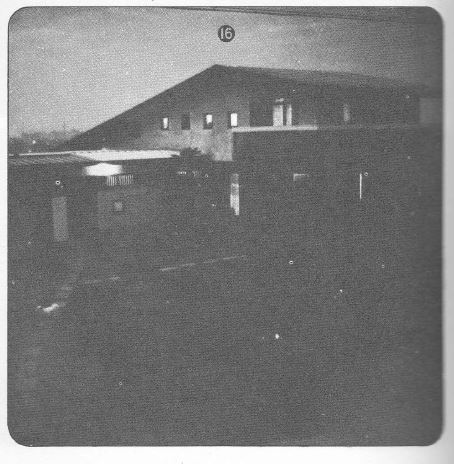
16 The family has retired for the night. What a long time we’ve been here! Only one light is burning. It’s in the room of the oldest boy who is studying for the university entrance examinations . He is preparing for the fiercest competition he may ever face. Taro, the family dog, is keeping the vigil outside. Well, good night now, have a good rest.
It’s the 1960s! The Japanese economy is booming! This was the time of The Three Sacred Treasures of Post-War Japan, when every family had to have a television, a refrigerator and a washing machine.
This is part 3 about how the Olympic Organizing Committee sought to educate the visiting foreigners about the typical Japanese household. Their message – yes, we’re Japanese, but we’re Western and Modern as well! In an article written in “Tokyo Olympics Official Souvenir 1964”, the writers explained how up to the times the typical Japanese family was. Having said that, the Kato girls are stuck cooking in the kitchen and doing the laundry, albeit with the latest white goods on the market.
5 Kitchen Area. This functional modern design is gaining in popularity as fewer girls are willing to be house maids. The housewife’s aids today are electric appliances. Mrs. Kato and her daughter-in-law are clearing the breakfast table.
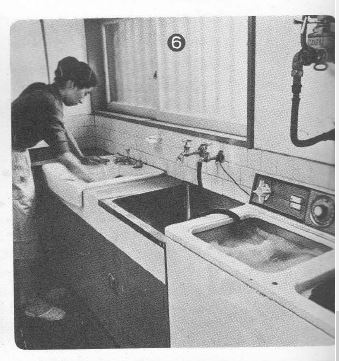
6 Laundry and Bath. The latest model washing machine and spin dryer. Look at the bathtub-in a Japanese style bath you wash and rinse outside the tub, and in this case, in a Western style shower. The water is not replaced for every bather so it’s important that you be clean before you get into the hot water of the tub to relax.
7 The handy folding clothesdryer can be moved to the sunniest areas as the sun moves across the sky.
10 With the washing in the fresh air, Mother turns to sewing. New electric sewing machines have made it possible for women to make their own kimonos at home. Once kimonos had to be made by professional dress makers. Japan currently produces sewing machines, at an annual rate of 3.5 million, many of which are ex ported.
Through the eyes of mother Kato, the writers show how Japan has modernized. First, mom drives! How else can she attend PTA meetings and buy her groceries at the increasingly popular supermarket!
11 Faced with increasing duties at home and outside, Mother has learned to drive. Alas, she had the new car two months before she could pass the driving test!
12 After attending a PTA meeting at the school of her youngest child, Mother stops at a supermarket on her way home. Supermarkets came into vogue in Japan about three years ago and have proved so popular with house wives that there are some 2,000 supermarkets in Tokyo alone.
LA2024’s campaign is heating up as the committee driving LA’s candidate city bid to host the 2024 Olympics has released virtual renderings of what the sports venues will look like.
LA2024 Stubhub Center rendering for equestrian events
Much of the strength of the LA and Paris bids are the use of existing sports facilities. Los Angeles has a rich sports culture, both at the university and professional levels, that there is little need for extensive budget for the building of new facilities.
Aquatic events on USC campus
For example, UCLA will host not only the Olympic and Paralympic Village, but all judo and wrestling. USC will be the home to swimming, diving, synchronized swimming and badminton. And of course existing structures like the LA Convention Center (fencing, boxing, taekwondo, table tennis), the Staples Center (basketball), as well as the LA Coliseum (athletics) can be fully employed for the Olympics.
The LA Convention Center can host fencing, boxing table tennis and taekwando
The International Olympic Committee’s Evaluation Commission will be in Los Angeles from May 10-12 to hear the bidding committee’s final presentation. Then they will be off for Paris from May 14-16 to hear the final presentation on the Paris 2024 bid. The IOC will then vote on which city will host the 2024 Olympics on September 13, in Lima, Peru.
Watch this video for the full view of the LA2024 sports centers and facilities.
It was the late 1970s and NYC was in the economic dumps. I used to take the train to a station called 23rd and Ely when there was a guy who used to jump in and out of the subway cars with an axe, taking swings at unsuspecting passengers.
I spent my high school summers with a friend in a magazine delivery sorting warehouse in Long Island City, Queens, unloading heavy canvas bags filled with magazines from all over the world, sorting them by postal code into boxes, and repacking them into the bags by area. We worked hard for our minimum wage.
Long Island City was typical of the neighborhoods along the western waterfront part of Queens facing Manhattan – warehouses, factories, chop shops and vacant lots. For decades, various administrations had tried to transform this prime waterfront property, but to little avail.
Like many other places in the five boroughs, it needed an Olympian shove. When Mayor Michael Bloomberg and his deputy, Daniel Doctoroff, kicked off in 2002 a campaign to bid for New York City to be host to the 2012 Summer Olympics, it triggered a comprehensive planning process that has altered the look of the city, and continues to do so.
Hunters Point South is several miles south of Long Island City where I sweated my high school summers away. Hunters Point was to be the site of the Olympic Village, a peaceful oasis surrounded by water on three sides, and yet within 10 kilometers of almost all major sporting venues. Hunters Point was to become the home for some 4,400 units in mid-rise buildings, and after the Olympians went home, would be converted into affordable housing – with a spectacular view of the East River and the Manhattan skyline.
Olympic Village envisioned in Hunter’s Point Queens
The Olympic Village was no longer necessary after NYC came in fourth in the 2012 bidding process. But the development plans in Hunters Point continued. According to Wikipedia, “As of Spring 2017, the project had attracted $2 billion from private investors. The plan calls for a 10-year build-out of 5,000 dwelling middle-income units, 1,100-seat intermediate/high school, waterfront park of 11 acres (45,000 m2), 96,500 sq ft (8,970 m2) for commercial development, 4,600 sq ft (430 m2) of community space.”
And that’s just Queens.
Manhattan: Although a new stadium for the New York Jets was not built over the Hudson Yards, the bidding process resulted in the rezoning of the area, paving the way for commercial and residential development.
While the LIRR trains at the Hudson Yards are still not covered, development plans for new residential and commercial buildings continue. Part of the Olympic development plan was to convert an old eyesore, an elevated train line, called the High Line, into a walkway from 34th street to the Village downtown. This plan has gone ahead, and a recent visit speaks to its vast popularity. This area was never really accessible to public transportation, so the Olympic bid accelerated the push to extend the #7 subway line to Hudson Yards. You can now get to the waterfront and the starting point for the High Line by taking the 7 train to 34th Street–Hudson Yards train station, which opened in September 2015.
Walking along the High Line
Brooklyn: Thanks to the Olympic bid and planning process, parts of the Brooklyn waterfront were re-zoned to create parks and develop residential and retail space, transforming the Greenpoint and Williamsburg parts of Brooklyn.
Bronx: Although the Olympics did not come to New York, and thus the facilities for track cycling and badminton did not come to the Bronx as a result, the bid process helped spur the redevelopment of what has been described as the dilapidated (and mostly unused) Bronx Terminal Market, which is now the home to a $500 million mall.
Ferry Service: Apparently, there were plans for Olympic athletes to get to certain venues by boat. While the IOC did not approve of that form of transportation, the idea for private ferry services remained alive. “In the summer of 2011, the City launched a new private ferry service linking East River waterfront neighborhoods in Brooklyn and Queens to Midtown and Lower Manhattan,” according to a report.
Harlem Armory and Queens Pool: Going ahead with plans hatched in the Olympic bid plan, the city continued with renovation of the 369th Regiment Armory in Harlem, which was to house the boxing events, and a public pool in Flushing, Queens, which was to be the venue for water polo.
Much of the above information has been culled from this fascinating report, “How New York City Won The Olympics”, by Mitchell L. Moss Director of the Rudin Center for Transportation Policy and Management.
It was November, 2011, only a few months after the attack on the World Trade Center in New York City, and Michael Bloomberg was elected the new mayor of this broken metropolis, the wounds of 9-11 were still exposed and bleeding.
And yet, with Bloomberg’s appointment of Daniel L. Doctoroff as Deputy Mayor for Economic Development and Rebuilding, the mayor triggered the start of a massive and well organized urban renewal development process that leveraged the Olympic Candidate bidding process to transform the city.
When he was an investment banker on Wall Street, Doctoroff was astonished to see the World Cup hosted in the United States at Giants Stadium in 1994, and how well received it was. He saw how one of the biggest events in the world was so welcome in New York City, one of the most diverse cities in the world. Since that time, Doctoroff had been on a mission to bring the Summer Olympic Games to New York City, and finally got the podium and the means to do so in the Bloomberg administration.
According to the report by Mitchell L. Moss Director of the Rudin Center for Transportation Policy and Management, Doctoroff’s strategy was to bring together all of the independent development ideas and plans for various parts of New York City and see whether they could all be put to use in the service of an Olympics. In Moss’ fascinating report, “How New York City Won The Olympics” (yes, I stole his title), all of these independent development projects were meandering along until Doctoroff argued for simultaneous fulfilment of these projects using the idea of an Olympic Games in New York City as a driving vision.
The NYC2012 team built upon previous studies by municipal agencies and civic groups. What was perhaps unprecedented, was the effort to aggregate all these areas in an overall development plan. The Olympic presentation offered a broad five-borough agenda for future development that gave priority to these neglected areas for comprehensive City action. No comparable city-wide plan for short-term action, involving a broad range of targeted areas in all five boroughs, had ever been presented or carried out in the modern history of New York City.
Doctoroff was also able to use the Olympic Games candidate city bid process as a way to drive a planning cadence and a sense of urgency.
The Bloomberg Administration now sought to use the pressure of the fixed, Olympic bid timetable to push forward the legal and technical review and approval of these projects on an accelerated schedule so that by the time of the IOC decision in mid-2005, they would be positioned to go forward regardless of whether New York City’s bid was successful.
As you are aware, the 2012 Olympics went to London, and NYC finished fourth behind Paris and Madrid. Perhaps New York City was never really in the running. The official reasons were that the Winter Olympics would be in Vancouver in 2010, so they couldn’t have two Olympics in a row in North America – a fairly weak reason considering that from 2018 to 2022 three straight Olympics will be held in Asia. Perhaps the US invasion of Iraq, and the memories of 9-11 left a tiny tingling fear in the amygdala of the IOC members.
Regardless of the bid vote, the Bloomberg administration was committed, in the aftermath of 9-11, to revitalize New York City across all five boroughs in a way unprecedented since the Robert Moses years. And as you can read in Part 4, many of the development plans designed for the NYC2012 Candidate bid were pushed forward.
Economist Andrew Zimbalist has written a fascinating book on the economics of Big Tent sporting events like the Olympics called Circus Maximus – The Economic Gamble Behind Hosting the Olympics and the World Cup. He writes eloquently about how often the economic impact on host cities is negative. But Zimbalist cites the 1992 Barcelona Olympics as the poster child for how to do it right. And as you can see in his advice, New York City followed the Barcelona template:
In 1983, city planners put out a preliminary report on the feasibility of hosting the Olympics and concluded that the refurbishment of the 1936 stadium in Montjuic (which became the Olympic Stadium) and the construction of the Sports Palace and Swimming facility would be undertaken whether or not the city was selected to host the games. Of the thirty-seven sports facilities ultimately used during the 1992 Olympics, twenty-seven were already built and another five were under construction at the time Spain was selected to host the games in 1986. Thus a central feature of the Barcelona experience is that the plan preceded the games, and hence the games were put at the service of the preexisting plan, rather than the typical pattern of the city development plan being put at the service of the games.
This is part 2 about an article written in “Tokyo Olympics Official Souvenir 1964”, a book designed to make sense of Japan to visiting foreigners during the 1964 Tokyo Olympics. While the article was interesting, the pictures were fascinating.
As stated in part 1, the Olympic Organizers wanted to put foreign visitors at ease, that Japan wasn’t so different. The article shows a picture of the family Kato. Kato is a typical Japanese name, but the house they live in – definitely not typical!
1 Here we are-this is the Kato home. Nice, isn’t it? Kato-san is a company manager and he, with his wife and eldest son’s family live in a nine-room, upper middle class home. The house, constructed recently at a cost of ¥9 million (S25,000), is of hinoki (Japanese cypress), considered the best home building material.
Hmmm, I don’t know about you, but 9 rooms, even for an upper middle-class home seems insanely spacious. And then there is the space around the house itself. If you’ve lived in a typical neighborhood, even in an upper-middle class abode, you rarely see such space around the house. More likely is that you could open your window and practically touch the house next door.
2 This is the front entrance. As we slip out of our shoes and into house slippers, we meet- Kato-san’s eldest son who is making the opposite change. He’s on his way to the office.
Clearly the eldest son is Westernized. He’s not in kimono – rather, he’s in the modern-day office wear of white shirt, trousers and necktie. And another familiar cultural cue of the 1960s: the wife stays at home to do the housework while the husband is working hard for the family.
3 With her husband off to work, the wife is in the living room, guiding the vacuum cleaner over the rug and under the Western-style furniture. You’ll notice the display shelves, a genuine Japanese touch. Resting on them are some of the family’s art treasures.
Not only are the Japanese Westernized, they’re civilized!
8 The clock has ticked by a few hours and Mother is in the garden hanging out the wash. She smiles as she hears her daughter practicing scales upstairs. Musical education at home was a rarity in prewar Japan, but is extremely popular now, especially for young people. Japan is proud to be the producer of some of the world’s finest pianos.
9 Kato-san’s three grandchildren are on late summer vacation now, from late July to early September. The oldest girl, home from college, is spending her leisure time playing the piano, while her brother, who is a high school student, and the youngest boy, who is in junior high school, are making plastic models and assembling a radio.
But not everything is Westernized. The Japanese actually do enjoy their green tea. And thanks to this article, foreigners can avoid the embarrassing faux pas of adding sugar to their green tea.
4 Upstairs, Kato-san is sipping hot green tea (without cream or sugar) which his wife has just brought him. He doesn’t have to go to the office until later. This sunny spot is a typical all-purpose Japanese room-a simple airy living room during the day, a dining area when you bring the low table to the center of the room, and at night, when the bedding is taken from the closets, and placed on the tatami presto, It’s a bedroom!
Organizers of the Tokyo Olympic Games in 1964 were worried about how they were going to accommodate all of the expected 30,000 visitors during the peak. In addition to hotels, youth hostels and even large passenger liners, owners of private homes were asked to make rooms available for foreign visitors. Over 580 private homes alone added an additional 1,445 beds to capacity.
Those who stayed at a Japanese private home likely had a unique and wonderful experience. But there must have been some initial concern by foreigners in crashing at a stranger’s place, particular in the land of the rising sun, where the people were inscrutable and the food moved on its own.
Perhaps the Organizing Committee felt a need to explain the Japanese family to the Westerner. Towards the end of the book, “Tokyo Olympics Official Souvenir 1964”, the publisher, Dentsu, dedicated a few pages to demystifying the Japanese family.
Dentsu’s approach was to apply the tried but true formula of the harmonious meeting of East and West. In this article, we visit the Kato family – a symbol of this pleasing integration:
We’ re on our way to Mr. Kato’s or “Kato-san’s” home. Let me give you some tips before we get there. You’ll find “dual” living arrangements there-Western modes and time-honored Japanese tradition peacefully co-existing under one roof. The Japanese have not dispensed with tatami rooms (straw mat floors), but one room is usually Western style with a rug and furniture. Kimono at home is the rule and Western dress outside, for the office, school and business.
It’s not just the house and the rooms, but also how the typical Japanese family eats and sleeps.
At mealtime you’ll see the family is as dexterous with fork and knife as with chopsticks (called hashi), but on the other hand they may favor chopsticks even for Western food. Each family member will have his own set of hashi, and guests are provided with disposable ones which are discarded after use. With the same relish, Kato-san and his son drink hot Japanese sake (rice wine) or whiskey on ice. At night some of the family may sleep on futons (feather bedding) and others will sleep in beds. The people of this country are “sensitive pragmatists” – there is beauty, versatility and comfort in their homes and lives.
Now Dentsu figured that the visiting Westerner has been programmed by WWII propaganda of how Japanese children and mothers were under the total subjugation of the man of the household, and how entire families were under the total subjugation of the Emperor of Japan. In this article, Westerners were reassured that times have changed, and so have the Japanese, but not entirely:
The Japanese home is no longer ruled by a huffing-puffing patriarch. Husband, “wife and children are a close group. While the chief decision-maker is the bread-winner, wives these days usually hold the purse strings and the women’s voice in domestic affairs is to be with. The Japanese Civil Code attempts to regulate inheritance so that one third of a man’s estate goes to his wife and two thirds to his children. It is still common, however, for an estate, settled in terms of a will, to award the lion’s share of the inheritance to the eldest son, reflecting the traditional value placed upon family line, rather than upon individuals.
Fanny Blankers Koen with her children and husband.
We meet competitive people all the time. Some of them can be jerks – for them, winning is everything, and relationships are secondary. As this Psychology Today article hints, competitive people can be overly narcissistic and self-centered, “not seeing you as a separate human being, but more as an extension of themselves.” The article also explains that competitive people could have issues of self esteem. “When they are doing well, they feel great and even superior to others, whereas when they encounter setbacks, they tend to feel shame and self-doubt. This results in anxiety and vigilance around social status and performance.”
Sometimes, we learn that even our heroes are prone to this kind of behavior. Arguably one of the greatest stories of the 1948 London Olympics was Fanny Blankers-Koen. The “Flying Dutchwoman” as the woman from Holland was called, won an amazing four gold medals in the 100-meter dash, the 80-meter hurdles, the 200-meters and the 4×100 relay.
Often described as a shy, gangly 30-year-old housewife, people were amazed at her accomplishments, often wondering what her medal would have been if the Olympics were not canceled in 1940 and 1944, arguably Blanker-Koen’s prime years. In 1999, the IAAF recognized her as the sportswoman of the 20th century. As written in the journal of the International Society of Olympic Historians, as celebrated as Fanny Blankers-Koen was, she was not beloved by those closest to her.
This article mentions a book called, in Dutch, Een Koningin Met Mannenbenen written by Kees Kooman, a sportswriter, author and investigative journalist. Although not yet translated in English, the title would be something like – “A Queen with Man’s Legs”. According to Kees, Blankers-Koen had this to say about her mother:
I think my mother never loved herself; while the other way around she could not give love and friendship herself to other people! Laying an arm around your shoulder like my father used to do, was an impossibility for her.
Fanny Snr’s brother, Huib Koen, told Kooman: “My sister was a girl who always did what she wanted to do but, to be honest with you, she was really always a bitch.”
Kees, a sports writer of good repute, explains in The Independent article that she was very much a competitive personality, and it got in the way of relationships:
Fanny wasn’t only the shy, nice Dutch housewife. Sport was everything to her and she wanted to win in everything. If she was out on her bike and someone was ahead of her she had to beat them. When she was 65 and she was told about someone knitting a sweater in a week, she was so jealous she had to do it herself.
Sport was more important to her than her children. Her daughter and her son were both critical of her. As her daughter said, she didn’t love herself. She had problems with confidence. I think she was searching for it on the track.





You must be logged in to post a comment.