Headed to Rio for the 2016 Olympic Games? Here’s a post from Cozysweatercafe entitled “The insider’s guide to Rio baby!” The blogger interviews Sulvain Leclerc, a program manager in Sports Relations for the Canadian Olympic Committee. Leclerc had lived in Rio de Janeiro for a few months in 2013. Here are his recommendations for the less-obvious places to go, and things to do in Rio.

  1. Climb all the way to the top of Dos Irmãos for the best point of view of Rio

rio dos irmaos
A view of Rio from Dos Irmãos2.
2. Take the Santa Teresa bonde and explore this hood, its nature, its architecture and its street art

Bonde Santa Tereza
The electric trolley of Santa Teresa

3. Go to Niteroi and go to the Museo Contempora

Niterói Contemporary Art Museum
The Museo Contempora at Niteroi

4. Go to Pedra Bonita for amazing views of Barra da Tijuca

The view of Barra de Tijuca from Pedra Gavea
5. Go to Urca at Bar Urca and drink beers on the sidewalk and eat a Moqueca in the restaurant

SAMSUNG
Bar Urca
6. Go to a Juice Bar and drink any real juice (Suco)… and try them all: mango, abacaxi, marajuca, etc!

7. Go out in Lapa on a Friday night, this huge sea of people partying outside is spectacular. On the sidewalk, there’s music, food, alcohol. The party is outside and inside in the bars…

the lapa scene
The night scene at Lapa

Row2Rio Foursome

Two men and two women are currently rowing their way from Portugal to Brazil. Susannah Cass, Jake Heath, Mel Parker and Luke Richmond have been rowing over six-weeks to shine the spotlight on the upcoming Olympics in Rio de Janeiro, as well as raise funds to fight cancer.

This Row2Rio team is close to becoming the first four-man crew to row from Europe to South America, mainland to mainland. Think about it – four people in the middle of the Atlantic, rowing essentially 24/7, living off of food and water stored inside their 8.6 meter long boat.

While they are the first to make this particular journey across the Atlantic by rowing, the first to actually make this trip was famed explorer, Christopher Columbus. The Italian discoverer, sponsored by Spanish resources, had already found fame and glory in two prior voyages. While Columbus was looking for a westward path to Asia, he famously “discovered” America in his first voyage, naming the locals “Indians” thinking initially that he had made it to India.

It was in Columbus’ third voyage that he sailed from Europe to mainland South America in 1498, the first to do so. Columbus had three ships and a large crew, and it took him about two-and-a-half months to sail from Spain to Paria Peninsula, which is in present-day Venezuela.

The Row2Rio crew is trying to do it in less time, and they are close to completing the 3,600 mile ocean journey. Here is an excerpt from a Row2Rio blog post from Luke Richmond, explaining the travails as they approach their port of call, Refice, Brazil.

Luke Richmond
Luke Richmond

Mother Nature giveth and Mother Nature taketh away. Just as we had a shining light of hope for a fast easier finish to this adventure it all changed within the hour to a grinding slog throughout the night. I’ve adjusted my mindset to just accept whatever the next 8 days will throw at us, the greater the struggle the greater the glory.

The battle line has been drawn. We are currently 600 Nautical Miles from our final destination of Recife in Brazil. If you can imagine a line drawn from our current position to Recife, this is now a line we cannot cross. We must stay south of this line while moving south south west. If we go above it for too long we might not be able to land in Recife and will have to change our final harbour to one of the northern towns. The waves [are]trying to push us north, the wind is trying to push us north west and the current is pulling us west. It’s up to ourselves to fight to stay below our cut off line and get as far south as we can in case we get very bad weather. It’s going to be a fine line all the way to the end. It’s tough rowing but our bodies have been conditioned for it over the past weeks and now this is our final test.

Once they make it to Recife, they complete their journey to Rio by cycling down the Eastern coast of Brazil over 4 weeks, to bookend their journey, which started when the biked from London to Lagos, Portugal. What awaits them are family, friends and the festive atmosphere of Rio on the verge of its biggest party ever.

Christoper Columbus in his Third Voyage
Christopher Columbus upon hitting land in his Third Journey to “Asia”


Columbus was not so lucky. After staying at Paria Peninsula for only a week, he set sail

Sendagaya platform
The phantom platform on the southern side of Sendagaya Station.


Did you know that of the 50 busiest train stations in the world, only 6 are outside Japan? Here’s a list from 2013 if you’re curious.

Tokyo’s train network in particular is amazing, or bewildering if you look at a train map. The train will get you almost anywhere you need to go, and if the schedule says it’s arriving at a specific time, it’s a pretty safe bet it will.

Not on that list is Sendagaya Station. But I know for a fact that it was one of the busiest stations in 1964, and will be again in 2020. Sendagaya Station is about 300 meters away from the once and future National Stadiums. Sendagaya Station itself is a relatively small station. It’s a one-platform station that accommodates trains going East and West on the Sobu Line, which cuts through the heart of Tokyo.

Sendagaya platform exit stairwell


But if you have ever been there, you may have noticed another platform on the southern side of the station. This was a platform used in 1964, when the area was flooded with folks going to and from the various Olympic venues in that area. And a single platform was simply too narrow to handle the volume. Train authorities shuddered at the thought of waiting passengers getting shoved onto the tracks because of the crowds, so the extra platform was built two months prior to the opening of the Tokyo Games.

Since 1964, that platform has very infrequently been put back into use – the time of Emperor Hirohito’s death and funeral rites in 1989 being one of those few exceptions. But come 2020 and the crowds, the phantom platform will find employment again.

Kristie Moore five months pregnant
Kristie Moore of Canada who competed at the Vancouver Olympics while 5-month pregnant.
Health officials in several countries stricken by the Zika virus have given their female citizens an unprecedented warning: “Don’t get pregnant.”

That’s the first line of this New York Times report, the advice that basically assumes a possible connection between the Zika virus in pregnant women and deformities to their children.

I can only imagine what women planning on visiting areas like South America, or female athletes planning to compete in Rio this August are thinking. Should I stay or should I go? If you are pregnant, and planning on going to the Rio Olympics with your family, you may want to reconsider your decision. Of course, no athlete would go to the Olympics if they were pregnant.

But apparently, that is a naïve assumption, for there have been quite a few known cases where women athletes were 1 to 3 months pregnant, and were not aware until after the Games. But three in this list of pregnant Olympians were at least five months pregnant when they competed:

  • Kristie Moore of Canada, who won a silver medal in curling at the 2010 Vancouver Olympics,
  • Anky van Grunsven of the Netherlands, who won a gold medal in individual dressage at the 2004 Athens Olympics.
  • Cornelia Pfohl of Germany who had been in early pregnancy when she won bronze in team archery at the 2000 Sydney Games, but was an amazing 7 months pregnant when she competed at the 2004 Athens Games.

Anky van Grunsven Athens
Anky van Grunsven of the Netherlands competed while 5 months pregnant at the 2004 Olympics.
Van Grunsven in particular has had a stellar Olympic career, winning a total of 8 equestrian medals, including three golds in individual dressage, over six Olympics, from 1992 to 2012. In November, 2004, only three months removed from the end of the Athens Games, she gave birth to her first son, Yannick.

Clearly, the Zika Virus should be giving women, who are pregnant, pause. But the Olympics come only once every four years. Who knows what stories Rio will bring.

Airbnb Japan screenshot
Screen capture from the Airbnb Japan website

Nearly 20 million foreign tourists visited Japan in 2015, already approaching the 2020 goal. This 47% year-on-year increase has been a revelation to Japan, making citizens and business owners keenly aware that Japan needs to gear up for continued growth, particularly as we get closer to the opening ceremonies of the 2020 Tokyo Olympic Games.

According to this article, the ability for Tokyo to accommodate this sudden influx of foreign tourists has been strained by the supply of hotel rooms. The room shortage is compounded by the weak yen, which results in more Japanese taking vacations within Japan as opposed to overseas. Occupancy rates at hotels in Tokyo and Osaka are routinely over 80%, and sometimes over 90%.

So into the breach steps Airbnb, a peer-to-peer business that connects travelers with individuals who want to open their homes, or a room in their home for rent. Airbnb has exploded worldwide as travelers seek greater choice of accommodations, as well as the possible added experience of personalized service and comfort by the owner. It was once thought that Japan, and its particular sensitivity to privacy, would be a bad fit for an Airbnb model. But Airbnb Japan’s business has grown 529% since last year, while the number of listings in this country has also jumped year on year 373%.

airbnb logo

And this is for a business that is essentially illegal, as Japan’s Hotel Business Law includes taxation of officially recognized accommodations, as well as various regulations around hygiene and safety, all of which Airbnb hosts have ignored.

But now, Ota Ward, one of the 23 districts that make up Tokyo, is hoping to legitimize the model, opening the door to individuals and families who need the income, want the business, and perhaps enjoy the experience of hosting strangers in their homes. Along with Osaka, the Japanese government will be looking closely at Ota Ward, with the hopes of expanding this model over the coming years.

Here’s how Nikkei Asian Review explains it:

In an attempt to eliminate such problems, Ota Ward has published rules and screening criteria. They include a requirement that neighbors who live within 10 meters of a rented property be notified in writing before an application is made. The local fire department must also be advised beforehand. Under the ward’s rules, minimum stays are set at six nights and seven days. Guest information such as names, contact numbers and passport numbers must be kept for at least three years. A host must also set up a window to accept complaints from neighbors and be ready to respond in foreign languages in emergencies.

What’s special about Ota Ward? It houses Haneda Airport, the expanding gateway to Asia and the world. Between 1978 and 2010, Haneda was, for all intents and purposes, the airport for domestic flights. But since 2010, it has taken on significant capacity as a port of call for international flights. Haneda is now the third busiest airport in Asia, and fourth in the world.

And let me tell you, as someone who has flown primarily into Narita International Airport, which requires at least another two to three hours of waiting and travel time to just get into downtown Tokyo, I much prefer to fly into Haneda. Tourists will as well. And wouldn’t it be nice to hop into a short taxi ride to your Airbnb accommodation about 10 to 15 minutes away.

Tokyo International Airport at Haneda
Haneda Airport in 1964, the entry point for Olympians from overseas.

mosquito

It is not a pretty sight – a newly born child with an unusually small head and brain damage. The working theory is that these abnormalities are caused by a virus, known as the Zika Virus, delivered by a certain strain of mosquito. It is believed that millions of people in the Americas, particularly South America, are infected, but that for the most part, “the infection causes no symptoms and leads to no lasting harm.” (See the New York Times article “Short Answers to Hard Questions About Zika Virus.)

And as the New York Times emphasized in another article, the connection between Zika and abnormalities in newborns is still unproven: “…the big question is whether Zika is responsible for the huge increase in birth defects reported by doctors, hospitals and other medical officials in Brazil over the last few months. That connection has still not been proved.”

And yet, it is the fear Zika creates that is of most concern to people in the Americas, particularly in Brazil, where the Olympic and Paralympic Games will be held in August and September this year. Millions of people from all over the world will visit, and while transmission of the Zika virus is unclear, the fear of the spread of the disease has increased. Will people who get bit in Rio de Janeiro become infected, and can they spread the virus in their own country via mosquitos locally? Will pregnant women be at significant risk?

In fact, The Center for Disease Control in the United States has issued a warning against travel for pregnant women and women trying to become pregnant to over 20 countries, primarily in the Caribbean, Central and South America, including Brazil. And the World Health Organization has declared Zika an “international health emergency.”

In the run-up to the London Olympics in 2012, there were fears of a flu pandemic. The Chinese government publicized the fact that thousands of additional hospital beds would be kept open in case of an outbreak of SARS. Fortunately, those particular fears never became an issue, and ultimately, those epidemics never emerged. Will Zika be different? One concern is the unknown nature of the Zika virus. The American Psychological Association explained the impact of the fear of the unknown disease in this article.

Research has shown that different threats push different psychological buttons. Novel, exotic threats like Ebola or avian flu raise anxiety levels higher than more familiar threats do. This reaction may have to do with our amygdala, which research suggests plays a role in detecting novelty as well as processing fear. In one recent study, for example, Nicholas Balderston and colleagues at the University of Wisconsin–Milwaukee found that activity in the amygdala increased when participants looked at unfamiliar flowers right after seeing pictures of snakes (PLOS ONE, 2013).

And, at the same time, people often under-react to familiar threats. For example, influenza sickens as much as 20 percent of the population a year, and kills thousands. Yet because most people have had the flu and survived, or know someone who has, people may feel less urgency toward getting a seasonal flu vaccine. This may help explain why the U.S. vaccination rate for the 2013–14 flu season was only 46.2 percent.

I feel for the organizers of the Rio Olympics. As I had described in a previous post, one

Pictograms for Women and Drinking Water
Pictograms used at the 1964 Tokyo Olympics, from the book, “The Games of the XVIII Olympiad Tokyo 1964 – The Official Report of the Organizing Committee”
If you don’t speak Japanese, travelling in Japan is a challenge. You’re in a train, you pull into a station, you peer through the window as the train decelerates desperately trying to figure out what station you’re at, scanning for English, any English at all.

The next best thing to words are symbols. The signs for men and women’s toilets come in a gazillion varieties, but they are most often a variation of a theme. Symbols, if done right, can cut to the chase.

foreign friendly pictograms

With a continued increase in foreign tourists to Japan, and a spike in international guests in Tokyo during the 2020 Olympics expected, the Geospatial Information Authority of Japan (GSI) released a new set of map symbols which they believe will be more intuitively understood by visitors. The old map symbols included an “X”. In the West, “X” may mark the spot of treasure, but in Japan, it meant police station. The old map represented a temple with a swastika, which is too much of an emotional jolt to many with its strong association with Nazism, despite its far longer association with Hinduism and Buddhism.

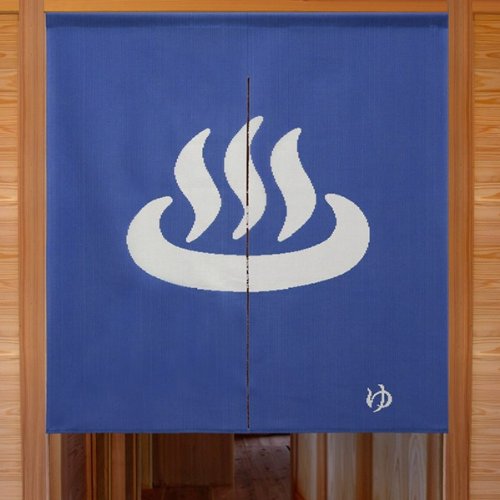
Fortunately, the GSI decided not to replace the symbol for onsen. The three wavy steamy lines bathing in an oval is a personal favorite.

onsen symbol

The pictograms of today were born out of the pictograms of the 1964 Tokyo Olympics. These Games were the first to be held in Asia, and Japan realized they had a language problem. In addition to translation, designers figured that use of symbols would be a powerful and efficient way to get foreigners to the right place. In fact, the Tokyo Olympics proved to be filled with design opportunities for the best in the country as the ’64 Games were essentially the first time an Olympic Games systematically used pictograms to represent each of the sporting events, or direct people to places.

As this blog post states, “…for such a huge national event, needless to say the design side of things was very important too and it engaged the talents of the industry heavyweights at the time.” One of the heavyweights was Yoshiro Yamashita, who designed these event symbols.

events pictograms 1964

The symbols that represented facilities were said to have been created by a team of ten designers.

pictograms at Tokyo Olympics_The Games of the XVIII Olympiad Tokyo 1964 Report
From the book, “The Games of the XVIII Olympiad Tokyo 1964 – The Official Report of the Organizing Committee”
Pachinko ad_Asahi Graf Tokyo Olympics_November 1964
Poster promoting pachinko in the Olympic Village_ from the book “Asahi Graf Tokyo Olympics_November 1964”

When I first came to Japan in 1986, I was struck by the brashness of the pachinko parlor – the martial music blaring, the blast of nicotine rushing through the doors as they opened, accompanied by the high-pitched sound of ball bearings slipping, sliding and colliding with glass, metal pins, and other balls across dozens of machines.

The game known as pachinko is as much a part of 20th century pop culture in Japan as Ishihara Yujiro and Misora Hibari, Godzilla and Astro Boy (鉄腕アトム), and Western-influenced music, fashion and sports.

Like bowling and surfing in Japan, pachinko started in the West, its origins thought to be in the 18th century French game, “Bagatelle”, and then the early 20th century game American adaptation, “Corinth Game”. As further explained in this detailed History of Pachinko, the Corinth Game came to Japan in the 1920s, providing ways for children to win candy or fruit in local shops. Children would call the game “pachi-pachi” as that was the sound they heard as the ball made its way through the playing surface.

After the Second World War, pachinko served society as a means to get access to daily necessities, as well as inexpensive entertainment for adults at a time when Japan fought its way out of the rubble and desperation of a lost war. Here’s how author and Japanologist, Robert Writing described it in his book, “Tokyo Underworld“:

pachinko parlor 1960s
Pachinko Parlor in Japan_circa 1960s

“In the postwar years, the prizes became daily necessities like coffee, canned fruit, sugar, soap, and domestic cigarettes like Golden Bat. Since it cost so little to play and was the essence of simplicity itself, the popularity of pachinko skyrocketed. By 1953, there were over a million machines housed in some 50,000 pachinko parlors, all filled to capacity, day and night. Critics complained the pachinko boom was creating a nation of idiots and that it also increased the crime rate. Indeed, people were so eager to try it, they would literally steal for the money to play.”

So you can see why the picture at the top of the post surprises me – pachinko in the early 1960s was less a shining example of Japanese culture and more a vice to cover up. I wish I could read the poster’s text – I could not good enough resolution to understand what virtues of pachinko the officials were playing up – but I’m sure the allure of the bells and whistles called out to more than a few of the highly competitive Olympians…at least for a try.

bangkok marathon
Bangkok Marathon

We have three stories today on the marathon.

First we take you to Bangkok, Thailand, my residence from 1994-2004, where Standard Chartered Bank hosted the annual Bangkok Marathon on November 15. As a part of the day’s event, a half marathon is held. Now for most of the world, half of the 42 kilometer marathon should come to 21 kilometers. And yet, as runners approached their expected times for 21 kilometers, they were surprised to see how far they were from the finish line, and disappointed at how slow their times were. As it turned out, the organizers had extended the length of the course a bit…if 7 extra kilometers is a bit….due to incorrectly informing runners where to make their u-turn. Unlike Singapore Math, Thailand Math won’t be coming to a neighborhood near you any time soon.

Brian Land_Santa at the Philadelphia Marathon
Brian Land had previously run a 1:20 half marathon in the Santa suit. Photograph by Island Photography

Next we take you the City of Brotherly Love, Philadelphia, Pennsylvania, my residence from 1981-1985, where a Guinness World Record was broken at the Philadelphia Marathon on November22. Brian Land, 29, a miler who raced at my alma mater, the University of Pennsylvania, decided to run the Philly Marathon….in a Santa Claus suit. Having run a marathon in 2 hours and 31 minutes, he was seeking to break the record of faux Santa Claus, Paul Simons, who set the then record at the 2009 London Marathon with a time of just under 2 hours and 56 minutes. Training in full Santa regalia at Planet Fitness in early November, and running a half-marathon in the suit, Land was confident. So when Santa Claus came to town for the marathon, he did so in the record time of 2 hours, 54 minutes and 2 seconds.

Tim Peake_astronaut marathoner
Astronaut Tim Peake

And finally, we take you to outer space, overlooking the planet earth, my home planet since 1963, where British astronaut, Tim Peake, plans to run the London Marathon on April 24, 2016. Yes, he’ll technically be in space on the International Space Station, and yes, he’ll be running on a treadmill alone while the other 37,000 run the roads of London. Peake will be tethered to the treadmill so he won’t float away, and will watch a video of the London course as he runs. Apparently, Peake isn’t the first to do so. NASA astronaut, Sunita Williams, also ran a marathon in space in 1997 racing in synch with the Boston Marathon that year. And yet, Peake’s goal is amazing. As he quipped, The London Marathon is a worldwide event. Let’s take it out of this world.”