Roy’s 2nd BirthdayIt’s been exactly two years since I started my journey to understand the context, the organization and the stories of the 1964 Tokyo Olympics. My father was at those games as a news producer for NBC, and I turned one years old on Opening Day.
I moved to Tokyo for a third time in January, 2014, excited by Tokyo’s selection as the host city for the 2020 Summer Games. Surprised to find not a single book on the 1964 Tokyo Olympics in English, I endeavored to write the definitive record. On May 1, 2015, I started my blog, The Olympians is in many ways, the first draft of my book.
All, thank you for your wonderful comments and support!
Here is part 4 of a series on how the Organizing Committee of the Tokyo Olympics in 1964 presented the typical Japanese family to the world. In these series of pictures, the writers again show how similar the typical Japanese and Western families actually are. Moms shout out to kids that dinner is ready, and they settle together at the dinner table to a wide variety of cuisine.
13 Amid the cackling and shouting of the kid on the lawn we hear Mother’ s voice. It’s supper time. Japan adopted daylight-saving-time shortly after the war, but the problem of getting the children inside while it was still light out proved too great, and daylight-saving-time was abandoned.
14 All the family members gather in the kitchen area for supper. For dinner you can expect any variety of Western, Chinese, Indian or Japanese food. No other nation offers such an array of homecooking. The availability of fresh meats and an abundant supply of fish give the homemaker scores of menu ideas. Rice, the all time favorite in Japan is losing some of its popularity to bread, especially at breakfast time. The main food seasoning is soy sauce, which was first introduced. to Japan from China centuries ago. Try a little on your fish.
When I read that Japanese typically eat Indian food, I had to pause for a moment. Indian food? Then I realized that one of the most popular dishes in the Japanese diet is indeed curry rice, a thick yellow curry that has been popular since the late 19th century when the British introduced it to the Japanese.
The article ends as does the day of the typical Japanese family – with everyone fast asleep, except the eldest son burning the midnight oil studying for university exams.
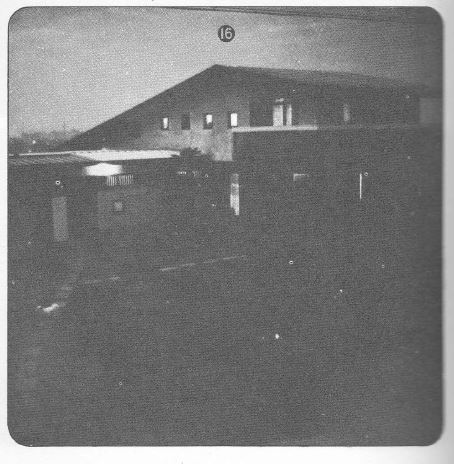
16 The family has retired for the night. What a long time we’ve been here! Only one light is burning. It’s in the room of the oldest boy who is studying for the university entrance examinations . He is preparing for the fiercest competition he may ever face. Taro, the family dog, is keeping the vigil outside. Well, good night now, have a good rest.
It’s the 1960s! The Japanese economy is booming! This was the time of The Three Sacred Treasures of Post-War Japan, when every family had to have a television, a refrigerator and a washing machine.
This is part 3 about how the Olympic Organizing Committee sought to educate the visiting foreigners about the typical Japanese household. Their message – yes, we’re Japanese, but we’re Western and Modern as well! In an article written in “Tokyo Olympics Official Souvenir 1964”, the writers explained how up to the times the typical Japanese family was. Having said that, the Kato girls are stuck cooking in the kitchen and doing the laundry, albeit with the latest white goods on the market.
5 Kitchen Area. This functional modern design is gaining in popularity as fewer girls are willing to be house maids. The housewife’s aids today are electric appliances. Mrs. Kato and her daughter-in-law are clearing the breakfast table.
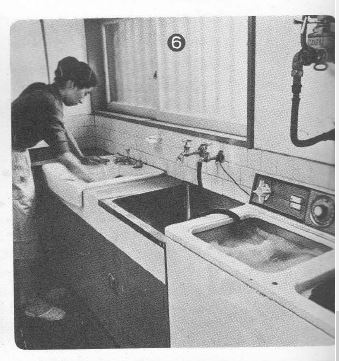
6 Laundry and Bath. The latest model washing machine and spin dryer. Look at the bathtub-in a Japanese style bath you wash and rinse outside the tub, and in this case, in a Western style shower. The water is not replaced for every bather so it’s important that you be clean before you get into the hot water of the tub to relax.
7 The handy folding clothesdryer can be moved to the sunniest areas as the sun moves across the sky.
10 With the washing in the fresh air, Mother turns to sewing. New electric sewing machines have made it possible for women to make their own kimonos at home. Once kimonos had to be made by professional dress makers. Japan currently produces sewing machines, at an annual rate of 3.5 million, many of which are ex ported.
Through the eyes of mother Kato, the writers show how Japan has modernized. First, mom drives! How else can she attend PTA meetings and buy her groceries at the increasingly popular supermarket!
11 Faced with increasing duties at home and outside, Mother has learned to drive. Alas, she had the new car two months before she could pass the driving test!
12 After attending a PTA meeting at the school of her youngest child, Mother stops at a supermarket on her way home. Supermarkets came into vogue in Japan about three years ago and have proved so popular with house wives that there are some 2,000 supermarkets in Tokyo alone.
This is part 2 about an article written in “Tokyo Olympics Official Souvenir 1964”, a book designed to make sense of Japan to visiting foreigners during the 1964 Tokyo Olympics. While the article was interesting, the pictures were fascinating.
As stated in part 1, the Olympic Organizers wanted to put foreign visitors at ease, that Japan wasn’t so different. The article shows a picture of the family Kato. Kato is a typical Japanese name, but the house they live in – definitely not typical!
1 Here we are-this is the Kato home. Nice, isn’t it? Kato-san is a company manager and he, with his wife and eldest son’s family live in a nine-room, upper middle class home. The house, constructed recently at a cost of ¥9 million (S25,000), is of hinoki (Japanese cypress), considered the best home building material.
Hmmm, I don’t know about you, but 9 rooms, even for an upper middle-class home seems insanely spacious. And then there is the space around the house itself. If you’ve lived in a typical neighborhood, even in an upper-middle class abode, you rarely see such space around the house. More likely is that you could open your window and practically touch the house next door.
2 This is the front entrance. As we slip out of our shoes and into house slippers, we meet- Kato-san’s eldest son who is making the opposite change. He’s on his way to the office.
Clearly the eldest son is Westernized. He’s not in kimono – rather, he’s in the modern-day office wear of white shirt, trousers and necktie. And another familiar cultural cue of the 1960s: the wife stays at home to do the housework while the husband is working hard for the family.
3 With her husband off to work, the wife is in the living room, guiding the vacuum cleaner over the rug and under the Western-style furniture. You’ll notice the display shelves, a genuine Japanese touch. Resting on them are some of the family’s art treasures.
Not only are the Japanese Westernized, they’re civilized!
8 The clock has ticked by a few hours and Mother is in the garden hanging out the wash. She smiles as she hears her daughter practicing scales upstairs. Musical education at home was a rarity in prewar Japan, but is extremely popular now, especially for young people. Japan is proud to be the producer of some of the world’s finest pianos.
9 Kato-san’s three grandchildren are on late summer vacation now, from late July to early September. The oldest girl, home from college, is spending her leisure time playing the piano, while her brother, who is a high school student, and the youngest boy, who is in junior high school, are making plastic models and assembling a radio.
But not everything is Westernized. The Japanese actually do enjoy their green tea. And thanks to this article, foreigners can avoid the embarrassing faux pas of adding sugar to their green tea.
4 Upstairs, Kato-san is sipping hot green tea (without cream or sugar) which his wife has just brought him. He doesn’t have to go to the office until later. This sunny spot is a typical all-purpose Japanese room-a simple airy living room during the day, a dining area when you bring the low table to the center of the room, and at night, when the bedding is taken from the closets, and placed on the tatami presto, It’s a bedroom!
Organizers of the Tokyo Olympic Games in 1964 were worried about how they were going to accommodate all of the expected 30,000 visitors during the peak. In addition to hotels, youth hostels and even large passenger liners, owners of private homes were asked to make rooms available for foreign visitors. Over 580 private homes alone added an additional 1,445 beds to capacity.
Those who stayed at a Japanese private home likely had a unique and wonderful experience. But there must have been some initial concern by foreigners in crashing at a stranger’s place, particular in the land of the rising sun, where the people were inscrutable and the food moved on its own.
Perhaps the Organizing Committee felt a need to explain the Japanese family to the Westerner. Towards the end of the book, “Tokyo Olympics Official Souvenir 1964”, the publisher, Dentsu, dedicated a few pages to demystifying the Japanese family.
Dentsu’s approach was to apply the tried but true formula of the harmonious meeting of East and West. In this article, we visit the Kato family – a symbol of this pleasing integration:
We’ re on our way to Mr. Kato’s or “Kato-san’s” home. Let me give you some tips before we get there. You’ll find “dual” living arrangements there-Western modes and time-honored Japanese tradition peacefully co-existing under one roof. The Japanese have not dispensed with tatami rooms (straw mat floors), but one room is usually Western style with a rug and furniture. Kimono at home is the rule and Western dress outside, for the office, school and business.
It’s not just the house and the rooms, but also how the typical Japanese family eats and sleeps.
At mealtime you’ll see the family is as dexterous with fork and knife as with chopsticks (called hashi), but on the other hand they may favor chopsticks even for Western food. Each family member will have his own set of hashi, and guests are provided with disposable ones which are discarded after use. With the same relish, Kato-san and his son drink hot Japanese sake (rice wine) or whiskey on ice. At night some of the family may sleep on futons (feather bedding) and others will sleep in beds. The people of this country are “sensitive pragmatists” – there is beauty, versatility and comfort in their homes and lives.
Now Dentsu figured that the visiting Westerner has been programmed by WWII propaganda of how Japanese children and mothers were under the total subjugation of the man of the household, and how entire families were under the total subjugation of the Emperor of Japan. In this article, Westerners were reassured that times have changed, and so have the Japanese, but not entirely:
The Japanese home is no longer ruled by a huffing-puffing patriarch. Husband, “wife and children are a close group. While the chief decision-maker is the bread-winner, wives these days usually hold the purse strings and the women’s voice in domestic affairs is to be with. The Japanese Civil Code attempts to regulate inheritance so that one third of a man’s estate goes to his wife and two thirds to his children. It is still common, however, for an estate, settled in terms of a will, to award the lion’s share of the inheritance to the eldest son, reflecting the traditional value placed upon family line, rather than upon individuals.
Fanny Blankers Koen with her children and husband.
We meet competitive people all the time. Some of them can be jerks – for them, winning is everything, and relationships are secondary. As this Psychology Today article hints, competitive people can be overly narcissistic and self-centered, “not seeing you as a separate human being, but more as an extension of themselves.” The article also explains that competitive people could have issues of self esteem. “When they are doing well, they feel great and even superior to others, whereas when they encounter setbacks, they tend to feel shame and self-doubt. This results in anxiety and vigilance around social status and performance.”
Sometimes, we learn that even our heroes are prone to this kind of behavior. Arguably one of the greatest stories of the 1948 London Olympics was Fanny Blankers-Koen. The “Flying Dutchwoman” as the woman from Holland was called, won an amazing four gold medals in the 100-meter dash, the 80-meter hurdles, the 200-meters and the 4×100 relay.
Often described as a shy, gangly 30-year-old housewife, people were amazed at her accomplishments, often wondering what her medal would have been if the Olympics were not canceled in 1940 and 1944, arguably Blanker-Koen’s prime years. In 1999, the IAAF recognized her as the sportswoman of the 20th century. As written in the journal of the International Society of Olympic Historians, as celebrated as Fanny Blankers-Koen was, she was not beloved by those closest to her.
This article mentions a book called, in Dutch, Een Koningin Met Mannenbenen written by Kees Kooman, a sportswriter, author and investigative journalist. Although not yet translated in English, the title would be something like – “A Queen with Man’s Legs”. According to Kees, Blankers-Koen had this to say about her mother:
I think my mother never loved herself; while the other way around she could not give love and friendship herself to other people! Laying an arm around your shoulder like my father used to do, was an impossibility for her.
Fanny Snr’s brother, Huib Koen, told Kooman: “My sister was a girl who always did what she wanted to do but, to be honest with you, she was really always a bitch.”
Kees, a sports writer of good repute, explains in The Independent article that she was very much a competitive personality, and it got in the way of relationships:
Fanny wasn’t only the shy, nice Dutch housewife. Sport was everything to her and she wanted to win in everything. If she was out on her bike and someone was ahead of her she had to beat them. When she was 65 and she was told about someone knitting a sweater in a week, she was so jealous she had to do it herself.
Sport was more important to her than her children. Her daughter and her son were both critical of her. As her daughter said, she didn’t love herself. She had problems with confidence. I think she was searching for it on the track.
When Fanny Blankers-Koen won four gold medals at the 1948 London Olympics, she was 30 years old and a mother of two.
Despite the fact that the war-ravaged years of the 1940s resulted in athletes of all ages, she was considered too old. The Smithsonian noted the reaction of TeamGB’s team manager, Jack Crump, who “took one look at Blankers-Koen and said she was ‘too old to make the grade.’”
Even more amazingly, Blankers-Koen won the gold in the 100-meters, the 80-meter hurdles, the 200-meters and the 4×100 relay while 3 months pregnant! If the press was aware of that, it’s possible Blankers-Koen would have been attacked more aggressively. And yet, the what the press wrote must have rankled, typically being described as the “shy, towering, drably domesticated” housewife.
According to The Economist, she was reported to say, “I got very many bad letters”, people writing that I must stay home with my children and that I should not be allowed to run on a track with…short trousers.”
The Smithsonian noted that the press was commonly patronizing of her, “hyping Blankers-Koen as the ‘Flying Housewife…’ Newspaper coverage of her exploits reflected the sexism of the time in other ways. One reporter wrote that she ran ‘like she was chasing the kids out of the pantry.’ Another observed that she ‘fled through her trial heats as though racing to the kitchen to rescue a batch of burning biscuits.'”
And yet, Blankers-Koen was indeed in conflict between personal achievement and family. After she had won her second gold medal in the 80-meters, barely, she was ready to go home. The unending criticism and the pressure to win combined made her homesick. But her husband and coach, Jan Blankers, convinced her that glory was hers for the taking. So Blankers-Koen trooped on, still breaking down in tears after a 200-meter heat.
The Flying Dutchwoman went on to win gold in the 200 meters and 4×100 relay, convincingly, establishing her place in the Olympic Pantheon of greats. Blankers-Koen set 16 world records in eight different athletic disciplines. In 1999, she was voted female athlete of the 20th century by the International Association of Athletics.
And while it may not have seemed so at the time, Blankers-Koen made a difference. So thought Sebastian Coe head of the organizing committee for the 2012 London Olympics:
“She moved the discussion on about the ability of women, particularly post World War II. A lot of things came together at the same time, particularly women who were taking up jobs that were often vacated by men” (who did not survive the fighting). “Women were showing that they were physically the equals of those jobs when it was assumed that they were not.”
She was 18 years old at the 1936 Berlin Olympics, a competitor in the high jump and the 4×100 relay. She did not win any medals but the tall woman from Lage Vuursche in Holland, but she did get the autograph of one Jesse Owens.
Owens was the star of the 1936 Games, reportedly showing up der Fuhrer by winning four gold medals. Fanny Blankers-Koen would also go on to win four gold medals in the Olympics, but she would have to wait 12 more years, as the Olympics were cancelled during the war years, before she could compete on the highest stage.
Watch the video above of the first woman to win four gold medals, which she did at the 1948 London Olympics. Blankers-Koen was absolutely dominant.
In her first competition, Blankers-Koen led the 100-meter dash nearly from start to finish.
In her next event, she had to work the hardest, coming from behind to barely win the 80-meter hurdles, but still in Olympic record time.
Fanny Blankers-Koen winning the 80 meter hurdles in London in 1948.
In her third triumph, Blankers-Koen won the 200-meters in the first lane, eating up the water-drenched track like a locomotive, well ahead of the 2nd place finisher, in Olympic record time.
And finally, in 4×100 meter relay, the Dutch team, in their orange shorts, were trailing in third when their anchor, Blankers-Koen took the baton. And like a rocket, she shot to the lead and crossed the line with her fourth gold medal.
Like her hero in Berlin, Jesse Owens, Blankers-Koen won four gold medals, the first woman ever to do so. According to the Smithsonian, Blankers-Koen met Owens again, this time in Munich in 1972.
“I still have your autograph,” she told her hero. “I’m Fanny Blankers-Koen.”
“You don’t have to tell me who you are,” Owens replied. “I know everything about you.”
BARCELONA – 1992: (L-R) Kim Zmeskal, Kerri Strug, Shannon Miller, Dominique Dawes, Wendy Bruce and Betty Okino of the United States stand on the podium
They are little girls. But they are as tough as nails. They have to be in order to be a top flight gymnast. And there are real costs.
But when you listen to people in the know, former gymnasts who grew up in the seemingly cruel world of competitive gymnastics, these stories of abuse are no surprise.
Wendy Bruce Martin won a bronze medal as a part of the US women’s gymnastics team at the 1992 Barcelona Olympics. She currently runs a consultancy that helps athletes with the mental and emotional aspects of competition, and has thought deeply about what she calls the “cult culture of gymnastics.” Martin believes it is a culture that feeds an addiction, as she writes in a blog post:
Gymnastics is like being in an unfair relationship, it takes way more than it gives back to the gymnast, and whatever it needs from us gymnasts, we give it. When it does give back, it gives us feelings that reach straight into our souls. The little tastes of success are enough to keep us working, and get us addicted.
I was willing to give anything to gymnastics and I was willing to give everything. My addiction had me focused mostly on my immediate gratification. As long as I could perform my skills, I was willing to ignore the advice from my Doctor. When my Doctors told me to take time off of gymnastics to heal, I didn’t. I pushed myself and worked in pain, and when I couldn’t handle the pain, I begged the Doctor to help. I begged for something to help ease my pain and so against my Doctors advice, I made them give me Cortisone shots in my ankles and wrists.
When I was training, I blackened my eyes when I fell on my head on the beam after fasting for three days before a competition. “I don’t coach fat gymnasts” was a common refrain from coaches antagonizing me about my weight. I competed on an injured ankle swollen to the size of a baseball. At one point, I required monthly cortisone injections to limp through my floor routine.
After I broke my femur at the 1985 world championships, I had the cast removed early under pressure from my coaches so that I could train for the next national championships. I competed and won, but not without breaking the opposite ankle in the process.
The message I got was that if you couldn’t take it, you were weak. If you complained, you didn’t deserve to be on the team. In fact, if you perceived it as abuse, rather than just plain old tough coaching, you were delusional.
Jennifer Sey
The problem that these two former gymnasts reveal is that it is not just the children and the coaches that perpetuate this culture of success and abuse, the parents of these children do as well. Martin explains that she had bulimia, an eating disorder. And an adult close to her was aware of this issue, and could have decided to reveal this secret, the consequences of which could have led to treatment and possibly a loss on the Olympics squad. But, she wrote, the adult was also complicit in the culture.
This adult told me that they knew about my eating disorder and they said, “Just don’t do it too much.” I was so relieved that they didn’t want to send me to treatment or therapy. I knew that I would miss out on my chance on being an Olympian. This was exactly the response I wanted. I shook my head and promised not to do it too much, and walked away in relief.
To me, Bulimia was something I was willing to sacrifice for the chance of my dreams. I was never upset at this adult for not doing more or forcing me to go into therapy. I was fine with their passive and non-confrontational advice on my disorder. I knew that they didn’t want to ruin my dream, and they didn’t want to be the one who spoke up and destroyed the 14 years of training I devoted my childhood to. They understood the Cult Culture of Gymnastics and so did I.
Sey has similar sentiments, understanding that the child gets so locked in the culture that “you learn to focus only on achievement and to disregard your own sense of right and wrong, along with your own well-being.” But she goes on to say that parents and adults do not have that excuse, particularly when it comes to sexual abuse.
Because of this, I can understand how young gymnasts might be confused about whether and how to speak up for themselves when they’ve been mistreated. But there’s no excuse for adults to turn a blind eye to sexual misconduct.
The strength and discipline of our gymnasts shouldn’t cause us to forget that most of them are children for a majority of their careers. The coaches, officials and other adults charged with harnessing their talents must also stand up for their well-being.
I wish I’d had someone to stand up for me.
Martin exclaimed the same.
The bottom line is that NOTHING is more important than the health of a child. No skills, routine, meet, medal, or trophy is more important than the child. Gymnastics will end one day, then what will the gymnast, coach, and parents be left with?
She was tiny – 150 cm in height and 45 kg in weight – but Keiko Fukuda stood tall amidst the Pantheon of Judo greats. When she passed away in San Francisco at the age of 99, she was the last remaining connection to the roots of Judo, the founder, Jigoro Kano.
Fukuda was born of samurai stock in 1913, her father being Hachinosuke Fukuda, who was a master of jujutsu and Kano’s sensei. When Kano branched off and developed a new set of techniques and rules, he founded the discipline of Judo.
Judo in Japan has been a very male bastion since its inception. Judo associations in Japan have consistently been male dominated despite the rise of Japanese women judoka. But interestingly, Kano was a pioneer in gender equality, creating a women’s section of the Kodokan, the dojo Kano created in Tokyo. It was in 1926 when Kano started teaching judo to women, and in 1935, Fukuda was one of 24 women who trained at the Kodokan.
Fukuda was not only pioneering judo in Japan, she was doing so in America. She first traveled to America at the invitation of a judo club in Oakland, California in 1953, after she had achieved the highest rank a women could get – 5th dan. She taught judo for two years, and then came back to California 11 years later, eventually becoming the full-time judo instructor at Mills College, where she taught until 1978.
Keiko Fukuda, wearing the black belt with the white stripe
In the 1960s, the glass ceiling for female judo was the 5th dan. But Fukuda’s friend and former student, Dr. Shelley Fernandez, was the president of the National Organization for Women in San Francisco, she petitioned the Kodokan to promote Fukuda to 6th dan. It worked, and Fukuda, as well as another woman named Masako Noritomi, were the first women ever granted a 6th dan.
So advances in women judo was taking place. And yet, one lingering symbol of stubborn male dominance persisted – the white stripe that ran the length of the “obi” for women black belts. You can see that belt around the waist of Fukuda in this picture below. While the International Judo Federation abandoned the black belt with white stripe to differentiate women from men, the All Japan Judo Federation has stuck to its traditional guns.





You must be logged in to post a comment.