Ajinomoto Ad_Tokyo Olympics Official Souvenir
Ad from the book Tokyo Olympics Official Souvenir 


It’s 1964 and Ajinomoto is at the top of the world.

Housewives in the growing post-war economies were benefiting from advances in food sciences. In America, it was easy to bake a Betty Crocker cake, or create a Jell-O dessert, or slap together a meal with a Swanson’s TV dinner.

For those who actually had to cook, particularly in Asia, mother’s little helper came in a little glass bottle with white crystals. This chemical substance, when added to food, instantly transformed bland vegetables, soups of meats into something savory and tasty. Created in 1908 by a chemist named Kikunae Ikeda, who extracted an element of sea kelp, Ajinomoto (or “the essence of taste”) became a global phenomenon in the first half of the 20th century.

It started with post-Meiji Era housewives of the upper classes, who believed that to be Western and cultured, they had to cook meals themselves. When they learned how easy it was to enhance the flavor of their prepared meals by adding Ajinomoto, sales took off.

Because this was the era of Imperialism, and Japan had colonies in East Asia, Ajinomoto made its ways to the kitchens of Taiwan and China. Restaurants in Taiwan quickly became addicted to the use of Ajinomoto, and this particular flavor and brand became associated with quality. According to this fascinating history of Ajinomoto called A Short History of MSG – Good Science, Bad Science and Taste Cultures, by Jordan Sand, display of the container that Ajinomoto was shipped in became proof of the quality of that establishment.

Some Taiwanese restaurants and noodle shops helped market the product unsolicited. If the tabletop glass shaker symbolized Ajinomoto’s mature position in the metropolitan Japanese food system, in Taiwan it was the square, gold colored, one-kilogram can, which was first imported in 1928. Food vendors and noodle shops displayed these cans toshow customers they used Ajinomoto. Presumably they did so in part to announce they were not using an imitationbrand, several of which had appeared in the 1920s. The large gold cans had particular significance for individual consumers, too, since Taiwanese merchants began opening them in the shops and selling small quantities by weight.

Ajinomoto ad_Jordan Sand
Ajinomoto advertised in a Chinese magazine from the 1920s. From Ajinomoto kabushiki gaisha shashi [Company History of Ajinomoto Incorporated] (Ajinomoto kabushiki gaisha, 1971), volume 1.
To succeed in China, Ajinomoto was marketed as the Buddha’s hand, again, according to Sand, and was particularly useful in making vegetarian food in China more palatable. And once something in China becomes popular or commonplace, it was only a matter of time before it made its way further abroad. The Chinese diaspora is one of the biggest, and when Chinese immigrants poured into America to help build the railroads, Chinese food became a staple of not only the migrants, but also the locals.

Fast forward to the 1960s, and this miracle food enhancer was at its peak, and beginning its descent. Rachel Carson’s Silent Spring educated the world on the unintended but dangerous consequences of pesticides in our ecosystem and our food supply, and more generally on man’s impact on nature. Eventually, people began to suspect that Ajinomoto, otherwise known as monosodium glutamate (MSG), was making people nervous because of its linkage to headaches, sweating, rapid heartbeats, sweating and even chest pain and nausea. In America, this particular ailment was informally called Chinese Restaurant Syndrome”, thanks to migrant cooks inordinate dependence on Ajinomoto.

Eventually, negative reactions to Ajinomoto in the United States spread to Japan. When the 1970s rolled around, Ajinomoto’s sales fell. Ajinomoto diversified and recovered, and today, Ajinomoto is certainly a giant among food manufacturers in Japan. But at the early parts of its existence, Ajinomoto was a company, by virtue of a single product, that had a significant global impact.

And in 1964, during the Tokyo Olympics, Ajinomoto was held up as one of Japan’s great success stories.

YOG winner of inaugural triathlon team relay - Europe 1
Youth Olympic Games winner of inaugural triathlon team relay – Europe 1

A triathlon team relay? A normal Olympic triathlon lasts about 2 hours. Would a relay version last 8 hours? That’s definitely not must-see television.

On June 9, the International Olympic Committee (IOC) announced that the triathlon relay will be a part of the 2020 Tokyo Olympics. But it isn’t as long as I had initially imagined. The specs for this particularly relay is that each of four team members run mini-triathlons. Instead of say, swimming 1.5 kilometers, cycling 38.48 kilometers, and then running for 2.5 kilometers like they do at the Olympics, the relay triathletes will instead each swim for 250 meters, cycle for 7 kilometer, and run for 1.7 kilometers. With those significantly shorter distances, four triathletes can complete a race in less than 90 minutes.

Where did this idea come from? The IOC, in a way, has their own innovation lab called the Youth Olympic Games (YOG). As a reaction to growing concerns of obesity in children, the IOC created the Youth Olympic Games, a smaller-scale Olympics for athletes aged 14 to 18. The first YOG was featured in Singapore in 2010, where 3600 athletes from over 200 nations came together to compete in 26 sports.

One of those sports was the Mixed Triathlon Relay. Another was 3-on-3 basketball.

What’s on the horizon? AT the 2018 Buenos Aires 2018 Youth Olympic Games, athletes will compete in dance sport -more specifically, break dancing.

Will you be 14 to 18 in 2018? Are you an amazing at headspins, airflares, robot moves and the baby swipe? Then here’s your chance to compete in Buenos Aires at the Youth Olympic Games, and potentially, legitimize breakdancing as sport to the point where the IOC asks, “so you think you can dance at the Olympics?”

Gender Equality IOC

Imagine if we had the 4×400 Mixed Relay at the Rio Olympics. Imagine 400-meter bronze medalist LaShawn Merritt passing the baton to 400-meter gold medalist, Allyson Felix, for the finish.

At the Tokyo Olympics, we no longer will have to imagine as the International Olympic Committee (IOC) announced on June 9, 2017 the addition of 15 new events for the 2020 Games, including the 4×400 Mixed Relay track event.

The IOC has worked to inject the Olympics with youthful enthusiasm with additions of such sports as skateboarding, surfing and sport climbing. And they have also worked towards gender equality, recently announcing in March 2017 the start of a study entitled “Gender Equality Review Project . The aim of the study is to produce recommendations to raise awareness and “further assist us to remove the barriers that continue to prevent women and girls in sport in general and elite sport in particular.”

Along those lines, the IOC has worked towards ensuring equality in Olympic events by ensuring that there are no events that only men compete in, or only women compete in. For example, the IOC announced the addition of the men’s 800-meter freestyle swimming and women’s 1500-meter freestyle swimming to balance out the gender ledger. And with the elimination of a men’s weightlifting class, and now ensuring that canoeing, rowing, shooting and weightlifting have equal number of men and women participants, the Tokyo2020 Olympics will approach a 50:50 male:female athlete representation. Considering that women made up 44.2% of athletes at the 2012 London Olympics and 45.6% at the 2016 Rio Olympics, getting to nearly 50% by 2020 is impressive.

Additionally, the Games will be reinvigorated with the mixed competitions. In addition to the 4×400 mixed relay footrace, the IOC is adding a 4×100 medley mixed swimming relay, a mixed archery team event, a mixed judo team event, mixed fencing team events, mixed doubles table tennis and, intriguingly, the mixed triathlon team relay.

Said gold medal breastroker, Adam Peaty, in this BBC article, “it’s something that would make things [at the Olympics] a little bit more fun. Obviously it’s very serious, but it’s great to mix things up from what they’ve been for so long as it adds a little spice and they’re great to watch.”

Watch the video for a fascinating look at what happens when women and men compete against each other in a relay race, particularly in the third and fourth legs.

Winners of the first FINA 4x100 mixed medley relay- Great Britain
Winners of the first FINA 4×100 mixed medley relay- Great Britain

In the history of the Olympics, both Summer and Winter versions, athletes who have compiled the highest medal hauls over their Olympic careers tend to be gymnasts and swimmers. In fact, of the top 20 greatest career medal recipients, seven are swimmers, including the all-time record holder, Michael Phelps, and his 28 total medals.

It just got a little easier for swimmers to add even more medals.

On June 9, 2017, the International Olympic Committee (IOC) announced the addition of another 15 events for the Tokyo 2020 Olympics, including the men’s 800-meter freestyle, the women’s 1500-meter freestyle, and the intriguing 4×100 mixed medley relay, in which 2 men and 2 women form a single team and swim the butterfly, backstroke, breaststroke and freestyle in succession.

Phelps reacted strongly when he heard the news, stating that the additional swimming events would “(take) away from the sport,” according to this NBC Sports article.

What else are we going to add? Are we going to do, like, 75m frees? How many other events are we going to add? When you add something like an 800m for men and a 1500m for women, and you’re adding mixed relays and 50s of strokes. I don’t want to say it, but it seems like there’s too much going on. It seems like, so then we’re going to grow the team by a handful of other people? I don’t like it. I don’t think it’s what swimming has been through all of this time, and hopefully we don’t have it for too long, but it’s not in my power. I can’t really do anything. I’ll just sit and watch.

It’s a bit of a ramble from Phelps, but it’s clear he’s unhappy. One could speculate that the IOC made it easier for some young swimmer to have more chances to earn medals, and perhaps one day, overtake Phelps’ 28 medals.

On the other hand, British gold medalist in the 100-meter breaststroke, Adam Peaty, expressed dissatisfaction with the fact that the IOC didn’t add even more swimming events as he thought that people wanted to see more sprints, for example, 50-meter races in the breaststroke, backstroke and butterfly. Perhaps more accurately, Peaty believes that the emphasis should have been on speed over distance, as he said in this BBC article.

Sprints engage people more than distance events. I don’t like that there’s another distance event and I don’t think that’s what’s needed. I’m a bit disappointed. Maybe they could have both just done a 1500m and then done away with the 800m. You can’t please everyone and I know I’m a sprinter but they’re the races I always remember growing up watching the Olympics.

Dale Kephart_2_Janie Speaks, Marie Walther, Muriel Grossfeld, Linda Metheny, Dale McClements, Kathy Corrigan, Doris Fuchs.jpg
Team USA 1964: Janie Speaks, Marie Walther, Muriel Grossfeld, Linda Metheny, Dale McClements, Kathy Corrigan, Doris Fuchs, from the personal collection of Dale McClements Kephart

The US women’s gymnastics trials were done. The women’s team was set.

Doris Fuchs, Muriel Grossfeld, Linda Methany, Dale McClements Kephart, Janie Speaks, and Marie Walther were selected to represent the United States in Tokyo at the XVIII Olympiad in 1964. The USSR and the Czechs were heavily favored, and the US women were not expected to medal. But you still have to play the game. You still have to believe you have a chance.

But even world-class athletes balance their emotions on the razor’s edge of confidence and collapse. Going into major competitions, many demand that they keep to their routines, and be steered clear of interruptions and distractions. And yet, the women’s gymnastics team faced the ultimate of distractions – a second trial to again determine which gymnasts would compete in the Tokyo Olympics.

According to a member of the women’s gymnastics team, Dale McClements Kephart, the head coach, Vannie Edwards, unexpectedly held an intra-squad competition on October 15, only a day prior to the start of the women’s competition. Of the 7 members of the women’s gymnastics team (including the alternate), four were asked to join the competition: Fuchs, Grossfeld, Speaks and the alternate, Kathy Corrigan.

Dale Kephart_3
Dale McClements Kephart, from her own collection

This is how McClements Kephart described the day in her diary, through her 19-year old eyes:

October 15th:  All the teams competing with us worked with us in the competitive gym and it was run like the meet.  We marched in, a gong was sounded at the beginning or our workout at an event and at the end.  We had 30 minutes.  then we marched to the next event, etc.  Our order of competition will be F.X., vaulting, Bars and Beam.  As far as our team is concerned, the order is not good, but it probably won’t matter that much.  Again we ended up making fools of ourselves (officials).  Here all the other teams made good use of the time by going through approximately 2 compulsories and an optional.  Instead three of us had a meet and all we worked was compulsories.  Doris, Muriel and Kathy competed compulsory and optional and Janie in only 2 events. 

A big strain was put on all of them and Linda, Marie and I didn’t get to hardly get up on the equipment because they had to all warm up and go through compulsories and optionals.  Then we had our little meeting and Doris was named the alternate.  This wasn’t really a shock, but it still hurt to know they were making such a big mistake.  Doris did crack during the competition.  Many of the Japanese, the Czechs and Russians feel it is all wrong and cannot understand it.  I do know the officials dislike her as a person and I’ve decided that this is what really happened.

When McClements Kephart wrote the word “officials”, she was referring to George Gulack, the head of the chair of AAU Gymnastics, and his wife, Fay Gulack, who was the women’s team manager in Tokyo. McClements Kephart felt that the Gulacks, for some reason, did not like Doris Fuchs personally.

At the end of that impromptu competition, the alternate on the team, Corrigan, was added to the starting team, while Doris Fuchs was unceremoniously switched from starter to alternate.

Abie Grossfeld, who was the assistant coach of the men’s team, and who observed this intra-squad competition, watched as Fay Gulack judged Speaks, and watched as Speaks fell off the balance beam twice. Muriel Grossfeld told me that Fay Gulack claimed Fuchs’ performance in the trial’s uneven bar competition was flawed, that her split – a leap off of the beam with legs spread – wasn’t high enough. But Fay Gulack didn’t buy that explanation because she also saw Speaks fall off the beam in the compulsory twice.

To the Grossfelds, Speaks performed poorly, and Fuchs was the third best member of the team as well as a superior performer in the uneven bars, so the change in team roster was seemingly inexplicable.


Abie Grossfeld
Abie Grossfeld


A day away from the biggest competition of their lives, the team was in turmoil, and the issue was escalated to the United States Olympic Committee (USOC). In a hastily arranged “trial”, Abie and Muriel Grossfeld argued the defense of Fuchs, explaining that Fuchs had already made the team in the trials and should be one of the final six members of the team. The Grossfeld’s explained that she wasn’t the seventh best on the team, she was actually the third best overall performer.

But the passionate appeal fell on deaf ears. When all was said and done, the USOC official said that it was the head coach’s decision. The head coach of the women’s gymnastics team was Vannie Edwards, who refused to change his mind. According to Abie Grossfeld, after the gymnastics teams arrived in Tokyo, Edwards told him that George Gulack, wanted Doris Fuchs to be the alternate. Grossfeld said that Edwards went along with the decision because “he was afraid that GG (Gulack) would hurt his future gymnasts in competition.”

In the end, Speaks finished worst on the American team in the all-around individuals, 62nd of 83 competitors. But to be fair, Marie Walther and Muriel Grossfeld finished 60th and 58th respectively. The team overall finished an underwhelming ninth, as the powerful Soviet Union, Czechoslovakia and Japan teams took gold, silver and bronze.

Then again, was the team given a chance, prepped to be their best on the biggest stage in their sport? Probably not.

The US Gymnastics Team and the 1964 Uprising Part 1: The Authoritarian Days of the AAU
The US Gymnastics Team and the 1964 Uprising Part 3: Empty Chairs

Governor Yuriko Koike

Before Tokyo governor Yuriko Koike came on the scene, the projected overruns for the 2020 Tokyo Olympic budget was expected to take the overall budget to USD30 billion.

Soon after Governor took office, she stated she was determined to cut that budget down to size, vowing not to strap Tokyo taxpayers with any “white elephants”. In partnership with the International Olympic Committee, which feared that ballooning costs would further discourage cities from bidding for Olympics in the future, Koike began asking a lot of questions about the budget.

The IOC then encouraged that a four-party group be created to drive the budget down. For the past year, members of the IOC, Tokyo 2020, Governor Koike and representations from the Japanese national government have been working to ensure a budget of USD15 billion or less. On May 31, 2017, Tokyo2020 organizers that the budget has been reduced to USD12.9 billion, according to Around the Rings.

In comparison to another mature city, the 2012 London Olympics ended up costing USD19 billion.

One of the major hurdles of finalizing the budget was determining who would fund the construction of temporary facilities in venues outside Tokyo, where events like baseball and soccer would be played, for example. In the recently agreed-upon budget, local governments in seven prefectures (Hokkaido, Miyagi, Fukushima, Saitama, Chiba, Kanagawa and Shizuoka) and four cities (Sapporo, Saitama, Chiba and Yokohama) will pay only for costs related to “medical services and security transportation to and from venues, but that Tokyo will cover costs for temporary facilities for venues outside of the Japanese capital”, according to Inside the Games.

Another potentially very good decision by the four-party task force, according to this Tokyo 2020 document, was to create a committee made up members of the four parties to monitor costs. This Management Committee for Collaborative Projects will look to optimize resources and further reduce costs with reviews held on a regular basis.

The high school girl in Japan is as iconic an image of Japanese popular culture as the ninja, Mt Fuji and Hello Kitty.

For whatever pop psychology reason you want to imagine, the teenage girl in a uniform, particularly those that echo the naval uniforms of Europe in the 19th century, is a constant in Japan’s mainstream (and not so mainstream) culture. More interestingly, the fighting high school girl is a uniquely popular phenomenon in Japan – case in point, the iconic characters of Sukeban Deka and Sailor Moon.

1989 High School Sumo Kanazawa Tournament

In promotion of the 101st High School Sumo Kanazawa Tournament, to be held on Sunday, May 21, 2017, a video called “Sumo Girls Eighty Two Techniques” was released. The Japan pop culture site, SoraNews24, provides details on these 82 techniques.

Most people, however, are likely more interested in the visuals.


Sumo Girls 2

Sumo Girls 1

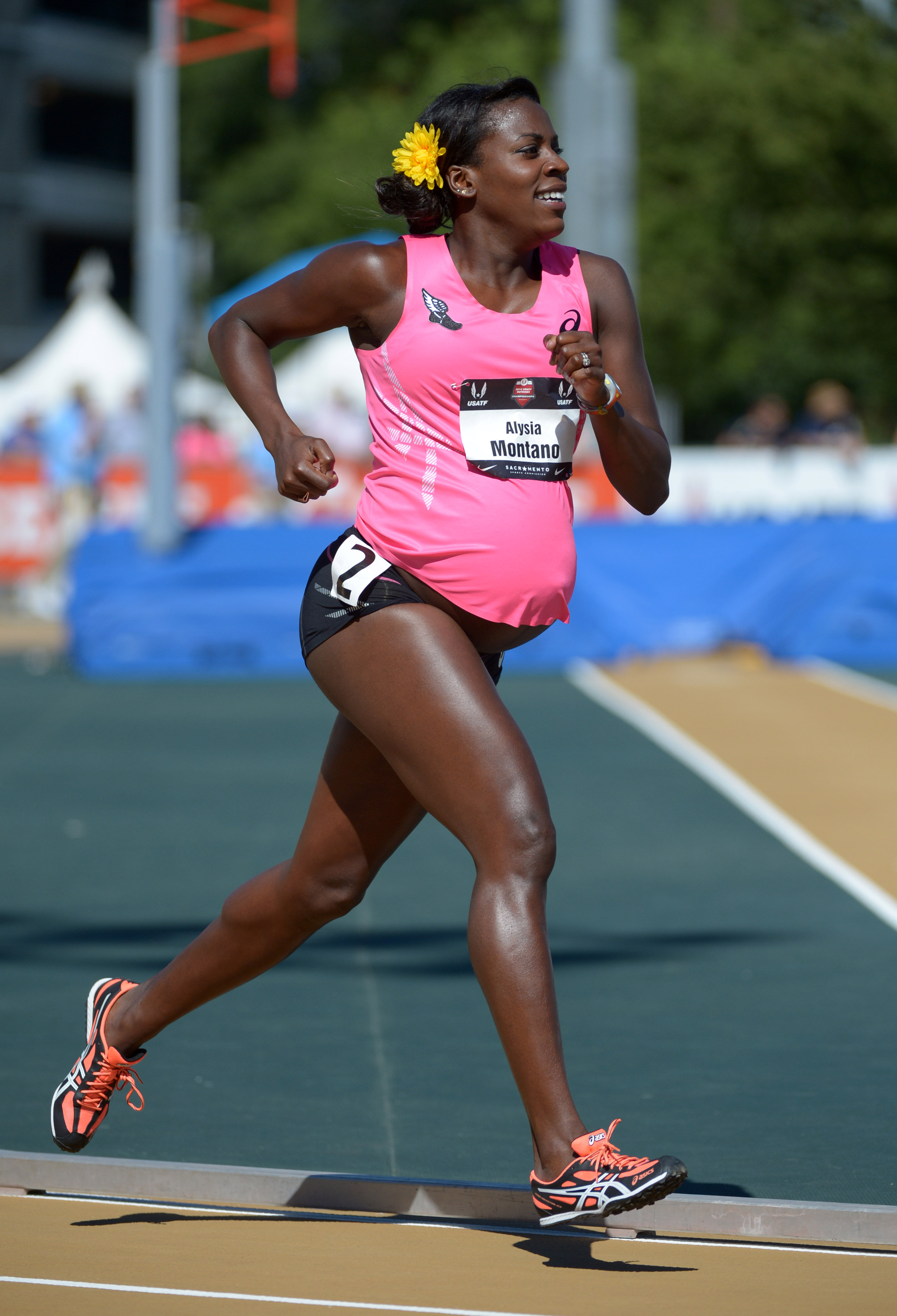
Track and Field: USA Championships
Alysia Montaño competing at the 2014 USA Outdoor Championships

Athletes are always pushing the boundaries – doing and accomplishing things that most others would not try or even think of doing.

When Alysia Montaño was considering whether to compete in her fourth straight USA Outdoor championship in 2014, she made a decision to do so – a daring decision considering she was 8 months pregnant!

This link, which shows a list of athletes who competed in the Olympics while pregnant, is filled with names of people who were 5-months pregnant or less. I wrote about the famed Flying Dutchwoman, Fanny Blankers-Koen, who was three-months pregnant when she won four gold medals at the 1948 London Olympics. Today, it is more and more common to hear about athletes competing while pregnant.

But Montaño race at 8 months was eyepopping. She was not out to win the 800 meter competition at the USA Outdoor Championship. In fact, she completed her race 35 seconds off her personal best. Her objective, as she related in this CNN interview, was to show the world what it looks like for a pregnant woman to be working, even as late as 8 months.

I recognized it was unlikely for people to see a pregnant woman running, in general. I wanted people to recognize that fitness and pregnancy is a really good thing, and this is what it looks like being a professional woman, whether my profession happens to be a professional athlete, or a businesswoman who has to go in an office and work 9 to 5. This is what it looks like for me as a professional athlete and wanted people to see that.

Of course, everyone wonders, is it safe? And Montaño has explained in many interviews that she did consult with her doctors, who not only said it was safe, it is a very good idea for women who are pregnant to exercise. Montaño explained that the immediate concern in running is not to fall. But like walking down the street, when a pregnant woman’s center of gravity is different from when she is not pregnant, she has to always remember to keep the posture upright. Montaño concentrated on doing so during the race.

In Montaño’s interview with ABC News, Senior Medical Contributor Dr. Jennifer Ashton explained that “pregnancy is not a disease,” and “we have to remember, pregnancy, labor and delivery – we have to train for them.”

As explained in this article, only one out five pregnant women exercise according to a study commissioned by the International Olympic Committee, and that “The American Congress of Obstetricians and Gynecologists (ACOG) recommends at least 150 minutes per week of moderate-intensity aerobic activity for women with uncomplicated pregnancies (although contact sports, scuba diving, sky diving, hot yoga or activities with risk of falling should be avoided, reads the organization’s opinion).”

Said Dr. Raul Artal, who co-authored the report, “pregnancy should not be a state of confinement but rather an opportunity for women to continue an active lifestyle or to adopt an active lifestyle if they were not active before.”

Amber Miller
Amber Miller competing at the 2011 Chicago Marathon

Amber Miller certainly didn’t confine herself. At the age of 27, while 39 weeks pregnant, Miller ran in the 2011 Chicago Marathon. It was not publicized, but when people realized she was pregnant, she got a lot of double takes and words of encouragement, as noted in this New York Times Well blog post.

Miller finished the race three hours off her personal best, in 6 hours and 25 minutes, mixing in walking with running. But then after the marathon, she embarked on a second one. While running she experienced contractions. Eight hours after completing the marathon, she gave birth to a baby girl. Which of the two was more difficult? “I don’t feel anything from the marathon, but I do feel what you’d expect after giving birth,” she said the day after.

So for all the mothers who have toughed it out, by just having children, Happy Mother’s Day!

Roy with 1964 Tokyo Olympic Torch
The Olympians has been a labor of love for exactly two years. It is my sketchbook as I prepare for the mural masterpiece, a book on the 1964 Tokyo Olympics.

While my book’s focus is on the XVIII Tokyo Olympiad, I use my blog as an excuse to write about anything even remotely related to these areas: the Tokyo Olympics, the Olympics overall, Japan, and sports in general. In other words, I think of my blog as therapy for a restlessly curious mind.

How else could I go 730 straight days without missing a post?

Enjoy!

Japan 1964


Tokyo 2020


Random Rambles

Roy's 2nd Birthday
Roy’s 2nd Birthday
It’s been exactly two years since I started my journey to understand the context, the organization and the stories of the 1964 Tokyo Olympics. My father was at those games as a news producer for NBC, and I turned one years old on Opening Day.

I moved to Tokyo for a third time in January, 2014, excited by Tokyo’s selection as the host city for the 2020 Summer Games. Surprised to find not a single book on the 1964 Tokyo Olympics in English, I endeavored to write the definitive record. On May 1, 2015, I started my blog, The Olympians is in many ways, the first draft of my book.

All, thank you for your wonderful comments and support!


Olympians 1964


Amazing Olympians