僕が若く、今よりずっと若かった頃は

誰かの助けを必要とする事なんて何もなかった

でもいつしかそんな日々は流れ、僕は自信を失ってしまった

気が付けば僕の考えは変わり、そしてその扉を開けたんだ

Help! By John Lennon and Paul McCartney


1964年、日本は若かった。今よりも遥かに若かった。活気に溢れ、建物は新しく、近代的な国。世界がオリンピックを通して目にする事になるその国は、友好的で誇り高く、思いやりがあり、高い技術力を持ち、そして陽気であった。

1964年、ザ・ビートルズはアメリカを席巻する。彼らの前途は、そしてどこまでも続くその成功は、誰からの助けも必要としていなかった。彼らの記者会見からもわかる事がだが、彼らの宿泊先での悪ふざけ、エド・サリバンショーへの出演や、ワシントンDC・フロリダへの旅といったリバプールから来たこの4人の若者は、アメリカ人が一緒に街へ繰り出したいと願う友の様な存在であった。ロン・ハワード監督の映画、「The Eight days a Week」に映るのは、ジョン、ジョージ、ポール、そしてリンゴの4人が、共に過ごす時間を心から楽しんでいる姿である。

the-beatles-landing-at-haneda
The Beatles Landing at Haneda Airport


私がこの映画を観たのは、つい先週の事だ。その映画が良作なのか駄作なのかはさておき、ハワード監督はザ・ビートルズとその音楽に徹底的にこだわっていた。筋金入りのビートルズファンとしてみれば、鑑賞中は終始顔がほころんでしまう。作品の中で、活動の前半期にあたる1964年に焦点をあてた辺りは、彼らの愉快さをそのまま体現させたようなザ・ビートルズのポートレートとなっている。

ザ・ビートルズは、なにもアメリカでだけ時間を費やしていたわけではない。結論から言うと、彼らが交わしたレコード契約の報酬は決して十分なものではなく、自らツアーに出て、彼らが本来受け取るに相応しい金額を、自分達で稼がなければならなかった。1964年2月、彼らはアメリカで初公演を行い、その年の半ばには、デンマーク、オランダ、香港、オーストラリア、そしてニュージーランドを巡る27日間のツアーを開催。このツアーで彼らは計37公演を行った。そして8月にはアメリカに戻り、23都市30公演を決行。彼らは行く先々で、ファンに揉みくちゃにされるのである。


 the-beatles-ascending-the-stage-at-the-budokan

 著明な作家マルコム・グラッドウェルは、ロン・フォワード監督の作品の中で、ザ・ビートルズとは、この才能あふれる4人の人気が、新しいグローバルな10代文化の波に乗って起こした社会現象であると話している。1964年の10月、世界中のオリンピック選手が東京に集結した際、そのほとんどの選手が10代またはそれに近い年齢層であったため、ザ・ビートルズを知っているのはもちろんの事、彼らの歌もよく歌われていた。

 1964年、ブルガリアの走り幅跳び選手として東京オリンピックに参加していたダイアナ・ヨーゴバは、私に宛てた手紙の中でこう話している。きつい練習の合間に取る休憩時、彼女は女子寮の中にあったミュージックホールへ行き、好きな音楽を聴いた。彼女のお気に入りの一つが「With the Beatles」というアルバムで、これは1963年11月に発売されたものであった。傍らで行われている生け花レッスンを横目で見ながら、そこから漂う花の香りを楽しみつつ、彼女はお気に入りの曲を聴いた。All My Loving, Please Mister Postman, Hold me Tight, I Wanna Be Your Man.

 アダ・コック、オランダの水泳選手で1964年東京オリンピック100mバタフライと4×100mメドレーにて、銀メダルを2つ獲得した選手だが、彼女もまたビートルズファンの一人である。女子寮で彼女が私に話したのは、オランダ代表選手とオーストラリア代表選手は、メダルを獲得した際に、とりわけ騒々しいパーティーを開いていたそうだ。彼らはビートルズを歌いながら、夜通し祝っていたという。

 しかしだ・・・いつまでもいいことばかりではない・・・。

 1964年の東京オリンピックは、最後の純真な大会だと考えられている。最後の清廉潔白なるオリンピック。警備が最重要課題に上がる事もなければ、ドーピングが流行っていたわけでもない。スポンサーへのワイロの支払が、堂々と行われていたわけではない。皆が楽しい時間を過ごしていた。

 しかし地政学的な情勢が、そして社会の奥底でうごめく何かが、少しずつ明るみになろうとしていた。1968年メキシコオリンピックで、開会式直前に犠牲者数百人にも及ぶ大虐殺が行われ、1972年ミュンヘンオリンピックの選手村では、パレスチナのテロリストによって、11人のイスラエル人が殺害されている。世界はオリンピックを歓喜と純真から、冷笑と憂いに変えてしまった。

でもいつしかそんな日々は流れ、僕は自信を失ってしまった

1966年、ビートルズは初来日し、6月30日と7月1日に計4公演を行う事になった。1964年10月、オリンピック参加の為に来日した外国人選手たちがそうであった様に、彼らもまた手厚い歓迎を受けた。彼らをよく知らない人たちから見れば、きっと世界一の有名人が、日本国民から最大級のもてなしを受けていると思ったであろう。しかし、ホワード監督の作品によれば、どうやらそうでもなかったようだ。

オリンピックに間に合うように建設された日本武道館で、ビートルズはミュージシャンとして初めて公演を行う事になっていた。しかし、右派の人たちからみれば、そもそも武道館は武道家達のものであり、そこに外国人のミュージシャンが突然やってきて音楽を演奏する・・・武道館が乗っ取られるのではないか・・・そんな思いから、彼らの事を快く思っていなかった。公演はビートルズマニアの絶叫の中、無事に幕を閉じたのだが、そこには厳戒な警備と、滞在中は十分に気を付けるようにと、ビートルズにも警告が出されていた。

security-at-the-budokan-for-the-beatles
Security at the Budokan


1960年代後半は、オリンピックにとっても、ビートルズにとっても、そして私たちにとっても、試練の時となった純真な時代は終わったのだ。

For English Version of The Beatles Eight Days a Week: The Fab Four and the Olympics in 1964, Transitioning from Joy and Purity to Cynicism and Insecurity

Life Magazine_30October1964_3

I recently bought a copy of Life Magazine’s October 30, 1964 edition, featuring a young Don Schollander staring off into the distance, his four gleaming gold medals draped around his neck. (Read about that here.) But equally interesting to me were the ads in the magazine, a time capsule containing artifacts of a consumer goods era long gone.

Polaroid: Polaroid saw the future was in instant images. Why wait days to get your print photos when Polaroid could do it in 60 seconds? Polaroid is still around, albeit more as a novelty. Although you can’t tell in this ad, this Polaroid Color Pack Camera expanded like an accordion, and appears very popular amidst the biggest names in rock and roll according to this site. Polaroid’s brand and IP is now owned by “The Impossible Project,” an organization dedicated to keeping Polaroid’s instant film legacy and business alive, a decade after Polaroid gave up on instant film cameras.

Life Magazine_30October1964_1

Encyclopaedia Britannica: Did you own a set of that massive collection of Western-centric knowledge? My family did. I remember chucking it into a dumpster as we cleared out the detritus of 20th century knowledge management, replaced ruthlessly by the Internet. The last paper version of this massive set of tomes – all 32,640 pages – was published in 2010.

Life Magazine_30October1964_4

Yellow Pages: This was a directory of telephone numbers and addresses amassed by AT&T, a tome published every year to help find the contact information of a business in your area. This tome too is now a relic of the past – see Encyclopaedia Britannica.

Life Magazine_30October1964_2

Admiral: In the early 1960s, Admiral was one of the leading names in electronics, famous for their televisions, radios and record players among a vast lineup of products. In their heyday, Admiral helped lead the transition from vacuum tube technology to transistors. Today, Admiral is still around as a television brand marketed by a company based in Taiwan. More interestingly, vacuum tube amplifiers today are all the rage.

Life Magazine_30October1964_6

Winston: I had thought that you couldn’t advertise cigarettes or tobacco products in American magazines, so I thought I’d highlight this antiquated ad for Winston Filter Cigarettes, with its iconic slogan, “Winston tastes good…like a cigarette should!” That ad made Winston the best-selling cigarette in the world in 1966, two years after this ad. While advertising tobacco products on the television and radio was banned in America in 1971, apparently, companies can still advertise tobacco products in magazines and newspapers. However, tobacco companies can get significant blow back if they try.


Penn Alumni at Meji Jingu_25Nov_8
On a Penn Club Japan tour of Meiji Jingu.


Olympians in 1964 remember Meiji Jingu as their neighborhood forest. The shrine dedicated to Emperor Meiji was a wooded area next to their Olympic Village in Tokyo, where athletes like Peter Snell would maintain their condition with a run.

I was fortunate to enjoy a walking tour of Meiji Jingu (aka Meiji Shrine) through my university alumni group on a beautiful autumn Saturday morning recently. We were led on the tour by a Shinto priest at Meiji Jingu, Taisuke Kadosaki, who provided a wonderful description of the shrine’s history and customs as we ambulated through what is often called the lungs of Tokyo.

Penn Alumni at Meji Jingu_25Nov_4

Here are a few of the fun facts gained on the tour:

  • Omotesando: a street akin to the Champs-Élysées in Paris or 5th Avenue in New York, Omotesando leads up to Meiji Jingu, and literally means “the entrance of the path to the shrine.”
  • 80,000 Shinto Shrines in Japan: Most shrines in Japan are over a thousand years old. Meiji Jingu is yet to turn 100.
  • Kami: Shinto shrines are places to pay respects to “kami,” translated as a mixture of such words as spirit, angel, or deity of nature, things or people. There are kami for the wind, for rice, for rivers and for emperors. For example, famed anime character Totoro is a tree kami. The kami at the heart of Meiji Jingu is Emperor Meiji, who died in 1912.
  • Not Quite Nature’s Handiwork: In 1916, work was begun for a shrine dedicated to Emperor Meiji after his death. Over 100,000 trees from all over Japan were transplanted in a desolate part of Tokyo called Yoyogi. In other words, the woods inside Meiji Jingu – a symbol of Japan’s love for nature – is completely man made.

    Penn Alumni at Meji Jingu_25Nov_3
    Pointing to Amaterasu, the Sun kami.
  • Sake and Rice: On the shady peaceful dirt path through the woods on the way to the shrine halls, you see barrels of sake on your right and casks of wine on your left. Sake is made from rice, a staple of Japan, and was granted from the sun kami, Amaterasu at the beginning of time. Rice and rice wine are two key offerings to “kami”. The casks of wine represent the modern era Emperor Meiji helped usher into Japan.
  • Red Wine: In the late 19th century and early 20th century, Emperor Meiji opened up Japan to the West with treaties, Western clothes, and wine. In fact, when his doctor informed the Emperor that he had diabetes and should diminish his sake intake, the good doctor recommended red wine in its place. Once the wineries of Burgundy in France heard about that, they sent bottles of their best red wine to Emperor Meiji every December.
  • A Most Popular Place After New Year’s Day: In 1920, Meiji Jingu welcomed 500,000 people when it opened. Every year, 10 million people visit Meiji Jingu, the first 3 million in the first three days of the year coming to make wishes for the new year.

Penn Alumni at Meji Jingu_25Nov_7

  • 100th Birthday: In 2020, Meiji Jingu will have its 100th birthday. It is currently going through a renovation, the most apparent part is the re-plating of the copper rooves of the shrine’s halls. What most people will remember are light green rooves, the product of copper oxidating over decades. The very day of our tour, the roof of the main hall was uncovered, displaying a bright and shiny copper finish.
  • Put Your Name on Meiji Jingu for 3,000 Yen: If you want to help finance the renovation of Meiji Shrine, you can donate JPY3,000 for a copper plate that will adorn the roof of one of the halls of the shrine. On one side of the plate, you can write your wish for the future and your name.
Penn Alumni at Meji Jingu_25Nov_5
My tiny bit of Meiji Jingu.

One of the wonderful insights shared by Kadosaki-san on the tour was about the Japanese, and whether they are religious or not.

“Many Japanese will say, ‘I’m not religious’. But in reality,” Kadosaki-san told us, “our daily lives are very close to Shinto.” He then cited several examples:

  • Children dressed up for Shichi-Go-San and new-born babies are brought to shrines to celebrate their growth and health
  • Cars are brought to shrines to be blessed.
  • Weddings are held at shrines. In fact, eighteen wedding ceremonies were scheduled the day of my tour.

Kadosaki-san also explained that from the moment the sun rises, people are sweeping the shrine grounds, cleaning floors, and wiping rails and handles. Washing the hands and rinsing the mouth inside the shrine grounds is also a custom. If you assume Japan is a culture of cleanliness, it’s possible this culture emerged from the practices and beliefs of the shrine.

If you’re in Japan, or planning a trip, you may want to visit peaceful and rejuvenating Meiji Shrine, or one of the other 80,000 shrines in Japan.

For a more detailed explanation of Kadosaki-san’s description of Shintoism and Meiji Jingu, click here.


Paul Maruyama and Roy
The author and Olympian, Paul Maruyama, and me.

Paul Maruyama is an Olympian, a member of the judo team, representing the USA at the 1964 Tokyo Olympics. Paul Maruyama is also an author, and the story he has to tell is personal…and incredible.

This is the story of the approximately 1.5 million Japanese who were essentially abandoned in the northern part of China, then called Manchuria, after the Pacific War. Overrun by the military of the Soviet Union, which had just declared war on Japan, Japanese military men and civilians alike were rounded up and sent to labor camps in the Soviet Union, while women and children were left in highly insecure and unsafe circumstances, including robbery and rape.

Seiyo Uchino and Yoshino Kimura

Maruyama wrote about this time in history because his father actually played a major role in ensuring safe passage of the 1.5 million Japanese in China back to Japan. In his book, Escape from Manchuria, Maruyama tells the incredible story of how his father, Kunio Maruyama, and his friends, Hachiro Shinpo and Masamichi Musashi worked together to get to Tokyo and meet General Douglas MacArthur, and convince him to send military ships to China and repatriate their countrymen.

When producers from NHK, the giant government broadcaster, read the Japanese version of Paul Maruyama’s book, they recognized the incredible human drama amidst the geo-political churn of post-war China and Japan, and decided to produce a two-part dramatization of those events.

On consecutive Saturdays of March 24 and 31 of 2018, NHK will broadcast their dramatized version of “Escape from Manchuria.” The Japanese title of the drama is “Doko ni mo Nai Kuni,” which I suppose can be loosely translated to “A Country that is Nowhere.”

Taizo Harada and Misako Renbutsu

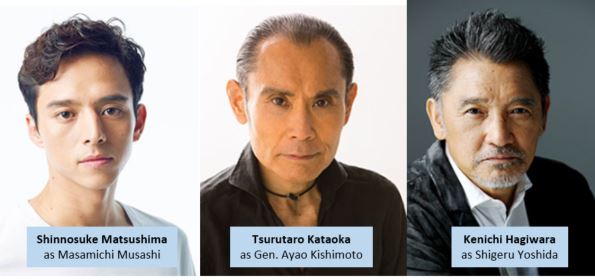
In addition to filming in China, NHK has invested in talent, recruiting some of the biggest names in Japanese television and film. Seiyo Uchino (内野聖陽) will play Paul’s father, Kunio Maruyama, while Yoshino Kimura (木村佳乃) will portray Paul’s mother, Mary Maruyama. Other well known actors like Taizo Harada (原田泰造), Misako Renbutsu (蓮佛美沙子), Shinnosukke Matsushima (満島真之介), Tsurutaro Kataoka (片岡鶴太郎), and Kenichi Hagiwara (萩原健一) fill out the all-star cast.

Prior to a recent trip to Japan, Maruyama made a sortie to Shanghai, China, where he was able to observe filming on a studio lot. A street was re-created to look like a Japanese community in Shenyang, complete with store front signs in Japanese and Chinese, filled with despairing Japanese citizens, and aggressive Russian soldiers. Maruyama, who was in Manchuria with his family at the age of six, took on the scene with wonder and pride, filled with emotion.

“When I see this set and the recreation of streets of Manchuria, the actors, all the extras, the staff, here because of a book I wrote, it’s kind of overwhelming. But I’m happy because we’re able to tell a part of Japanese history that is not well known.”

Shinnosuke Matsushima Tsurutaro Kataoka Kenichi Hagiwara

Soya Skobtsova autographs
Businesslike Zoya Skobtsova signs autographs for kids at Russian camp outside Tokyo_Sports Illustrated, October 19, 1964

It’s days before the start of the 1964 Tokyo Olympics and Olympic fever in Tokyo is rising. Athletes from all over the world were arriving days if not weeks in advance, filing off of planes and ships and filling the Olympic villages in Yoyogi, Enoshima and Lake Sagami.

For most Japanese, the Olympic villages were pop-up mini United Nations, places of such diversity to shock the mono-culture of Japan. They were drawn to the villages with the hopes of seeing the wide variety of shapes, colors and sizes of the world population, to shake hands with the foreigners, take pictures with them, and of course, get their autographs.

Certainly, to get the autograph of swimming siren Kiki Caron from France, or the amazing barefoot runner from Ethiopia Abebe Bikila, or the 218 cm giant center on the USSR basketball team, Janis Krumins would be a coup. But apparently, the Japanese would rush up to anyone who looked like a foreigner and ask for their autograph.

Hayes Jones was not just anyone – he was the 110-meter hurdles gold medalist. But when he wrote down his name “Hayes,” he would cause a ruckus beyond his expectation:

When I was going into town after the winning the gold in Tokyo, I was leaving the village to see my wife, and these Japanese kids were outside with the autograph pads and they saw me call me out, and this kid put my pen and paper in front of me. I started signing my sign, “Hayes”. …they started shouting “Bob Hayes” is here. I didn’t have the nerve to write “Hayes Jones”.

The “fanaticism” of the Japanese to get autographs was apparently wearing thin on athletes and officials alike, even before the Olympics opened, so much so that the press had words of caution for their readers. As you can read in the Yomiuri article of October 5, 1964 below, athletes were “outraged,” at risk of “writer’s cramp”! To be honest, it’s hard to tell whether the article was preaching, or teasing….

Some athletes have become so outraged that whenever they see these “fanatics” they raise their voices, yelling them to go away.

The great majority of the determined pack of autograph hounds consist of people assigned to the village. These are mostly defense force servicemen, interpreters and assorted workers who often show utter disregard for the time, place or mood of athletes in asking for autographs.

If this trend remains unchecked, many athletes will end up having writer’s cramp before they leave for home.

Autograph Hounds_Yomiuri_5Oct64
The Yomiuri, October 5, 1964

My Kamekura Yusaku original 1964 Poster

Yusaku Kamekura designed a series of four posters for the 1964 Tokyo Olympics. The first one was printed in 1961, a simple yet powerful construct of red circle on white, balanced in the bottom half of the poster with the Olympic logo and the words “Tokyo 1964” in gold.

I finally secured one of these vintage posters last week. It is striking in its simplicity. And it struck a chord with the Japanese as well.

While the “Hinomaru” flag has represented Japan on ships and in international events since the late 19th century, the red circle on white was only made the national flag by law in August 1999. Due to the powerful connection to the Japanese state in the war years, the occupying leadership group overseeing Japan’s occupation after the end of WWII – The Supreme Commander for the Allied Powers or SCAP – restricted display of the hinomaru significantly.

But in 1961, as Tokyo Olympic fever was beginning to rise, Kamekura released his red-circle-on-white poster on Japan. He claimed that his design had nothing to do with the Japanese flag. According to the article, Rebuilding the Japanese Nation at the 1964 Tokyo Olympics, Satoshi Shimizu quotes Kamekura as saying:

I drew a large red circle on top of the Olympic logo. People may have considered that this large red circle represented the hinomaru, but my actual intention was to express the sun. I wanted to create a fresh and vivid image through a balance between the large red circle and the five-ring Olympic mark. I thought that it would make the hinomaru look like a modern design.

In my view, it’s a lame explanation as the hinomaru is also a representation of the sun. To say the red circles on the poster and the flag are different is confusing. To most people, what the Kamekura’s fist ’64 Olympics poster represented was Japan’s traditional flag. In fact, as Japan continued to step out of the shadow of post-war subjugation, symbols of Japan’s past continued to make a comeback, as explained by Christian Tagsold in his article, “The Tokyo Olympics: Politics and Aftermath.”

The restoration of national pride that was staged in 1964 involved the deliberate rehabilitation of classical national symbols, especially the tennō himself (the emperor), the hinomaru (or Rising Sun) flag, the kimigayo (“His Majesty‘s Reign”) anthem, and the army. The method of their revival was to free them of their wartime associations and present them instead as symbols of peace. This was made possible by embedding them in the Olympic Games’ own narrative and by introducing new national symbols.

The power of the red-circle-on-white symbol was felt in Okinawa, a part of Japan that had been placed under American military control after the war and was still a US territory in the 1960s. The American government routinely denied requests by schools for example, to fly the hinomaru flag.

My Kamekura Yusaku original 1964 Poster 2

And yet, there was, apparently support by the Japanese public for an eventual return of the Okinawan islands to Japan. And since he Okinawa Athletic Association, was recognized as a part of the japan Athletic Association, the Torch Relay Special Committee that the torch relay should take place in all Japanese prefectures, even former ones like Okinawa., according to Shimizu. In fact, they made Okinawa the landing place for the Olympic flame after it completed its Southeast and East Asia journey.

When the Olympic flame arrived in a plane at Naha Airport in Okinawa from Taipei, the headlines claimed that the torch had arrived in Japan. Thousands of torch bearers had signed up to carry the torch for five days in Okinawa, and all of the torch bearers in Okinawa and throughout Japan would be wearing Kamekura’s design on their white tank-top shirt.

In addition, when the first runner pulled into Ounoyama Athletic Stadium after securing the flame at Naha Airport, 40,000 spectators were there to cheer him on, witness the lighting of an Olympic cauldron, the hoisting of the Hinomaru flag, and the playing of the national anthem, Kimigayo.

It would take another 8 years before Okinawa was returned to Japan by the United States, but in 1964, it appears, that thanks to the power of the Tokyo Olympics, and perhaps Kamekura’s famous first poster, the hinomaru flag and Kimigayo had been returned to Japan amidst the golden glow of the Olympics.

My 3 years to go Coca Cola pin

A friend of mine at Coca Cola gave me a gift that I treasure – a “3 Years to go!” pin, distributed to all Coca Cola Japan employees in anticipation of the Tokyo 2020 Games.

Coca Cola is a TOP Sponsor, which means they are one of 13 global sponsors of the Olympic Games. In fact, Coca Cola is the longest running sponsor of the Olympics, having first established its presence at the 1928 Amsterdam Olympics. They also produce Coca Cola branded Olympic pins, and sponsor pin trading centers at the Games.

The “3 years to go!” pin highlights the official Tokyo2020 logo and Olympic rings on the right, with a red Coca Cola bottle swathed in a green and gold kimono obi.

No, I won’t trade.

Torch Runner in front of Mt Fuji_Ichikawa film
Torch Runner passing the front of Mt Fuji, from the Kon Ichikawa film, Tokyo Olympiad. Click on the image to see this scene at the 9 minute 30 second mark to see.

In 1964, the cycling road race in Hachioji, a suburban area in Western Tokyo, was considered too easy, which allowed too much bunching of elite and mediocre racers during the bulk of the race. In 2020, the road race route “will be tough, with a lot of difference in elevation,” according to this Japan Times article.

More importantly, for the viewer, the backdrop will be wonderful. The 2020 route will take Olympian cyclists by the foot of Mount Fuji in Shizuoka Prefecture. According to the article, the 270-km course will start near Musashino Forest Sport Center (not far from ASIJ, the school to which my son cycled to every day), and continue through National Route 413 all the way to scenic Lake Yamanaka and Mt Fuji.

According to Cycling Weekly, the organizers said that the race might even include a climb up Mt Fuji.

The final major obstacle of the men’s road race should be another long climb of around 15km, going half way up the side of the iconic Mount Fuji. This is likely to be crested with around 36km to go, half of which will be a descent before a flat or rolling run-in to the finish line back on the Fuji Speedway circuit. If this mountainous course is confirmed by the organising committee, the men’s race will feature more than 5,000m of climbing and be the longest race since professional riders were allowed to compete in 1996.

Reports are that the women’s 143-km road race will also have a similar route but will have less climbing.

In 1964, Mt Fuji was certainly one of the top five things a visiting Olympian would know about Japan. Some may have seen it on the plane ride into Tokyo. But most could not see it even if they wanted as the Tokyo skies were filled with the soot and dust of industry and construction. Additionally, it rained a good part of the Tokyo Olympics.

In July and August, 2020, the competitors in Tokyo will still unlikely be able to see Mt Fuji – the skies usually don’t become clear enough until the Autumn and Winter months. But the cyclists will have a front row view from their bikes.

As a side note, I did as well in the Autumn of 2005. I stupidly joined a bunch of young but experienced mountain bikers who convinced me that biking up and down Mt Fuji is a blast. As you can see in the picture below, I did not fare well, wondering how I did not break any bones hurtling down steep slopes of lava rock.

Ah, Mt Fuji….

Fujiyama2_November2005

031164 - Crown Prince and Empress meet teams Tokyo Games - 3b -
The Crown Prince and Princess greet athletes at the 1964 Tokyo Paralympics.

Today, Emperor Akihito is 83 years old, a revered father figure in Japan, looked upon kindly by old and young alike. The Emperor took the unusual step to ask the Japanese government for permission to abdicate in 2019 so he could hand over the countless royal duties to his son, the Crown Prince Naruhito.

In 1959, then Crown Prince Akihito married a wealthy commoner named Michiko, in a highly publicized and popular wedding ceremony, a television extravaganza in a time when Japan was just getting its footing back after years of post-war American occupation.

When the nascent Preparatory Committee began to seriously consider the hosting of a Stoke Mandeville Games in Tokyo after the Tokyo Olympics, the head of the committee, Yoshisuke Kasai, knew he needed powerful allies and influencers to build the awareness of disabled sports and a possible Tokyo Paralympics, as well as raise the organizational infrastructure and funds required to pull off an international sporting event successfully…in only two years.

As explained in this post, part of the plan to grow awareness was to send athletes from Japan for the first time to the annual Stoke Mandeville Games in London, in 1962. According to D. J. Frost and his article, Tokyo’s Other Games: The Origins and Impact of the 1964 Paralympics, Kasai appears to have leveraged the opportunity to celebrate Japan’s participation in the Stoke Mandeville Games to introduce the importance of sporting events for the disabled to the Imperial Family. He arranged for the Crown Prince Akihito to meet the returning athletes and members of the Preparatory Committee, which was heavily covered by the Press.

In addition to the Crown Prince’s expressed hopes for the Paralympics to come to Tokyo in 1964, the newspapers were filled with pictures of the Crown Prince, the Crown Princess, and the disabled athletes showing off their skills. Members of the government, including then Prime Minister Hayato Ikeda, pledged their support for the Tokyo Paralympics. As Frost wrote, thus began a long-lasting relationship between the Imperial Family and the Paralympic movement.

Although it remains unclear how the meetings with imperial family members came about, it seems likely that committee members, and perhaps Kasai specifically, mobilised their social connections to establish what proved to be a long-lasting and critically important link between the Paralympics and the imperial household. Associations with the Crown Prince, in particular, practically guaranteed the Games increased media attention. At a moment when the ruling conservative party in Japan, led by Prime Minister Ikeda, was looking to revive the influence and prestige of the imperial family, the potential power of the Crown Prince’s expressions of support should not be underestimated.

A cording to this paper called The “Legacy” of the 1964 Tokyo Paralympics, from the Journal of the Nippon Foundation Paralympic Research Group, Kazuo Ogoura explains that the involvement of the Imperial Family in the 1964 Tokyo Paralympics was significant, as “at least one of the members of the Imperial family went to see some events every day,” and that their commitment to disabled athletes was heartfelt:

Even after the Games ended, they extended full-scale cooperation and support to those involved. This experience helped them establish in-depth knowledge and interest in the Paralympics in general. It must be noted that the Imperial involvement came from their heart, rather than physical and systemic arrangement. A member of the Paralympics’ International Secretariat said, “When the Crown Prince and Princess unofficially invited the members of the Secretariat to the Imperial Palace, the Crown Princess Michiko told us that their young prince made a Teru Teru Bozu doll to pray for sunny weather during the Paralympics.”

The Japanese government was conscious now of the possibility of the Tokyo Paralympics, and the impact that such a successful international event right after a successful Tokyo Olympics would help boost Japan’s standing in the global community. They also understood that to succeed, the institution of the Imperial Family and the increasing star power of the Crown Prince and Princess were needed. That in turn would continue to enhance the Imperial Family as a fundamental pillar of Japanese society. As Frost wrote,

The Tokyo Paralympics, emerging from this same historical and cultural milieu, proved no less important as a tool for reviving national symbols and bolstering Japan’s international prestige. Indeed, viewed in this light, the Crown Prince’s oft-mentioned involvement with the Paralympics reflected more than a personal commitment on his part; it was a carefully cultivated and highly politicised link designed to benefit both the Games and the international reputation of Japan’s future monarch.

The Crown Prince and Princess, as you can see in the video below, were present during a good part of the 5-day Paralympics. Unlike Emperor Hirohito, whose appearance at the opening ceremonies of the 1964 Tokyo Olympics was most official and formal, the Crown Prince and Princess walked among the athletes, stopping to greet and talk with them. Their exit during the closing ceremonies of the Tokyo Paralympics was a stroll across the gymnasium flow, waving and smiling at the wheelchair athletes – a modern royal family for changing times.

Girl skiier_love over bias

P&G’s long-running series of “Thank You Mom” commercials have been a powerful testament to the importance of the love and support of parents, particularly mothers. The global consumer goods company has worked hard to make the connection to caring mothers and their brand, and have leveraged sports stories during Olympic cycles to send particularly emotional messages.

Their most recent commercial, “Love Over Bias,” has – at least to me – a more intense resonance.

These are divisive times, with tensions emerging out of the economic dislocations that have slammed the middle classes in developed economies all over the world. The tensions have at times, in my view, manifested themselves in balder declarations of intolerance, in angrier expressions of victimization, and more frequent impulses to violence.

Ooh child, things are going to get easier

Ooh child things will get brighter

Love Over Bias

The message is that children at times suffer unnecessarily from bias, whether they are black with hopes of making it in a sport dominated by whites, or boys in a sport where boys’ sexuality are questioned, or children who have not compete with those who have, or girls of Islamic faith whose hibabs become emotional lightning rods, or disabled children who simply want a chance.

“Imagine if the world could see what a mom sees,” Is the tagline.

The message is universal. And yet…..