I have spent much of the past two decades in corporate meeting rooms in Tokyo, Singapore and Bangkok listening to leadership teams talk about diversity and inclusion. I watched the language change year by year, and I noticed why it changed.
Early in my HR career, at Morgan Stanley, diversity was not something leadership chose to embrace. It was something a lawsuit forced them to do. The EEOC sued the firm in 2001 over a pattern of sex discrimination in its Institutional Equity Division. The case settled in 2004 for $54 million, with $2 million earmarked for gender discrimination and diversity training across the company. I recall leaders in Japan complaining that diversity training existed in Japan because a court ordered it in the United States.
But well over a decade later, when I joined MetLife Japan’s HR team, something had genuinely shifted. My team rolled out diversity webinars that leadership supported. The Tokyo 2020 Paralympics finally took place after a one-year delay due to the COVID pandemic, and we took inspiration from the International Paralympic Committee’s WeThe15 campaign, which emphasized that 15% of the world’s population, or about 1 billion people, were disabled, but seeking to live the less hindered lives of their family, friends and colleagues.
MetLife leaders talked about diversity, equity and inclusion, or DEI, with real conviction, i thought, not because a regulator or New York told them to, but because they believe it made the organization better. I believed it too. I still do.
The reality is that in many corporations, particularly US-based ones, the ideas of DEI have come under attack. Whatever the merits of underlying criticisms of attempts to improve the opportunities of minority groups, I believe that the politicization of DEI has resulted in corporate leaders backtracking on DEI initiatives and muting DEI messaging. For example,
- Meta scrapped its DEI program.
- Walmart discontinued its racial equality center.
- McDonald’s is no longer setting senior-leadership diversity goals.
- Accenture “sunset” diversity goals for leadership, stopped using DEI targets in performance reviews, and exited external benchmarking surveys.
- Boeing dismantled it’s DEI department.
Fortunately, there are still some institutions that fight the good fight.
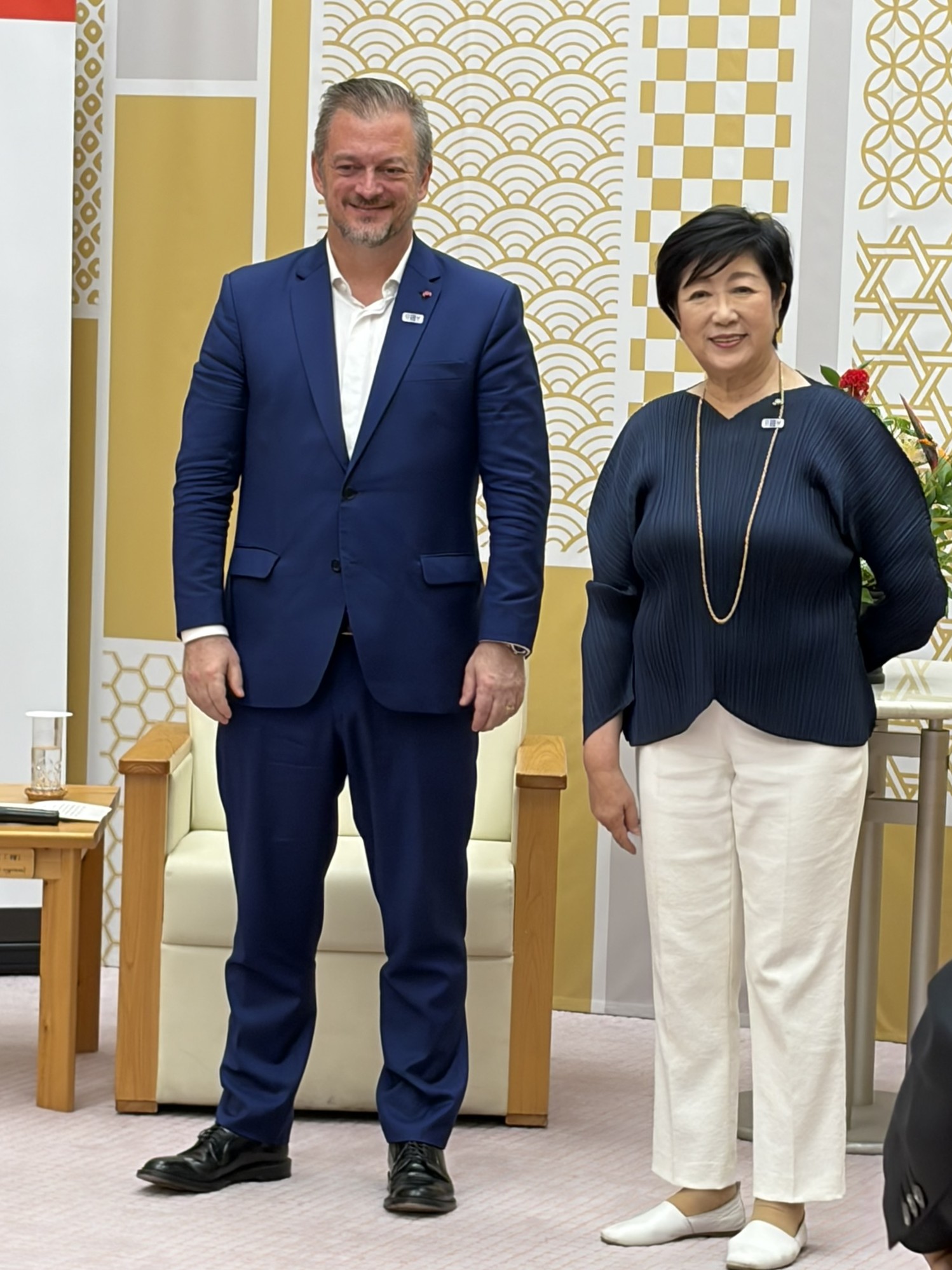
This week I found myself covering the fifth anniversary of the Tokyo2020 Paraylympic Games, first at the Edo-Tokyo Museum, then two days later at Tokyo Metropolitan Komei Gakuen, the city’s oldest public special needs school, shadowing IPC President Andrew Parsons and Executive Director Colleen Wrenn. At Komei Gakuen, Parsons watched young people with disabilities use assistive technology to compete in eSports and play boccia remotely, among many other impressive activities held to educate the Tokyo community that the disabled can and should have the opportunity to play and compete as others do.

At the end of the press conference, I asked a question. While the past three days of his visit to Tokyo have been a celebration of diversity and inclusion, I asked for his reaction to the past ten years or so, particularly in America, which have seen diversity and inclusion come under political attack.
“I think what we do at the Paralympics is try to show by example,” the president of the IPC said. “If you remove barriers, a person with disability, in our case athletes with disability, can do incredible things and inspire people. They deliver performances of such a high level in sport that they can really promote change around the world.”
He was clear that sport is only the starting point.
“We want barriers to be removed in education, in politics, in employment, in every aspects of society,” he said. He refused to pretend progress runs in a straight line, pointing to the pandemic, when health services that were supposed to be inclusive simply were not, even in wealthy countries. “There’s a lot to celebrate, but there’s a lot to work towards.”
Two days earlier, at the Edo-Tokyo Museum, I had asked Parson a more IPC-specific question. What happened to the WeThe15 campaign itself. He was candid. Wethe15 launched as a coalition of 20 organizations, he told me, but the IPC ended up funding nearly all of it alone. “It became super expensive for us to be teh only one really funding it,” he said. A movement, he said, requires sustained resources that a single organization cannot carry forever, so the campaign scaled back.

I found that answer honest, and a reflection of how social change is a narrative of surges, retreats, achievements and defeats. I am reminded of Martin Luther King’s observation that the arc of the moral universe is long, but bends towards justice.
Watching corporate diversity commitments rise, harden, and then soften over twenty years taught me exactly how long “long” can feel, and how much deliberate effort it takes to keep that arc bending in the right direction, rather than simply drifting.
Parsons is leveraging his position as the leader of the INternational Paralympic Committee, but he speaks with belief and conviction. I still recall the passion of his speech at the opening ceremony of the Tokyo2020 Paralympic Games, which reflected the long hard journey of the disabled.
When humanity should be united in its fight against COVID 19, there is a destructive desire by some to break this harmony. Overlooking what brings us together, to focus on the factors that differentiate us, fuels discrimination. It weakens what we can achieve together as a human race. Difference is a strength, not a weakness and as we build back better, the post-pandemic world must feature societies where opportunities exist for all.
You must be logged in to post a comment.